


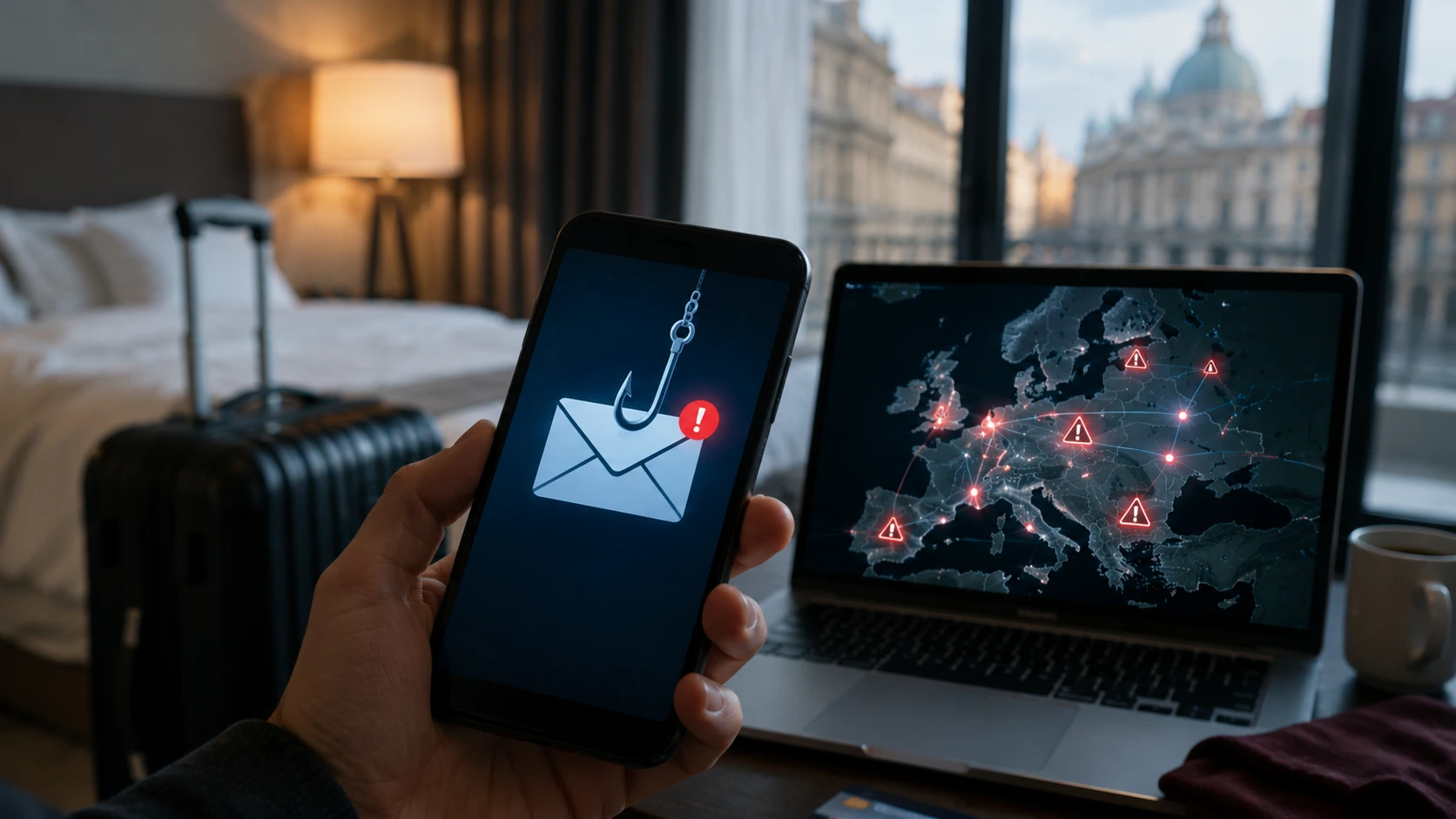
Cybercriminals are targeting hotel guests with convincing payment scams after a data breach affected more than 100 hotels across Europe.
The incident exposed reservation information belonging to travelers staying at properties in the Netherlands, Belgium, and Ireland. Attackers are now using the stolen data to send phishing messages that appear to come from legitimate hotels, increasing the likelihood that victims will hand over money or financial information.
Authorities have launched investigations as the full scale of the breach continues to emerge.
Stolen Booking Data Fuels New Scams
Unlike traditional phishing campaigns, these attacks rely on real reservation details obtained during the breach.
According to reports, criminals gained access to booking information and customer records linked to hotel reservations. They then used that information to contact travelers with messages requesting additional payments or claiming that reservations would be canceled unless immediate action was taken.
Because the messages contain accurate booking details, many guests have difficulty distinguishing the scams from genuine hotel communications.
The tactic gives attackers a significant advantage over generic phishing emails that rely on guesswork or mass distribution.
More Than 100 Hotels Impacted
Industry officials say at least 100 hotels in the Netherlands have been affected. Additional cases have also been reported in Belgium and Ireland.
The total number of impacted guests remains unknown, but reports suggest that some travelers have already fallen victim to the fraud campaign. Belgian media outlets reported cases involving substantial financial losses after guests followed payment instructions sent by attackers.
Investigators continue to assess the extent of the breach and identify every organization affected by the incident.
Reservation Software Under Investigation
Early findings suggest the compromise may not have originated within individual hotels.
Instead, investigators believe attackers may have gained access through software used to manage reservations and booking operations. Modern hospitality systems often rely on multiple third-party platforms that exchange customer and reservation data behind the scenes.
If one of those systems is compromised, attackers can potentially gain access to information belonging to numerous hotels at the same time.
Authorities have not yet publicly identified the technology provider at the center of the investigation.
Privacy Regulators Step In
The Dutch Data Protection Authority has opened an investigation into the incident as officials work to determine how the breach occurred and what information was exposed.
The case highlights a growing problem for the hospitality industry. Reservation records contain valuable personal information and provide cybercriminals with context that can make scams appear legitimate.
As a result, even a limited breach can quickly evolve into a large-scale fraud operation targeting travelers across multiple countries.
Conclusion
The hotel phishing attacks linked to this breach demonstrate how quickly stolen reservation data can be turned into a powerful fraud tool. Investigators believe attackers compromised systems connected to more than 100 hotels before using real booking information to target guests. As authorities continue their investigation, affected travelers should treat unexpected payment requests with caution and verify reservation issues directly with their hotel before taking action.
0 responses to “Hotel Phishing Attacks Follow Major European Data Breach”