


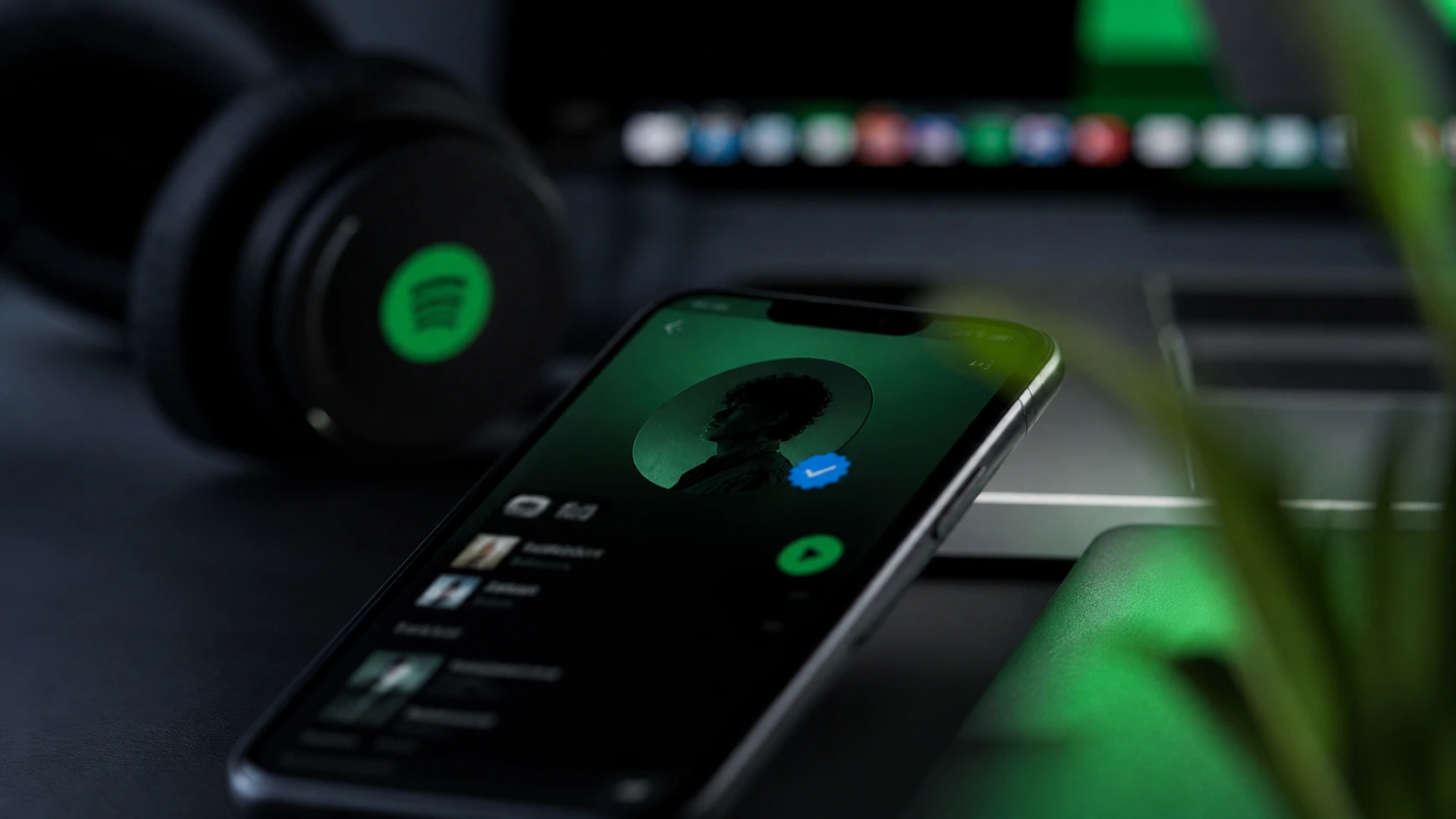
Spotify has launched the Spotify verified badge to help users identify real artists. The move responds to a sharp rise in AI-generated music across the platform.
Listeners now struggle to tell who created a track. This shift has started to affect trust, discovery, and artist visibility.
Spotify aims to bring clarity without disrupting how users explore music. The feature focuses on highlighting authentic creators rather than removing AI content.
AI-generated tracks flood streaming platforms
The Spotify verified badge arrives as AI music uploads increase at scale. Thousands of synthetic tracks now appear on streaming platforms each day.
This surge creates new challenges. AI tracks compete with human artists for streams, attention, and algorithmic reach.
Some of these tracks gain traction despite limited artistic input. This raises concerns about fairness and long-term platform quality.
Spotify now faces pressure to define what counts as a real artist.
Badge confirms authentic artist identity
The Spotify verified badge appears as a checkmark on artist profiles. It signals that Spotify has confirmed the creator behind the account.
Verification relies on multiple signals. These include online presence, audience engagement, and activity beyond the platform.
Artists must show that they exist as real individuals or groups. Profiles that represent purely AI-generated projects do not qualify at launch.
This approach helps users quickly identify authentic creators.
Rollout focuses on widely searched artists
Spotify plans to apply the Spotify verified badge to most high-traffic profiles early. The company expects the majority of commonly searched artists to receive verification first.
This ensures that users see trusted profiles when searching for well-known names. It also reduces confusion caused by duplicate or AI-generated accounts.
The system does not rely on a single metric. It evaluates overall presence across different channels.
Concerns remain around smaller creators
The Spotify verified badge improves transparency, but it introduces new concerns. Smaller artists may struggle to meet verification signals early on.
This could limit their visibility compared to established names. At the same time, AI-generated music continues to grow without clear labeling.
Users still lack tools to filter AI content completely. This leaves part of the problem unresolved.
Platforms may need stronger controls as AI tools become more advanced.
Spotify shifts toward transparency
Spotify is expanding its focus beyond the Spotify verified badge. The platform is testing ways to provide more context about artists and their activity.
These efforts aim to help users understand who is behind the music they hear. Transparency is becoming a core part of platform trust.
As AI content evolves, streaming services must balance innovation with authenticity.
Conclusion
The Spotify verified badge marks a key step in addressing the rise of AI music. It gives users a simple way to identify real artists in a crowded space.
However, verification alone cannot solve the issue. AI-generated content will continue to grow and reshape the industry.
Spotify must continue refining its approach to protect both artists and listeners.
0 responses to “Spotify verified badge tackles AI music surge”