


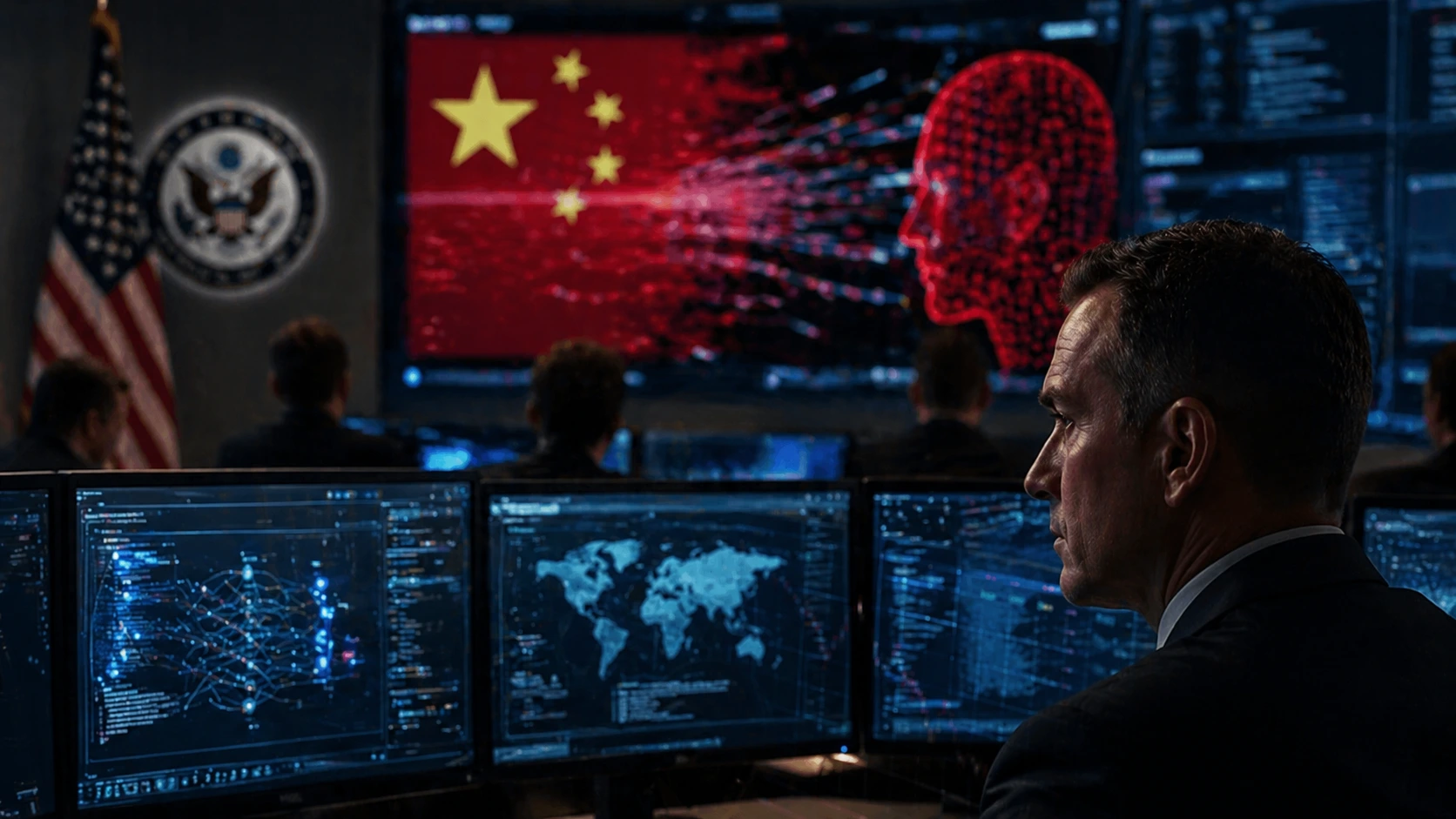
A new AI distillation warning from the United States highlights growing concerns about how advanced AI systems may be replicated. Officials believe some foreign firms could use distillation techniques to copy American models and gain a competitive edge.
US pushes global awareness on AI risks
US officials have instructed diplomats to raise the issue with international partners. The focus remains on protecting American innovation and limiting unauthorized use of advanced AI capabilities.
Distillation allows developers to train smaller models using outputs from more advanced systems. While the method supports efficiency and research, it can also be misused to recreate proprietary behavior.
Distillation creates both opportunity and risk
The process reduces development costs and speeds up deployment. Many companies rely on it to improve performance without building large systems from scratch.
However, concerns grow when firms apply distillation without authorization. This approach may replicate sensitive capabilities while bypassing safeguards built into original models.
As a result, officials view the practice as more than a technical shortcut. It raises questions about control, accountability, and long-term security.
Concerns center on Chinese AI companies
US officials have pointed to several Chinese AI firms in connection with these concerns. Reports suggest some companies may rely on indirect access methods to gather model outputs at scale.
Authorities believe these techniques allow developers to build competing systems without direct access to source code. This creates challenges for enforcement and intellectual property protection.
Chinese officials have rejected the claims, describing them as politically motivated.
Global AI competition continues to intensify
The AI distillation warning reflects broader geopolitical tension between the United States and China. Both countries continue to invest heavily in artificial intelligence as a strategic priority.
US authorities are considering stricter controls and closer cooperation with domestic AI companies. At the same time, experts note that separating legitimate research from misuse remains difficult.
This uncertainty complicates global regulation and enforcement efforts.
Conclusion
The AI distillation warning shows how technical methods can quickly become geopolitical issues. Distillation offers clear benefits, but it also introduces risks when used without oversight.
As competition increases, governments will likely focus more on protecting innovation while managing the spread of advanced AI capabilities.
0 responses to “AI distillation warning targets Chinese firms over copying”