


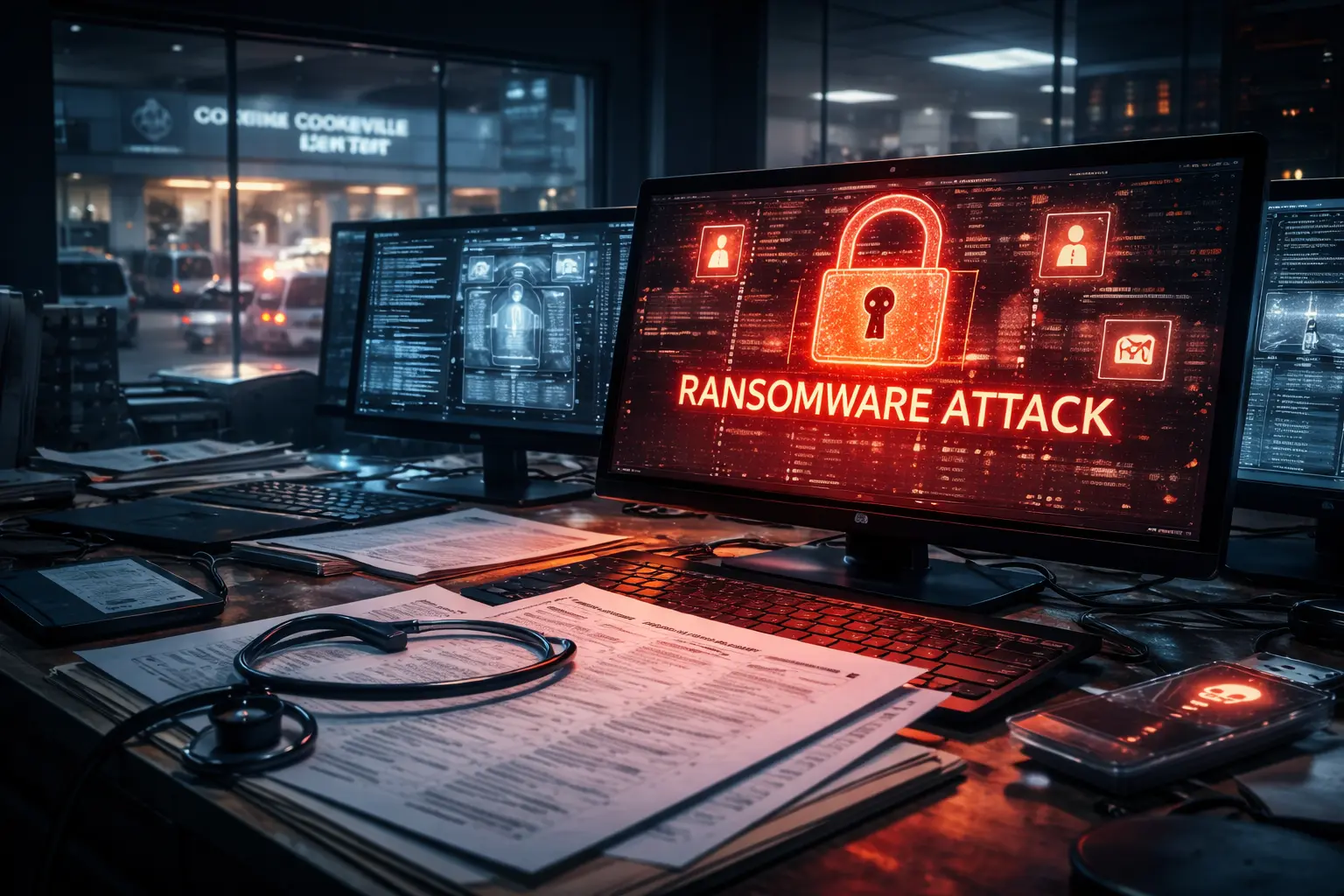
A Cookeville medical center ransomware incident has exposed sensitive data of more than 337,000 patients. The breach stems from a 2025 cyberattack and shows how healthcare organizations continue to deal with long-term consequences after initial intrusions.
Attack timeline reveals delayed notification
The incident began in July 2025, when attackers gained unauthorized access to internal systems over several days. During this time, they were able to view and extract sensitive files.
Although suspicious activity was detected earlier, affected individuals were notified months later. This delay reflects the complexity of investigating ransomware incidents and determining the full scope of exposure.
Sensitive data included personal and medical records
The Cookeville medical center ransomware breach involved highly sensitive information. The compromised data may include both personal and healthcare-related details.
Reported data includes:
- Names, addresses, and dates of birth
- Social Security numbers and identification details
- Financial account information
- Medical records and treatment data
- Health insurance information
This combination significantly increases the risk of identity theft, fraud, and targeted phishing attacks.
Ransomware group applied pressure
The Rhysida ransomware group claimed responsibility for the attack. The group published sample data online and demanded a ransom reportedly exceeding $1 million.
Leaked samples included documents tied to patients and internal operations. This tactic is commonly used to pressure organizations into paying.
It remains unclear if any payment was made or how widely the data has been distributed.
Operational impact remained limited
The attack disrupted parts of the hospital’s network, but core medical services continued. Healthcare providers often prioritize patient care, even during active cyber incidents.
This approach helps maintain operations but can complicate response efforts. Recovery and investigation may take longer as a result.
Delay increases risk for victims
The Cookeville medical center ransomware case highlights the risks tied to delayed breach notifications. Investigations require time, especially when large datasets are involved.
However, attackers may already exploit stolen data before victims are informed. This gap increases the chance of fraud and identity misuse.
Delayed awareness reduces the ability of individuals to respond quickly.
What affected individuals should do
People impacted by the Cookeville medical center ransomware incident should take immediate steps to protect themselves.
Recommended actions include:
- Monitor bank accounts and transactions closely
- Check credit reports for unusual activity
- Stay alert for phishing attempts
- Use identity protection services if available
Early action can reduce the impact of potential misuse.
Conclusion
The Cookeville medical center ransomware breach shows how cyberattacks in healthcare extend beyond the initial incident. Sensitive data exposure can create long-term risks for both organizations and patients.
This case reinforces a clear priority. Fast detection, quicker notification, and stronger data protection remain essential in reducing the impact of ransomware attacks.
0 responses to “Cookeville Medical Center Ransomware Exposes 337K Patients”