


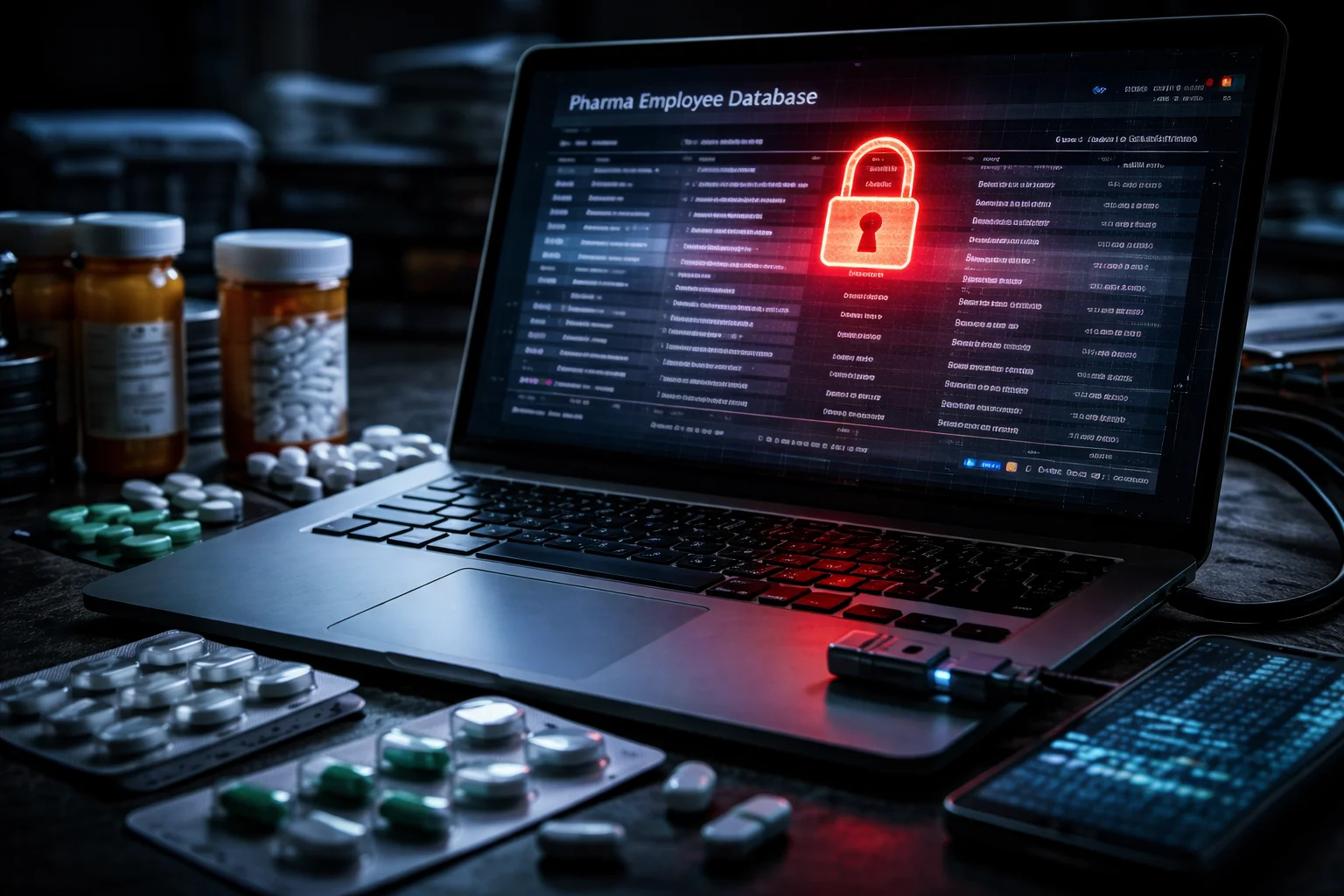
A recent InfoDesk breach has raised concerns across the pharmaceutical and financial sectors. A threat actor claims they accessed employee data from multiple global organizations. This case shows how third-party platforms can expose sensitive corporate information at scale.
Attackers claim access to employee data
A threat actor claims they breached InfoDesk, an enterprise intelligence provider. The attacker says they accessed employee directories from 18 organizations, including major pharma and biotech firms.
The breach reportedly occurred in February 2026. The attacker later listed the data for sale on a dark web forum. Security researchers reviewed a sample of the dataset and linked it to real companies.
These findings suggest that the breach may affect multiple global organizations.
Exposed data increases phishing risk
The InfoDesk breach appears to involve employee names and corporate email addresses. This type of data may seem limited, but attackers can still use it effectively.
Threat actors use verified employee details to craft targeted phishing emails. These messages often look legitimate and can trick employees into sharing credentials or installing malware.
Even small datasets can support high-impact attacks when attackers use them strategically.
Third-party platforms amplify risk
The InfoDesk breach highlights a common weakness in modern cybersecurity. Many companies rely on external platforms to manage data and intelligence.
When attackers compromise one provider, they can access data from multiple organizations. This creates a supply chain risk that extends beyond a single company.
Attackers increasingly target these centralized platforms because they offer broader access.
Scale of the breach remains unclear
The attacker claims they hold up to 1,000 records per company. Researchers have only reviewed a limited sample so far.
InfoDesk has not released an official statement at this stage. This makes it difficult to confirm the full scale of the incident.
However, the available data suggests a credible exposure risk.
Why employee data matters
Employee data plays a key role in cyberattacks. Attackers use it to understand company structure and identify valuable targets.
With access to names and emails, attackers can:
- Impersonate employees
- Launch spear-phishing campaigns
- Target high-level staff
- Move deeper into internal systems
This makes even basic data highly valuable.
Conclusion
The InfoDesk breach shows how third-party platforms can expose multiple organizations at once. Attackers do not need highly sensitive data to cause damage. Basic employee information can still enable targeted attacks.
Companies should review vendor security practices and limit unnecessary data sharing. Strong protection depends on securing both internal systems and external partners.
0 responses to “InfoDesk Breach Exposes Big Pharma Employee Data”