


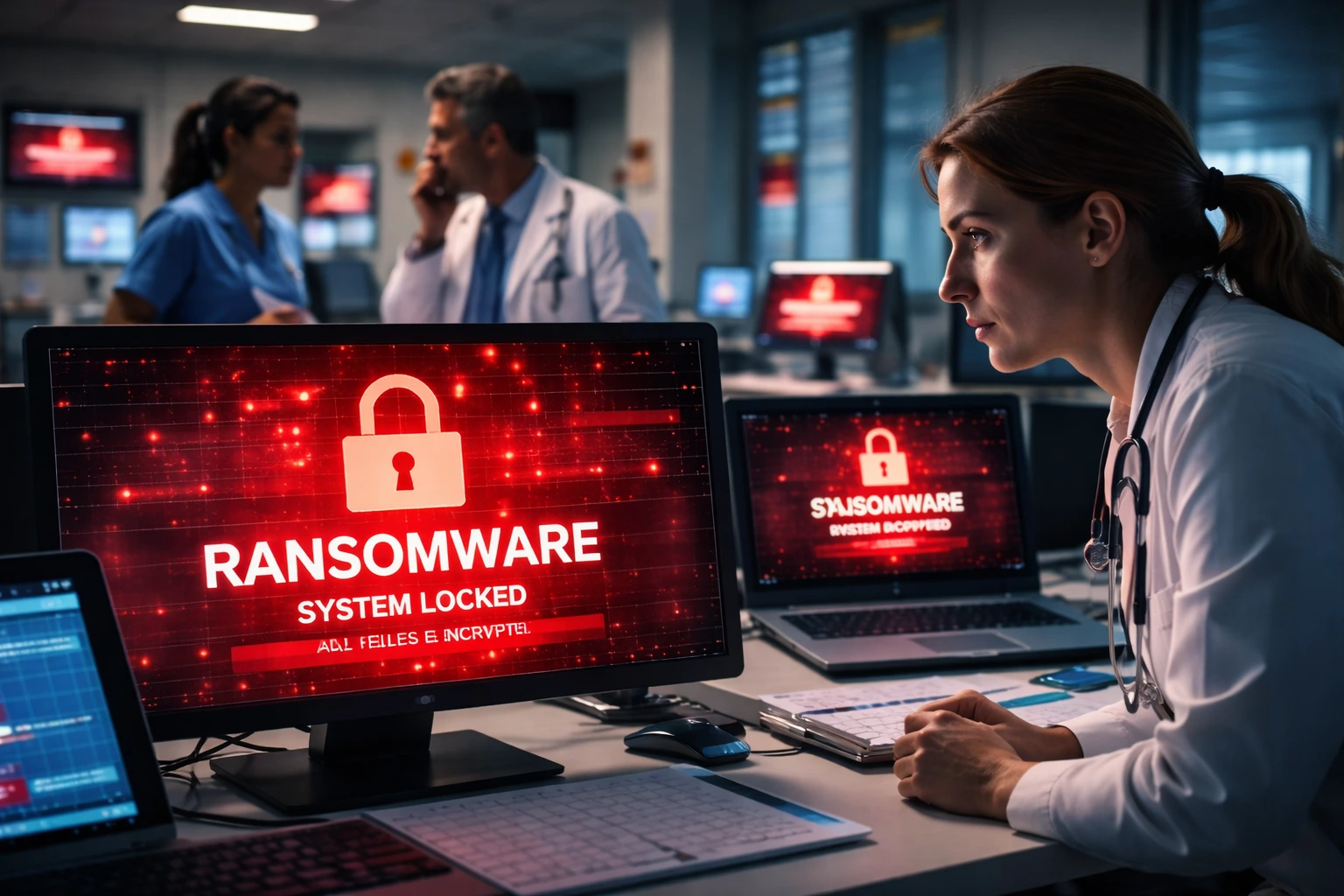
A hospital ransomware attack has disrupted healthcare services after a key software provider was targeted. As a result, several hospitals were forced to disconnect critical systems to contain the threat. This incident clearly shows how quickly cyberattacks can impact patient care.
Software provider becomes the weak link
The hospital ransomware attack is linked to a breach involving a provider of electronic patient record systems. These platforms are central to hospital operations, as they store and manage patient data.
Once the threat was identified, hospitals moved quickly to isolate affected systems. In doing so, they aimed to stop the attack from spreading across networks.
More importantly, the situation highlights the risks tied to shared infrastructure. When one provider is compromised, multiple organizations can be affected at the same time.
System shutdowns disrupt daily operations
Hospitals responded to the hospital ransomware attack by disconnecting patient software from their networks. While this step helps limit further damage, it also creates immediate operational challenges.
For example, medical teams may lose access to:
- Patient records
- Treatment histories
- Appointment systems
As a result, staff must rely on manual processes. This not only slows down workflows but also increases the risk of human error.
Patient care faces real impact
The hospital ransomware attack affects more than just systems. In practice, it directly impacts how care is delivered.
For instance, service disruptions can lead to:
- Delayed procedures
- Slower diagnosis and treatment
- Reduced efficiency in emergency care
In many cases, even short outages can place additional pressure on healthcare staff and available resources.
Healthcare remains a high-value target
The hospital ransomware attack reflects a wider trend in cybercrime. In general, healthcare organizations continue to face frequent attacks due to the critical nature of their services.
Attackers understand that hospitals cannot afford long downtime. Therefore, this urgency increases the likelihood of rapid responses and makes the sector more attractive to ransomware groups.
At the same time, complex systems and multiple vendors create more entry points for attackers. As a result, defending these environments becomes increasingly difficult.
Supply chain attacks expand the threat
This hospital ransomware attack also shows how threat actors are shifting tactics. Instead of targeting hospitals directly, they now focus on third-party providers.
By breaching a single vendor, attackers can reach multiple institutions at once. Consequently, this approach increases overall impact while reducing effort per target.
As healthcare systems become more interconnected, this risk will continue to grow.
Conclusion
The hospital ransomware attack highlights how vulnerable healthcare infrastructure can be. On one hand, disconnecting systems helps contain the threat. On the other hand, it exposes how dependent hospitals are on digital tools.
Ultimately, improving vendor security and strengthening response strategies will be critical as these attacks continue to evolve.
0 responses to “Hospital ransomware attack forces system shutdowns”