


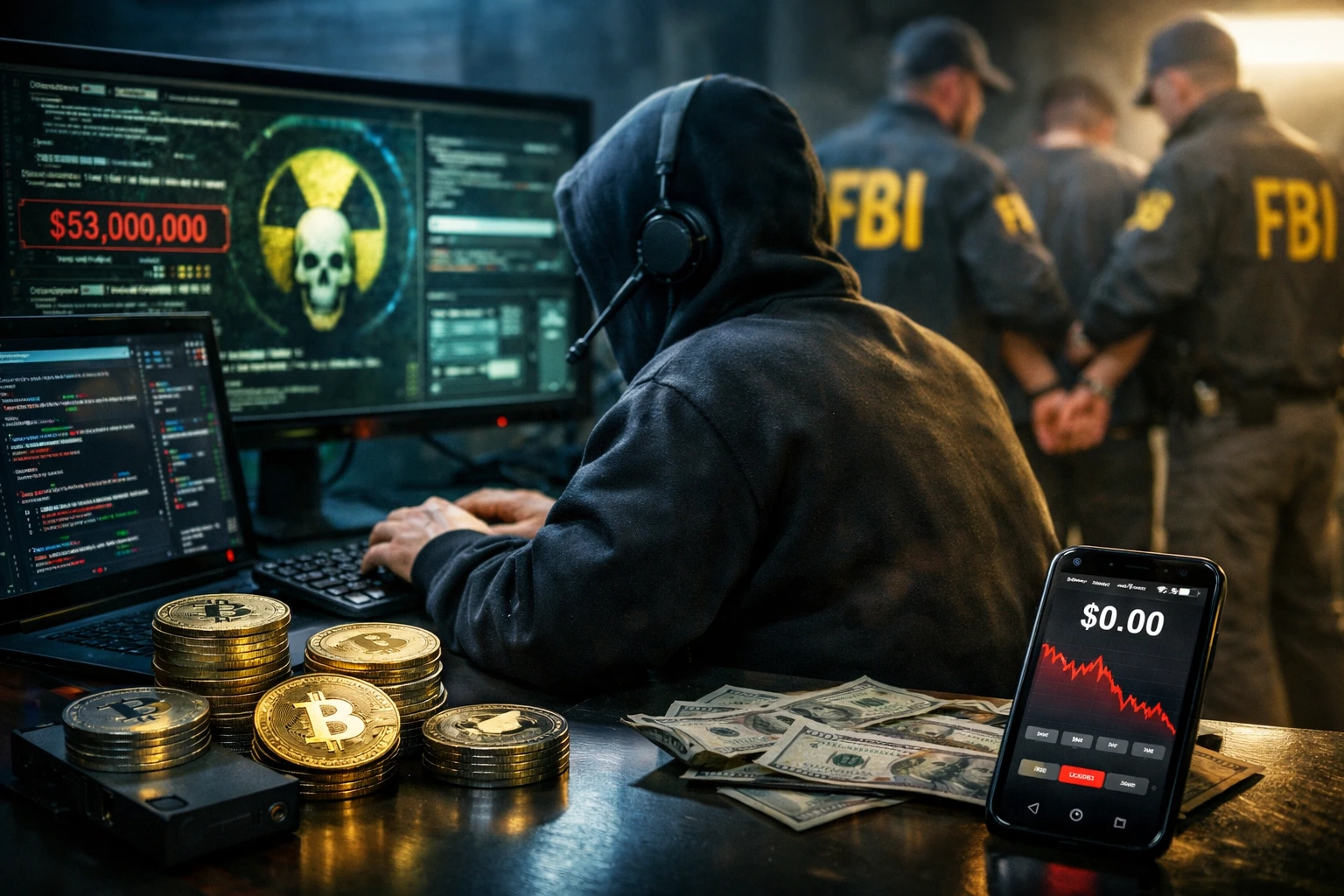
The Uranium crypto hack has led to criminal charges against a suspect accused of stealing over $53 million from a decentralized exchange. U.S. authorities say the attacker exploited vulnerabilities in the platform and later laundered the stolen funds.
The case shows how DeFi exploits can lead to serious legal consequences.
Suspect faces federal charges
U.S. authorities charged a Maryland man for his role in the Uranium Finance hack. Prosecutors say he carried out multiple attacks in 2021 that drained millions from the platform.
The charges include computer fraud and money laundering. If convicted, the suspect could face decades in prison.
Investigators link the attacks directly to the collapse of the Uranium Finance exchange.
Exploits drained liquidity pools
The attacker targeted vulnerabilities in Uranium Finance’s smart contracts. He exploited a flaw in the platform’s code to manipulate balances and withdraw funds.
In one attack, he drained liquidity pools by abusing incorrect calculations in the system. A later exploit allowed him to steal more than $50 million in a single incident.
These attacks show how small coding errors can lead to massive losses in DeFi platforms.
Laundering attempts followed the theft
After stealing the funds, the suspect moved the assets through multiple wallets to hide their origin. He used mixing services to obscure transaction trails and complicate tracking.
Authorities also traced part of the stolen funds to purchases of high-value assets, including collectible items.
Law enforcement later recovered a significant portion of the stolen cryptocurrency, though not all funds have been traced.
Case challenges DeFi assumptions
The case raises questions about how authorities treat exploits in decentralized systems. Some argue that interacting with smart contracts falls within system rules.
However, prosecutors treat these actions as fraud when they involve intentional manipulation and theft.
This case could influence how courts handle similar incidents in the future.
DeFi security risks remain high
The Uranium crypto hack highlights ongoing risks in decentralized finance. Platforms rely on complex smart contracts that can contain hidden vulnerabilities.
Attackers continue to search for weaknesses and exploit them quickly. Even minor flaws can lead to large-scale financial damage.
Developers now face increasing pressure to strengthen audits and improve security practices.
Conclusion
The Uranium crypto hack shows how a technical exploit can result in major criminal charges. Authorities have taken action, but the incident highlights persistent risks in DeFi systems.
As enforcement increases, attackers face growing legal consequences for exploiting vulnerabilities.
0 responses to “Uranium crypto hack suspect charged over $53M theft”