


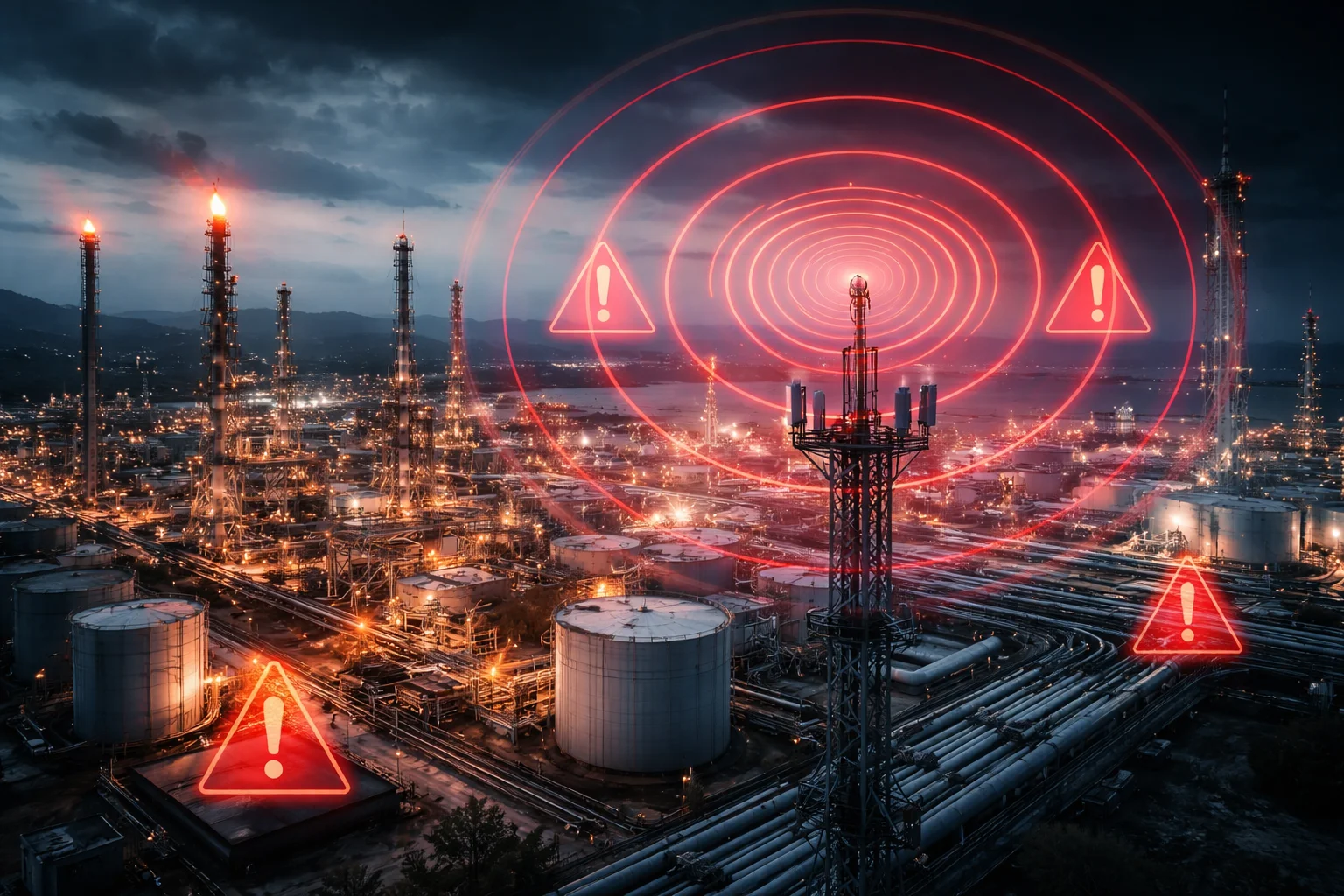
The GPS spoofing threat is raising concerns across the oil and gas sector. Attackers are no longer focused only on data or network access. They are now targeting timing signals that critical systems rely on to operate correctly.
This shift introduces a less visible but potentially more disruptive form of attack.
GPS Disruptions Signal a Larger Problem
Recent activity has shown increased GPS interference affecting large areas, particularly in regions with ongoing geopolitical tension. While these disruptions often appear as navigation issues, the underlying risk is more serious.
Industrial systems rely on GPS for precise timing, not just positioning. When that timing becomes unreliable, core operations can be affected without immediate detection.
Timing Manipulation Impacts Operations
GPS spoofing works by transmitting false signals that appear legitimate to receivers. These signals can alter time synchronization across systems, leading to incorrect data processing.
In oil and gas environments, timing controls how systems communicate and respond. Even small deviations can create inconsistencies between components, which may lead to operational errors.
Because these systems are interconnected, the impact can spread quickly.
Oil and Gas Systems Depend on Synchronization
Operational technology in energy environments depends on accurate timing across multiple processes. Systems managing pipelines, monitoring equipment, and distribution networks rely on synchronized data.
If timing shifts, automated systems may respond incorrectly or out of sequence. This can affect efficiency, reliability, and in some cases, safety.
The risk becomes greater as more systems rely on shared timing sources.
Threat Linked to Advanced Attack Capabilities
The GPS spoofing threat has been associated with more advanced threat activity rather than opportunistic attacks. Unlike basic intrusion attempts, this method does not require direct access to internal systems.
Instead, attackers can influence external signals that systems trust by default. This makes detection more difficult and reduces the need for traditional breach techniques.
Critical Infrastructure Exposure Continues to Grow
The incident highlights a broader issue across critical infrastructure. Many systems were not designed to verify the integrity of GPS signals.
As reliance on external timing sources increases, so does the potential for manipulation. This creates a gap that attackers can exploit without triggering standard security controls.
Other sectors that depend on synchronized systems may face similar risks.
Conclusion
The GPS spoofing threat shows how attacks are shifting toward indirect methods that target system behavior rather than access. By manipulating timing signals, attackers can disrupt operations without entering the network.
Stronger validation of external signals and improved system resilience will be essential to reduce the risk of similar incidents in the future.
0 responses to “GPS spoofing threat puts oil and gas systems at risk”