


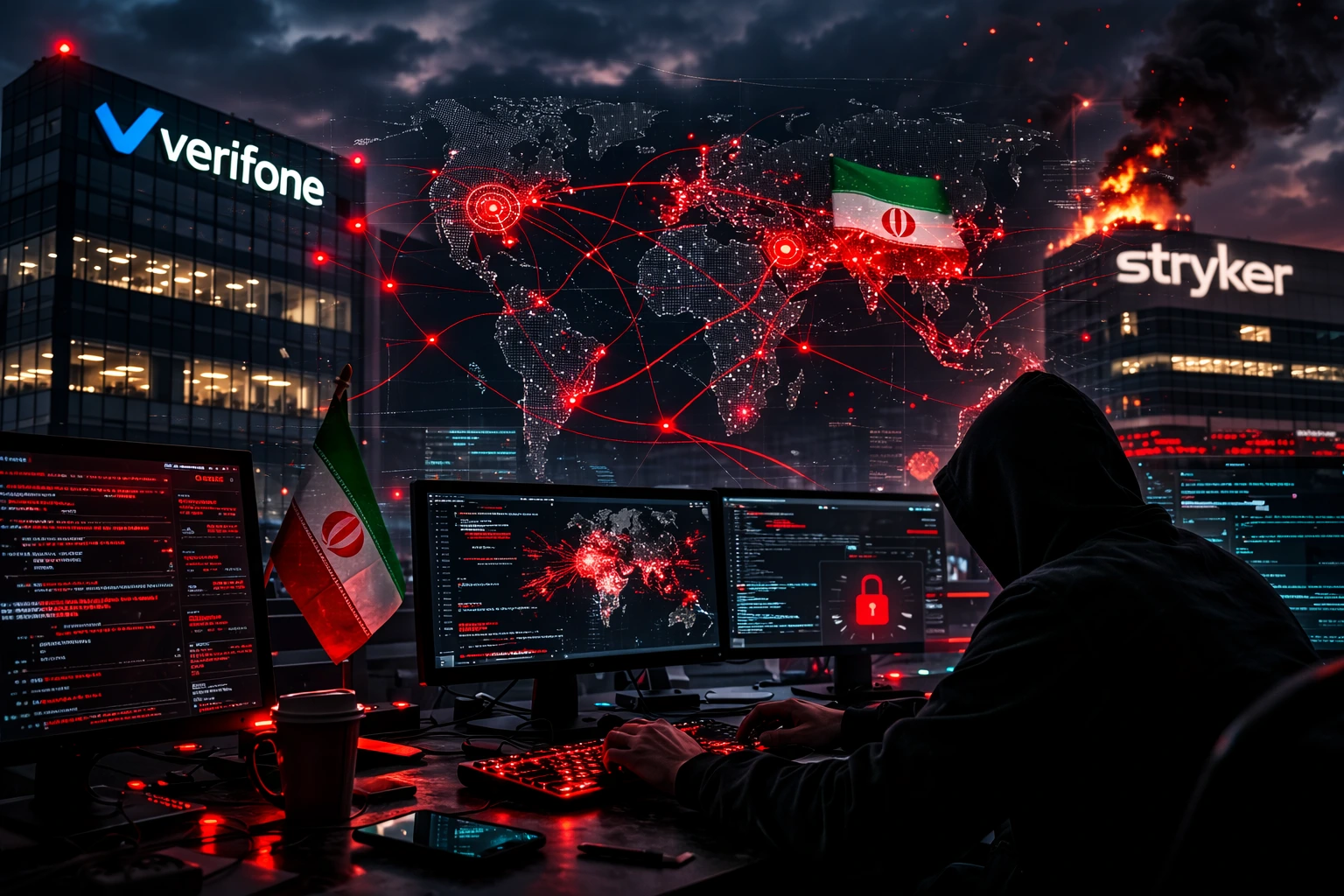
The Handala hackers have claimed responsibility for cyberattacks targeting two multinational companies, Verifone and Stryker. The group is widely believed to have ties to Iran-aligned cyber networks.
The attackers posted statements on their online channels describing the operations. They framed the attacks as retaliation linked to geopolitical tensions in the Middle East.
Security analysts say the claims highlight a growing trend. Cyber operations now increasingly mirror global political conflicts.
The incidents have raised concerns that cyber retaliation campaigns could expand further in the coming months.
Verifone Named as One of the Targets
The Handala hackers said their first operation targeted Verifone. The company provides payment technology used by retailers and businesses around the world.
Verifone systems process transactions in stores, service locations, and digital payment environments. Because of this global footprint, attacks against the company can raise concerns about broader disruption.
The group claimed it infiltrated company systems and threatened to leak internal data. It also said the operation was meant to pressure companies with ties to Israel or its allies.
Public information suggests that Verifone services continued operating normally. The company has not confirmed the extent of any breach.
Stryker Cyberattack Adds to Growing Alarm
The same group also claimed responsibility for a cyberattack against Stryker. The company is a major global manufacturer of medical technology and hospital equipment.
The incident reportedly disrupted parts of Stryker’s internal infrastructure. Some employees temporarily lost access to internal systems.
Staff members were reportedly instructed to disconnect devices while security teams responded to the incident. These containment measures often occur during major cyber investigations.
The attackers claimed they wiped systems and stole large volumes of data. Investigators have not independently verified those claims.
Handala Group Linked to Iran-Aligned Cyber Activity
Security researchers believe the Handala hackers operate within a broader network of pro-Iran cyber groups. These collectives often carry out politically motivated cyber operations.
Their campaigns usually mix ideological messaging with disruptive digital attacks. Website defacements, data leak threats, and service disruptions are common tactics.
Some analysts believe such groups act as informal proxies for state interests. This approach allows governments to influence cyber operations while maintaining plausible deniability.
Cyber Retaliation Risks Continue to Grow
Security experts warn that the latest claims may signal broader cyber retaliation campaigns. Conflicts between nations increasingly extend into the digital domain.
Companies with global operations may become targets during geopolitical tensions. Organizations linked to sensitive regions face particularly high risks.
Even unverified attack claims can create disruption. Companies must investigate potential breaches and secure their infrastructure.
Cyber conflict is becoming an extension of international competition. Businesses must prepare for threats that originate far beyond traditional criminal activity.
Conclusion
The Handala hackers campaign targeting Verifone and Stryker shows how cyber operations now intersect with global politics. Hacktivist groups increasingly claim attacks to promote geopolitical messages.
Investigators are still assessing the true impact of the incidents. However, the claims alone illustrate how multinational companies can become targets during periods of political tension.
As geopolitical conflicts evolve, cyber operations will likely remain a key tool. Organizations must strengthen defenses to withstand politically motivated attacks.
0 responses to “Iran-Linked Handala Hackers Claim Attacks on Verifone and Stryker”