


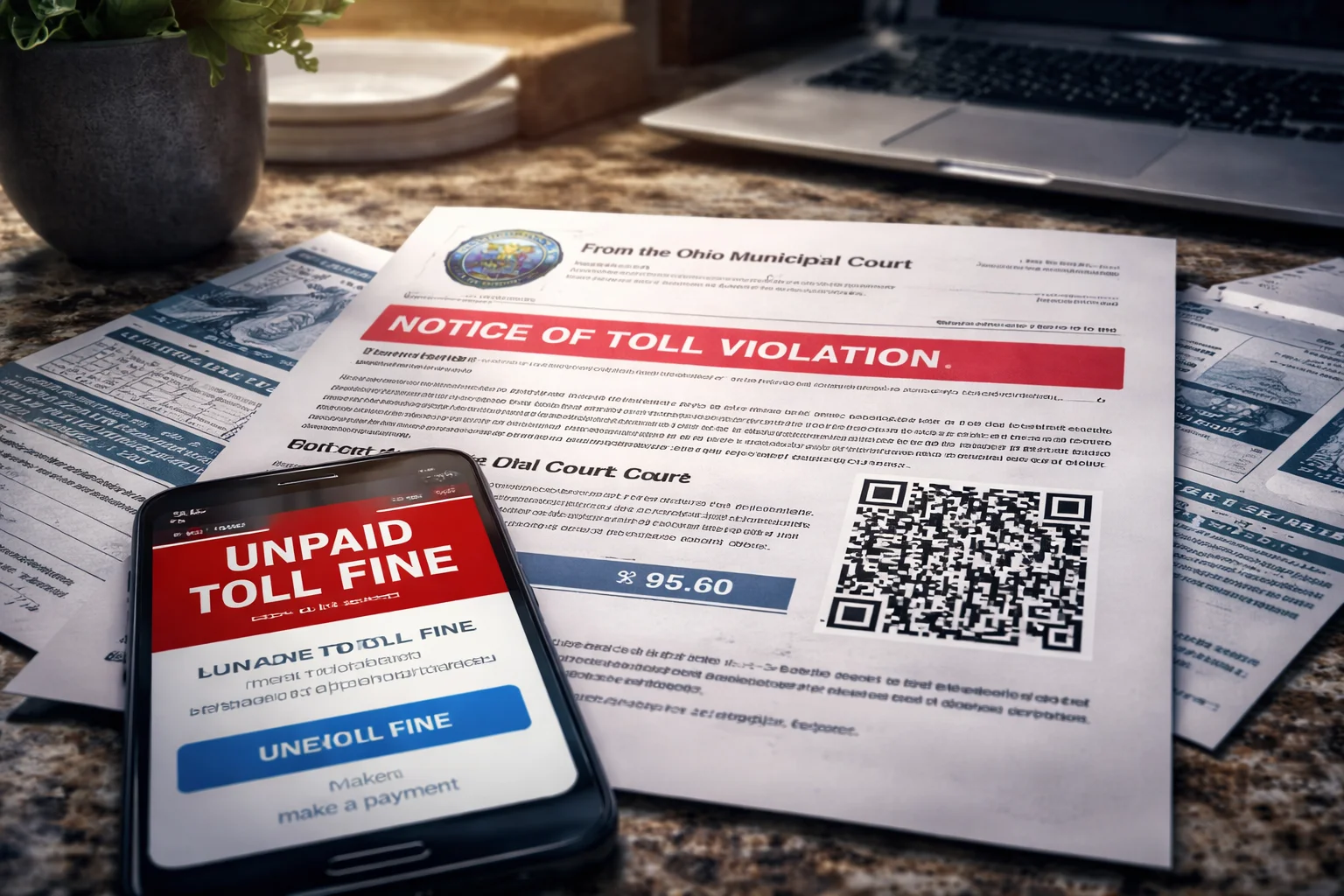
Authorities in Ohio are warning residents about a new fraud campaign targeting drivers. The scheme involves messages claiming the recipient owes money for unpaid parking or toll violations. Officials say these notices are fraudulent and designed to pressure victims into making quick payments.
The toll fine scam uses messages that appear official and urgent. Criminals often threaten legal consequences if the supposed fine is not paid immediately. These tactics attempt to create panic and push victims into acting before verifying the claim.
State officials say similar scams continue to spread across the United States. Fraud groups frequently impersonate government agencies to make their messages appear legitimate.
Fake Court Notices Used in the Scam
The scam begins with messages that look like official court notices. Victims receive warnings stating they failed to pay a toll or parking fine. The notice claims that immediate payment is required to avoid legal action.
Many of the messages attempt to appear authentic by including court names and official language. Some even display images resembling state seals or government logos.
However, investigators found several inconsistencies in the fraudulent notices. In one case, the message referenced a judge who does not serve in the listed court system. Officials also identified incorrect court details and other errors that revealed the documents were fake.
Authorities emphasize that legitimate courts follow strict procedures when issuing fines or legal notices. Unexpected messages demanding immediate payment should always raise suspicion.
QR Codes Lead Victims to Fraudulent Websites
Many versions of the toll fine scam include a QR code within the message. Recipients are instructed to scan the code to pay the supposed violation.
After scanning the code, victims are redirected to websites that appear to process payments. These sites often mimic official government pages and request payment details.
Investigators warn that these websites are not connected to any real court system. Instead, the domains appear to be operated by unknown entities located outside the United States.
Scanning the QR code may expose victims to additional risks. Some malicious websites attempt to collect personal data or financial information.
Scammers Use Urgency to Pressure Victims
Criminals rely heavily on urgency to increase the success of these scams. Messages often claim that failure to pay will result in penalties, legal action, or court appearances.
This tactic aims to create fear and push victims into making quick decisions. People may act immediately without verifying whether the notice is legitimate.
Officials say scammers frequently target drivers because toll systems and parking fines are common. The message therefore appears believable to many recipients.
Authorities warn that any unexpected demand for payment should be verified through official channels before taking action.
Officials Urge Residents to Verify Suspicious Messages
Ohio officials are encouraging residents to remain cautious when receiving unexpected messages about fines or legal notices. Several warning signs may indicate a fraudulent message.
- Unexpected notices demanding immediate payment
- Messages containing QR codes or suspicious links
- Incorrect court information or unfamiliar websites
- Requests for payment through unofficial channels
Authorities recommend contacting the court or agency directly using official contact information. This step allows residents to confirm whether the notice is legitimate.
Officials also remind residents that courts usually communicate about fines through official mail rather than text messages.
Conclusion
The toll fine scam targeting Ohio residents demonstrates how criminals exploit trust in government institutions. By impersonating courts and legal authorities, scammers attempt to pressure victims into sending money.
The use of QR codes and convincing document formats makes these messages appear legitimate. However, careful verification can reveal the warning signs of fraud.
Officials urge residents to remain cautious and verify unexpected payment requests. Awareness and careful verification remain the most effective defenses against this growing form of online fraud.
0 responses to “Toll Fine Scam Targets Ohio Drivers With Fake Court Notices”