


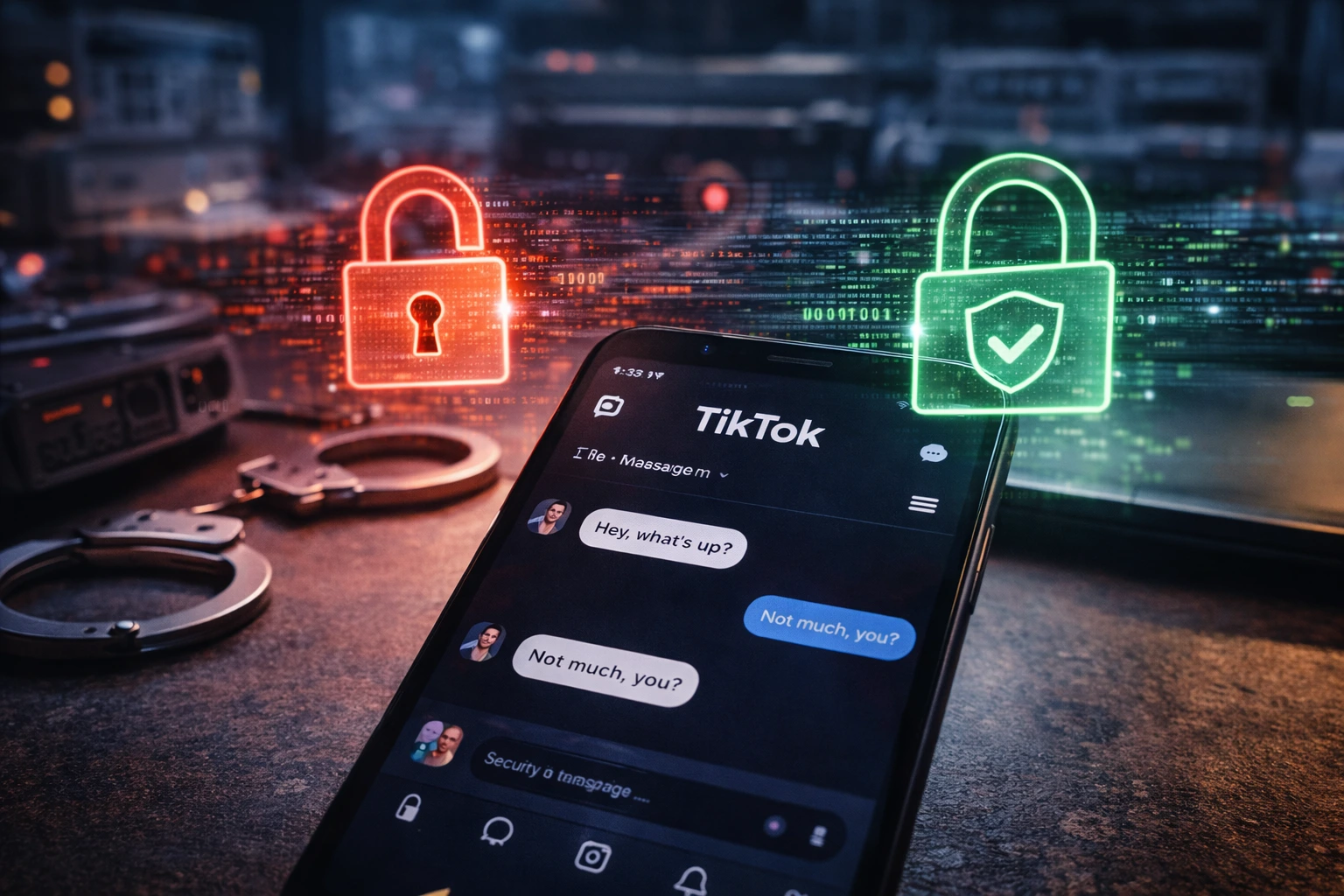
Debate around TikTok end-to-end encryption is growing after the platform confirmed that it does not plan to introduce encryption for direct messages. The decision separates TikTok from many other large messaging platforms that already protect private conversations with strong encryption.
End-to-end encryption ensures that only the sender and the recipient can read the contents of a message. When this technology is used, even the platform hosting the communication cannot access the conversation.
Privacy advocates say the absence of this protection raises concerns about how user messages are stored, processed, and potentially accessed.
TikTok Prioritizes Moderation Capabilities
TikTok says its approach to messaging focuses heavily on safety and moderation. According to the company, maintaining visibility into message content helps its safety teams detect harmful behavior and respond to abuse reports.
The platform has argued that encryption could limit its ability to investigate violations such as harassment, scams, or other forms of online abuse. By keeping messages accessible to internal moderation systems, TikTok can review reports and support law enforcement requests when necessary.
This approach reflects a broader strategy that prioritizes active moderation over fully private messaging infrastructure.
Privacy Experts Raise Concerns
The absence of TikTok end-to-end encryption has drawn criticism from privacy researchers and cybersecurity experts. Without encryption, messages are processed through platform servers in a readable format.
This design means that the company technically has the ability to access message content when required. While this capability supports moderation and investigation efforts, critics argue that it also introduces potential privacy risks.
Security experts often recommend encryption as a core safeguard for protecting digital communications from unauthorized access.
Competing Platforms Use Encryption
Many major messaging services have already adopted end-to-end encryption as a standard security feature. Platforms such as WhatsApp, Signal, and other messaging applications use encryption to ensure that private conversations remain accessible only to participants.
Supporters of encryption argue that it protects users from surveillance, data breaches, and unauthorized monitoring. By preventing service providers from reading messages, encryption reduces the risk that sensitive conversations could be exposed.
TikTok’s messaging system currently operates under a different model that allows moderation systems to review message content when necessary.
Privacy and Safety Remain in Tension
The debate surrounding TikTok end-to-end encryption reflects a broader challenge across the technology industry. Companies must balance user privacy with the need to prevent abuse and illegal activity on their platforms.
Encryption strengthens privacy protections but limits the ability of platforms to monitor conversations for harmful behavior. On the other hand, keeping messages accessible to moderation systems may weaken privacy safeguards.
Technology companies, regulators, and security experts continue to debate where the appropriate balance should exist.
Conclusion
The ongoing discussion about TikTok end-to-end encryption highlights the difficult balance between protecting user privacy and maintaining effective platform moderation. By choosing not to encrypt direct messages, TikTok preserves the ability to monitor conversations and investigate potential violations.
However, critics warn that this decision leaves user messages without the same level of privacy protection offered by many competing messaging platforms. As digital privacy concerns continue to grow, pressure on social media companies to strengthen communication security is likely to increase.
0 responses to “TikTok End-to-End Encryption Debate Grows Over Message Privacy”