


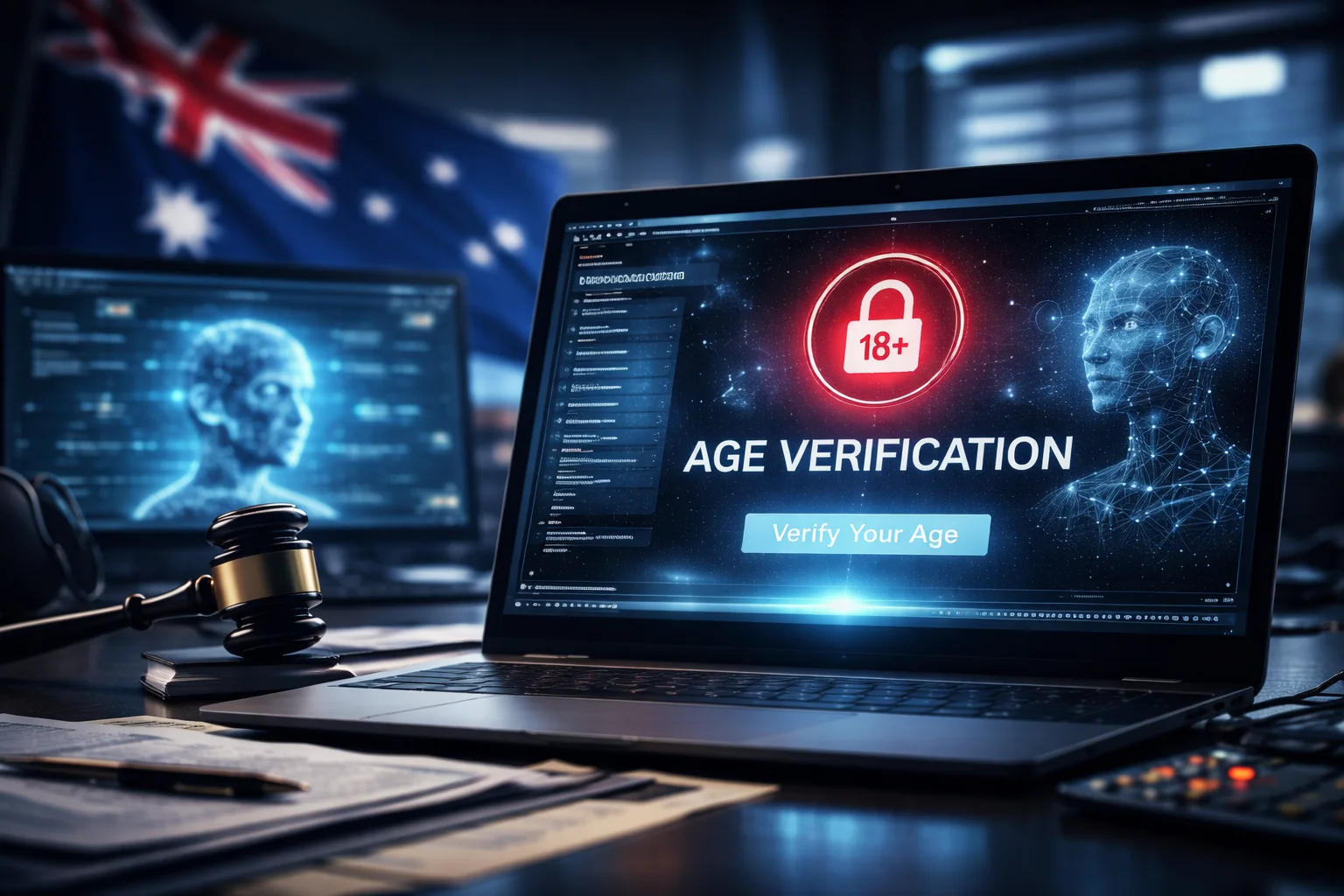
Australia AI age verification warning has put artificial intelligence platforms on notice. The country’s eSafety regulator says it may block access to AI services that fail to verify users’ ages properly. The move follows a review that found many popular AI tools lack clear safeguards to prevent minors from accessing harmful content.
Authorities argue that rapid AI adoption has outpaced child protection measures. Without effective age controls, young users can encounter explicit material, violent themes, or self-harm content generated by AI systems. Regulators now demand stronger accountability from technology providers operating in Australia.
Why Australia Is Taking a Hardline Approach
The eSafety Commissioner reviewed dozens of widely used AI platforms. The findings showed that a significant portion had not publicly outlined robust age assurance mechanisms. Some platforms relied only on self-declared birthdates. Others provided no meaningful verification at all.
Australia has already introduced strict social media age policies. Extending similar expectations to AI platforms reflects a broader regulatory strategy. Officials believe AI chatbots and generative tools pose comparable risks when they lack proper content controls.
The regulator also signaled it may hold app stores and search engines accountable. These digital gatekeepers provide distribution channels for AI services. If platforms ignore age requirements, authorities may pressure intermediaries to restrict access.
How Platforms Are Responding
A limited number of AI providers have introduced age gates or broader content filtering systems. Some companies implemented verification steps designed to confirm users meet minimum age thresholds. Others enhanced moderation rules to limit high-risk outputs for younger audiences.
However, several platforms have not clarified their compliance plans. A few providers reportedly consider restricting Australian access rather than adapting systems to meet local requirements. That approach would reduce regulatory exposure but shrink their market reach.
The uneven response highlights tension between innovation and compliance. Age verification can introduce technical complexity and privacy concerns. At the same time, failure to act could lead to enforcement action or blocking orders.
Broader Regulatory Implications
Australia’s position represents one of the strongest global stances on AI age controls. Policymakers aim to set clear expectations before AI adoption deepens further. If enforcement succeeds, other jurisdictions may adopt similar measures.
Technology companies now face strategic decisions. They must balance user privacy, regulatory obligations, and operational costs. Stronger age verification systems may become a baseline requirement for operating in tightly regulated markets.
The debate also raises questions about feasibility. Accurate age verification without collecting excessive personal data remains technically challenging. Regulators and developers will need to coordinate practical solutions.
Conclusion
Australia AI age verification warning signals a decisive shift in AI regulation. Authorities are prepared to block platforms that fail to protect minors effectively. As enforcement deadlines approach, AI providers must strengthen safeguards or risk losing access to the Australian market. The outcome could shape how age verification standards evolve across the global AI industry.
0 responses to “Australia AI Age Verification Warning Signals Possible Platform Blocks”