


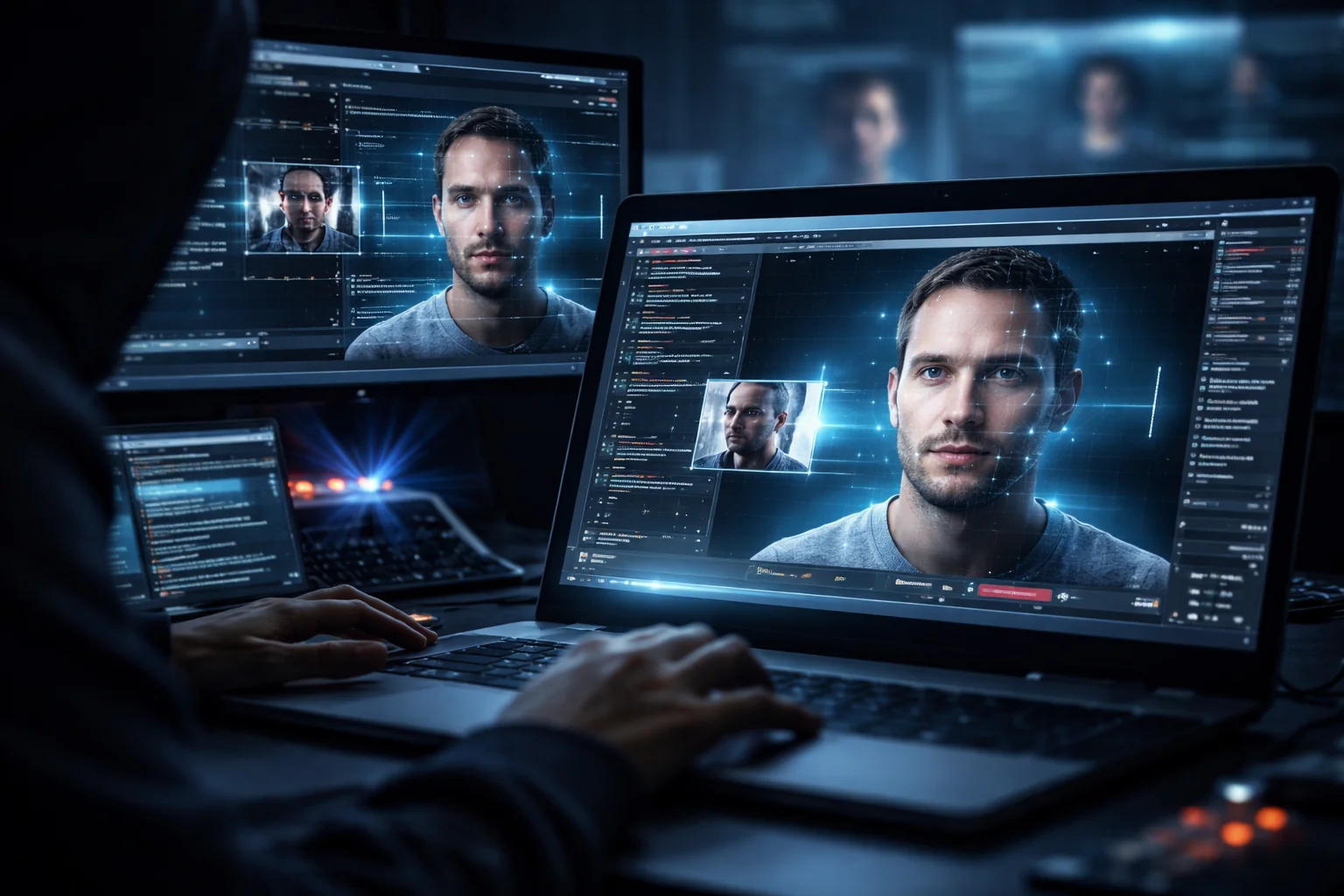
Deepfake identity attacks are reshaping the threat landscape for digital verification systems. Companies depend on biometric checks to confirm users during onboarding, account recovery, and remote access. Criminals now exploit artificial intelligence to manipulate those checks with alarming precision. These attacks combine synthetic media with technical injection methods that bypass camera-based safeguards.
Verification systems once focused on detecting static image fraud. That model no longer protects against AI-driven impersonation. Attackers can now generate convincing facial movements and voice patterns in real time. They can also manipulate verification streams before systems analyze them.
How Deepfake Identity Attacks Work
Deepfakes rely on machine learning models trained on publicly available photos and videos. These systems generate realistic facial animations or voice simulations that closely mimic real individuals. Fraudsters use this content during biometric verification sessions.
Injection attacks take a more technical approach. Instead of presenting manipulated media through a camera, attackers feed pre-recorded or AI-generated streams directly into the verification software. The platform believes it receives a live camera feed. In reality, it processes fabricated input controlled by the attacker.
This tactic bypasses traditional liveness detection. Many systems focus only on visible cues such as blinking or head movement. They rarely validate whether the input stream originates from a legitimate device source.
Why Traditional Verification Fails
Most digital identity tools rely on facial comparison and simple interaction prompts. Users may blink, smile, or turn their heads to prove presence. Modern deepfake tools can simulate these actions convincingly. Injection techniques remove the need for real-time interaction entirely.
Attackers also automate large-scale attempts. They test stolen identity data against platforms with weak monitoring controls. When one attempt succeeds, criminals gain access to financial accounts or internal systems. The breach can remain undetected for extended periods.
Visual realism is no longer the primary problem. Stream integrity and device authenticity now determine whether a session is trustworthy. If the system cannot verify the source of the input, biometric checks lose reliability.
Business and Security Implications
Deepfake identity attacks increase exposure to account takeover, synthetic identity fraud, and insider infiltration. Financial institutions face direct monetary losses and regulatory scrutiny. Technology platforms risk reputational damage and operational disruption. Remote hiring workflows also become attractive targets for impersonation.
Individuals suffer long-term consequences. Fraudsters can open loans, move funds, or conduct scams under stolen identities. Victims may struggle to prove impersonation occurred. The reputational and psychological impact can be severe.
Regulators are paying closer attention to digital verification standards. Organizations that fail to strengthen defenses may face compliance risks alongside security failures.
Strengthening Identity Verification Defenses
Companies must move beyond basic biometric checks. Device integrity validation can detect manipulated input streams before analysis begins. Behavioral analytics can identify automation patterns and suspicious session activity. Continuous risk scoring improves detection across the entire verification process.
Security teams should monitor for coordinated synthetic identity campaigns. Human review teams need clear escalation procedures for high-risk cases. Regular testing of verification systems helps identify weaknesses before attackers exploit them.
A layered approach improves resilience. Verification should function as an ongoing security process rather than a single checkpoint.
Conclusion
Deepfake identity attacks are eroding trust in digital verification systems. Injection techniques allow attackers to bypass biometric safeguards with increasing sophistication. Organizations must strengthen stream validation, monitor behavioral signals, and adopt layered defenses. Without these improvements, identity verification will remain vulnerable to advanced AI-driven fraud.
0 responses to “Deepfake Identity Attacks Undermine Digital Verification Systems”