


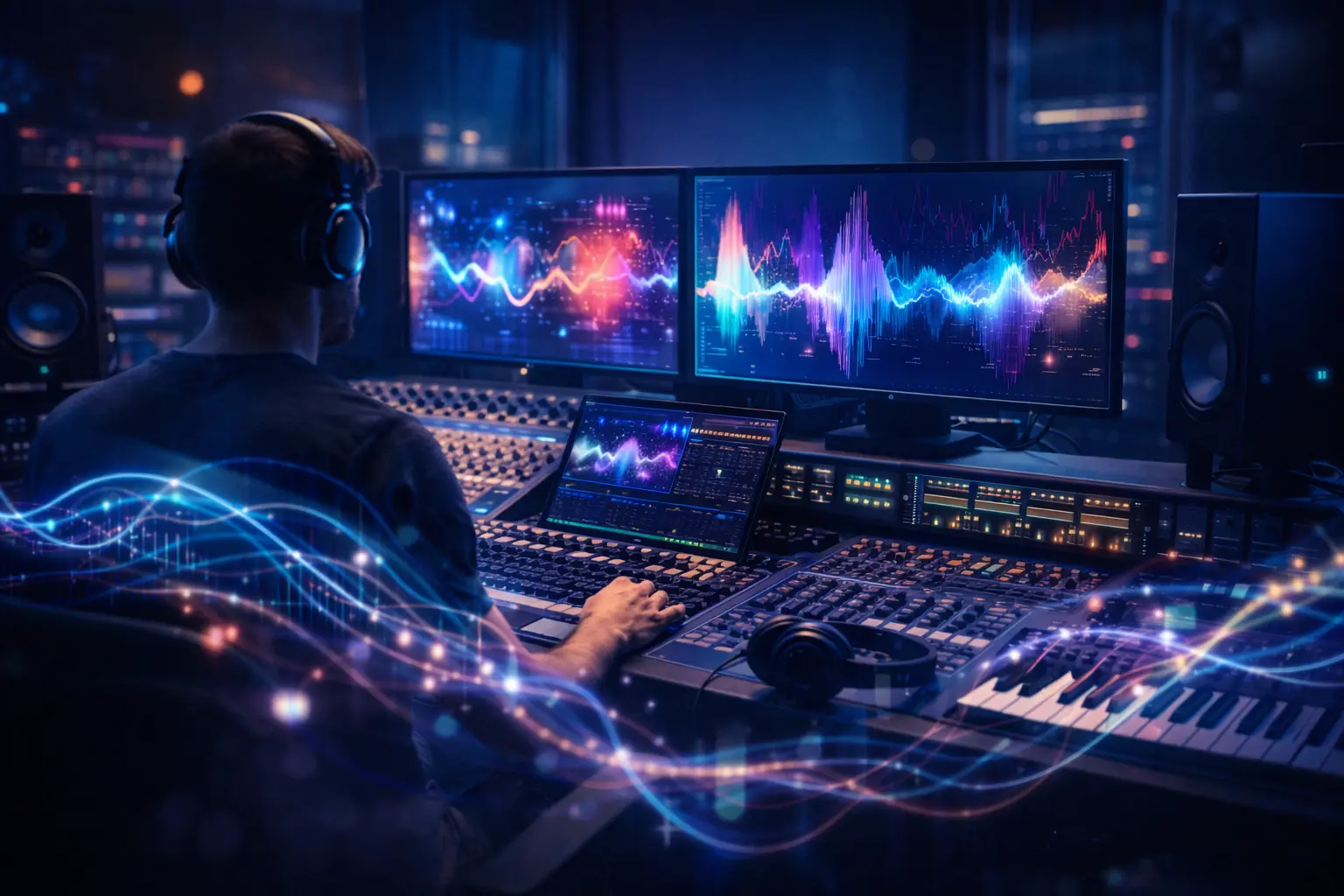
Google has officially integrated Google ProducerAI into its Google Labs division, marking a major expansion of its generative music ambitions. The AI music platform, previously backed by artists including The Chainsmokers and Lecrae, now operates under Google’s broader artificial intelligence ecosystem. The move signals a stronger push into AI-powered creative tools for musicians, producers, and content creators.
ProducerAI positions itself as more than a simple text-to-music generator. Instead, it aims to replicate the collaborative experience of working with a real producer. Users can generate, refine, and remix tracks through conversational prompts and iterative adjustments.
What ProducerAI Offers
ProducerAI allows creators to compose full songs, adjust instrumentation, refine lyrics, and experiment with different production styles. The system uses advanced generative models capable of producing high-quality music with layered arrangements. Instead of short audio snippets, the platform focuses on structured tracks suitable for professional workflows.
Users can request changes in mood, tempo, genre, or vocal style through natural language instructions. The AI responds with updated compositions, enabling a back-and-forth creative process. This approach mirrors real studio collaboration, where producers adjust tracks based on feedback.
The platform also integrates visual components. AI-generated album artwork and short-form video content can accompany musical output, creating a complete multimedia package.
Integration With Google’s AI Ecosystem
Google ProducerAI operates within Google Labs and leverages several internal AI systems. Music generation models provide audio synthesis, while conversational AI supports interactive refinement. Google also embeds watermarking technology into generated content to promote transparency around AI-created media.
This integration strengthens Google’s position in generative AI across multiple creative domains. The company continues expanding into music, video, image generation, and conversational assistance. ProducerAI represents a focused effort to target professional and semi-professional creators rather than casual experimentation alone.
The service remains available globally, offering both free and paid access tiers. That accessibility broadens its potential user base across independent artists, influencers, and established musicians.
Industry Implications
The arrival of Google ProducerAI under a major technology brand adds momentum to the AI music space. Established artists participating in its development lend credibility to the platform’s creative potential. Their involvement suggests AI tools can function as collaborative instruments rather than replacements for human talent.
At the same time, the expansion of generative music raises questions around copyright, ownership, and ethical use. Watermarking and transparency features aim to address some of these concerns, but industry debate continues.
AI-generated music tools are evolving rapidly. As major technology companies invest heavily in creative AI, competition in the music production space will intensify.
Conclusion
Google ProducerAI represents a strategic step in Google’s broader AI expansion into creative industries. By combining conversational workflows, advanced music synthesis, and multimedia generation, the platform positions itself as a collaborative digital producer. As adoption grows, AI-assisted music creation may become a standard component of modern production pipelines.
0 responses to “Google ProducerAI brings AI music to mainstream artists”