


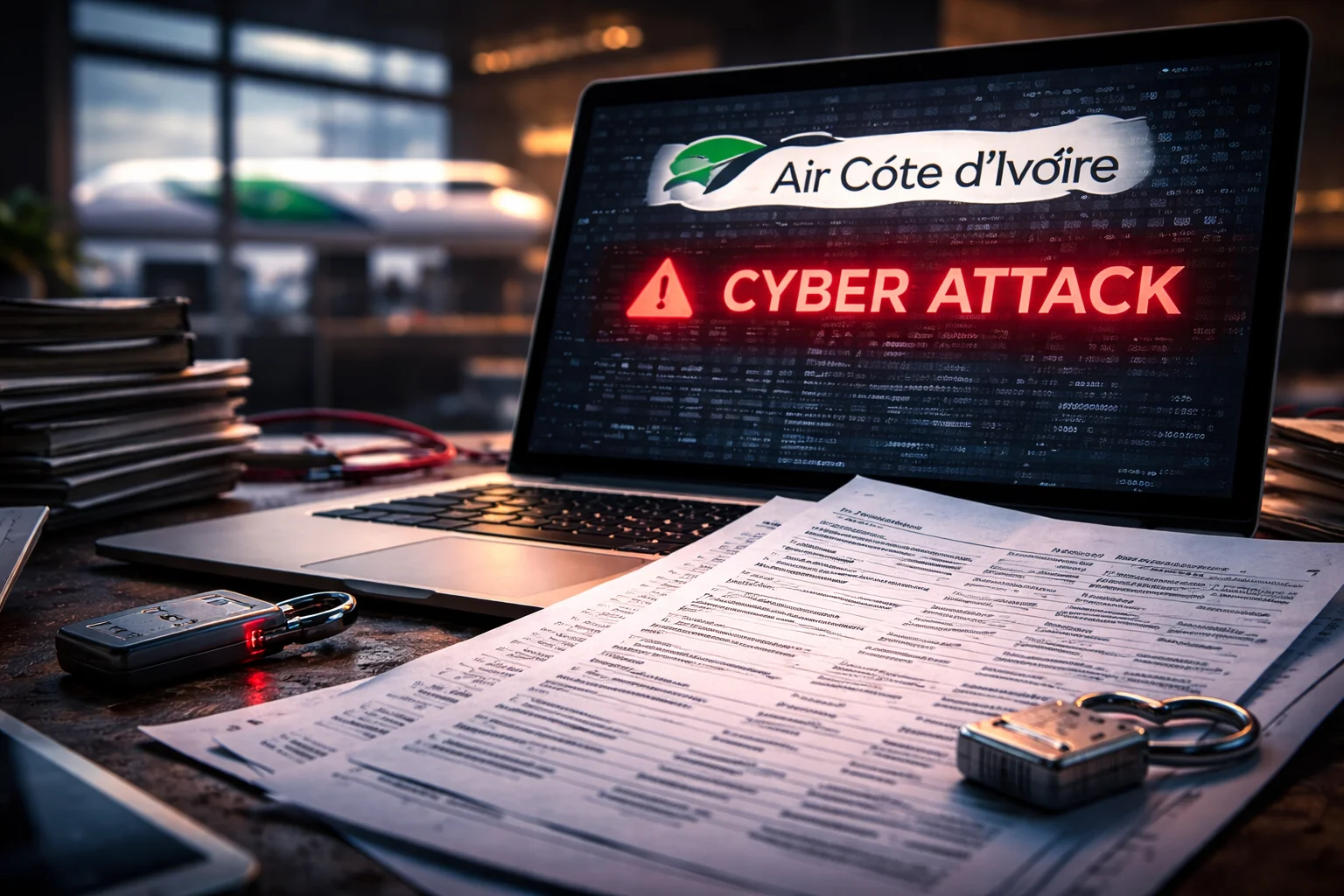
Air Côte d’Ivoire has confirmed that it suffered a cyberattack that resulted in unauthorized access to its systems and the theft of data. The Air Côte d’Ivoire cyberattack was detected after the company identified unusual activity within its IT infrastructure. While core flight operations continued without disruption, the breach exposed sensitive internal information and triggered a formal investigation.
The incident highlights the growing pressure ransomware and data-extortion groups place on airlines and transport infrastructure worldwide.
How the Incident Was Discovered
The airline reported that its technical teams identified irregular system behavior and immediately activated internal incident response procedures. Security measures were implemented to contain the threat and secure affected environments.
Despite the intrusion, the company stated that flight schedules and operational services remained functional. Business continuity protocols allowed the airline to isolate impacted systems while maintaining essential services.
Investigators are now working to determine how attackers gained access and how long they remained inside the network before detection.
Stolen Data and Ransomware Claims
Initial reports indicate that attackers exfiltrated company data during the breach. Although the airline has not publicly disclosed the full scope of the compromised information, threat actors allegedly claimed responsibility and asserted that a large volume of files was taken.
Cybercriminal groups increasingly use a double-extortion model. They steal data before threatening public disclosure if ransom demands are not met. Even when operations continue, the exposure of sensitive data creates reputational and legal risks.
At this stage, authorities are still assessing the scale and sensitivity of the stolen information.
Response and Ongoing Investigation
Air Côte d’Ivoire confirmed that it notified relevant national cybersecurity authorities and is cooperating with investigators. Internal and external specialists are analyzing system logs, identifying entry points, and reviewing defensive controls.
The airline stated that strengthening its security posture remains a priority. Post-incident reviews often include infrastructure hardening, enhanced monitoring, and stricter access management controls.
Cyberattacks targeting aviation organizations can have broader implications beyond immediate data theft. Airlines manage passenger information, employee records, financial data, and operational systems, all of which represent valuable targets for threat actors.
Potential Impact on Customers and Partners
Although operational services were not interrupted, data exposure can still create downstream risks. Stolen airline data may include personal details, booking information, or business documentation. Such data can support phishing campaigns, identity fraud, or targeted scams.
Passengers and partners should remain alert to suspicious communications referencing travel records or account activity. Updating passwords, enabling multi-factor authentication, and monitoring financial accounts are prudent defensive steps following any breach.
Conclusion
The Air Côte d’Ivoire cyberattack demonstrates how modern ransomware operations increasingly focus on data theft rather than service disruption alone. Even when flights continue as scheduled, the compromise of sensitive information can carry lasting consequences.
As investigations continue, the incident serves as a reminder that aviation organizations remain high-value targets for cybercriminal groups. Strong incident response planning and proactive security controls remain critical in limiting both operational and reputational damage.
0 responses to “Air Côte d’Ivoire Cyberattack Leads to Data Theft”