


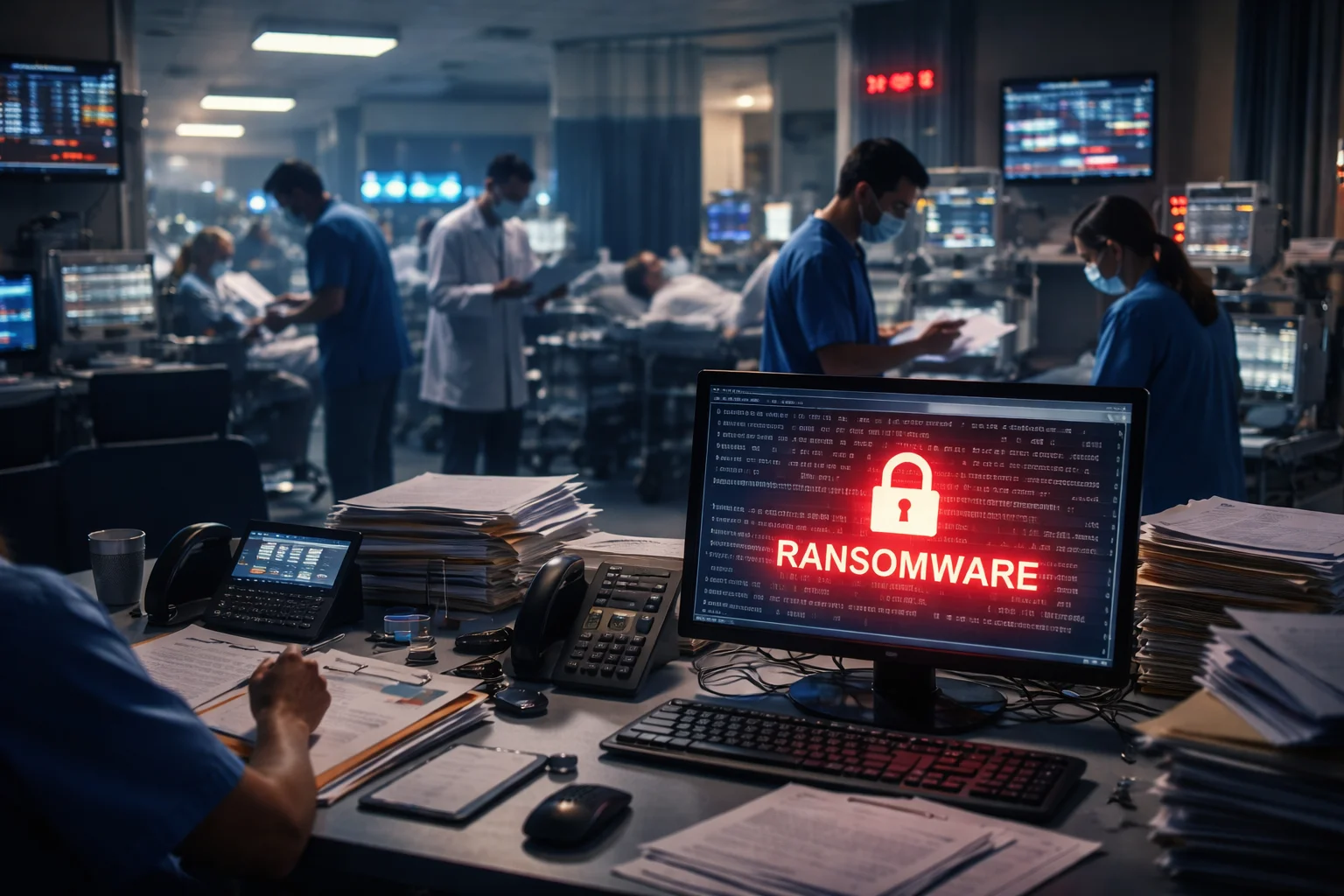
Healthcare systems rely on constant access to digital records. When those systems fail, patient care immediately slows down. The UMMC ransomware attack showed how quickly a cyber incident can turn into a public health disruption.
The University of Mississippi Medical Center operates the state’s largest hospital network. After attackers compromised internal systems, staff lost access to core tools and moved to emergency procedures. Appointments stopped, communications broke down, and treatment workflows changed overnight.
The incident highlights a growing reality. Hospitals now face operational risk, not only data loss, during cyberattacks.
What happened
The attack forced multiple medical systems offline across the network. Electronic medical records became unavailable, and staff switched to paper documentation to continue treating patients.
Several facilities experienced immediate disruption:
- Seven hospitals affected
- Numerous outpatient clinics closed
- Imaging services paused
- Surgeries postponed
- Internal communication systems unreliable
Emergency departments remained open, but routine care required rescheduling. Without digital scheduling and charting tools, staff handled only urgent cases.
Investigators began forensic analysis while technicians isolated affected systems.
Impact on healthcare operations
The medical center provides specialized services unavailable elsewhere in the region. Because of this central role, one cyberattack reduced healthcare access across a large area.
The outage created cascading problems:
- Delayed treatments
- Extended patient wait times
- Reduced diagnostic capacity
- Administrative backlog
Even after systems return, hospitals must manually re-enter records created during downtime. That process can take weeks and increases error risk.
Why hospitals are targeted
The UMMC ransomware attack reflects a broader trend. Criminal groups increasingly target healthcare because downtime creates pressure to restore services quickly.
Hospitals face unique challenges:
- Continuous operations cannot stop
- Legacy systems remain common
- Large vendor networks expand exposure
- Patient safety limits shutdown duration
Attackers understand that operational urgency increases negotiation leverage.
Recovery challenges
Restoring hospital infrastructure involves more than turning servers back on. Every connected device must be verified before reconnection.
Recovery includes:
- Rebuilding compromised systems
- Resetting credentials
- Validating patient records
- Restoring integrations with partners
- Monitoring for reinfection
Full administrative recovery often lasts months after technical restoration.
What the incident shows
Modern ransomware attacks focus on operational disruption rather than only stealing files. The goal is to halt services until organizations prioritize restoration above all else.
Healthcare providers must prepare for offline workflows and rapid isolation procedures. Prevention alone no longer guarantees resilience.
Conclusion
The UMMC ransomware attack disrupted medical care across an entire regional network. Staff continued treatment, but only through manual emergency processes.
Cybersecurity now directly affects patient safety. Hospitals that build strong downtime operations will recover faster. Those relying only on digital availability will face longer service interruptions when incidents occur.
0 responses to “UMMC ransomware attack disrupts Mississippi hospital network”