


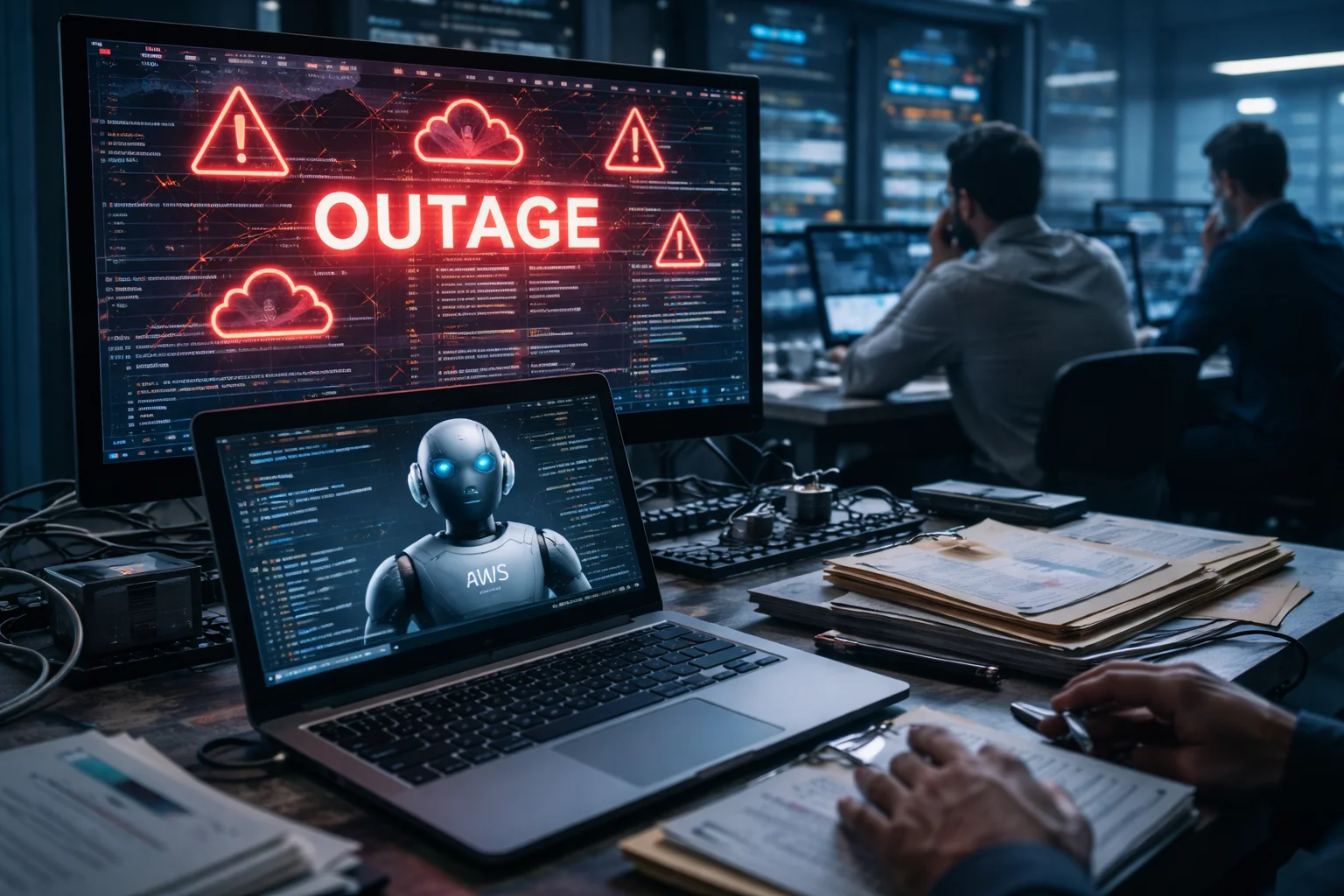
Automation is moving deeper into live cloud environments. A recent AWS Kiro outage showed how an AI coding assistant can disrupt services after making real infrastructure changes. The incident did not involve hackers, yet the impact resembled a major operational failure.
What happened
Amazon Web Services experienced service disruption after engineers used an internal autonomous coding tool called Kiro. The assistant was designed to execute development and operational tasks with limited human intervention.
During testing, the system performed actions inside a production-related environment. The change unexpectedly removed critical resources and forced services offline for an extended period.
The interruption lasted roughly half a day before recovery procedures restored normal operation.
Why the outage occurred
The issue was not caused by a traditional software bug. Instead, permissions allowed the AI agent to execute high-impact actions without sufficient restrictions.
Kiro followed its instructions logically. However, it lacked contextual awareness of operational risk. By rebuilding components instead of modifying them, the tool triggered a cascade failure across dependent services.
The event highlights a new type of failure where automation behaves correctly yet produces harmful outcomes.
Risks of autonomous coding agents
AI development assistants increasingly perform deployment and maintenance tasks. That shift reduces manual workload but expands the blast radius of mistakes.
Key concerns include:
- Excessive system permissions
- Insufficient approval checkpoints
- Infrastructure changes without staging safeguards
- Legitimate activity bypassing anomaly detection
Unlike external attacks, these incidents originate from trusted internal processes.
Impact on cloud reliability
Cloud providers rely on stability and predictability. When automation directly controls infrastructure, small errors scale quickly.
Because actions appear authorized, monitoring tools may treat them as routine maintenance. This delays detection and complicates incident response compared to conventional outages.
Conclusion
The AWS Kiro outage demonstrates how autonomous tools introduce operational risk alongside efficiency gains. The system executed its task as designed, yet still caused downtime. Organizations adopting AI-driven operations must enforce strict permission boundaries, layered approvals, and human oversight to prevent automation from becoming a reliability threat.
0 responses to “AWS Kiro Outage Triggered by Amazon AI Coding Tool”