


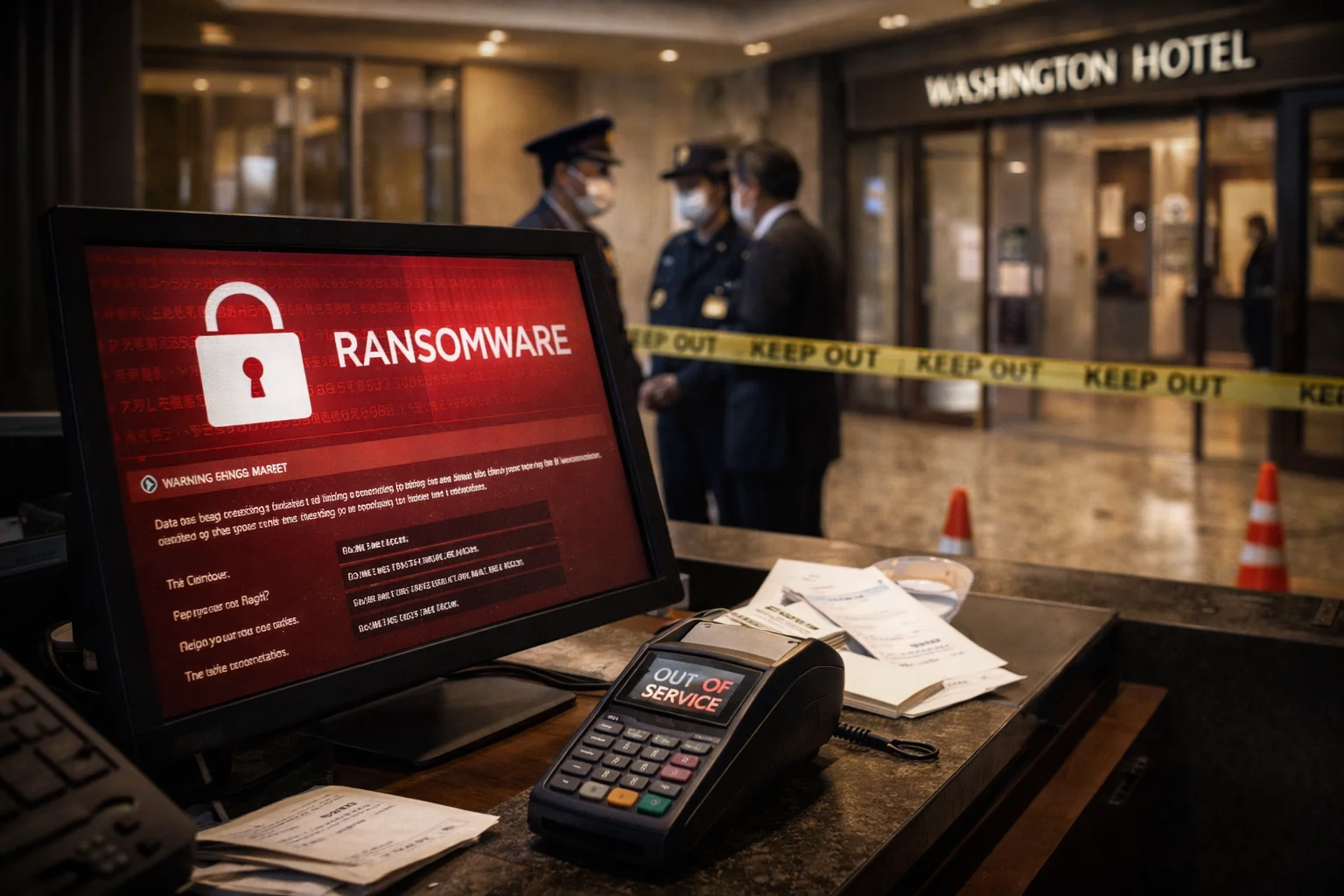
Hotels manage reservations, payments, and identity documents every day, which makes them valuable ransomware targets. The Washington Hotel ransomware incident in Japan highlights how attackers often aim at internal operations even when guest data is stored separately.
The company confirmed unauthorized access to internal systems and immediately began containment procedures.
Timeline of the intrusion
The hotel operator detected suspicious activity and discovered attackers inside its network. Administrators disconnected affected servers from external connections to stop further spread while launching an investigation with law enforcement and security specialists.
The response focused on isolating compromised systems first, then restoring operations gradually. This approach limited the impact but still caused service disruption.
What data was affected
The attackers accessed internal business information stored on the compromised servers. The company stated that reservation and payment records are handled on different infrastructure managed separately.
Initial checks found no evidence that customer personal data had been accessed. However, the investigation continues as specialists review logs and system activity in detail.
Separating guest databases from operational systems appears to have reduced potential exposure.
Operational impact
Containment measures temporarily affected some services at certain locations. Payment terminals stopped working while networks were isolated and verified.
Despite the interruption, hotels remained open and continued operating manually where necessary. The company prioritized preventing further intrusion over maintaining full digital functionality.
No ransomware group has publicly claimed responsibility so far.
Broader security context
The Washington Hotel ransomware case reflects a broader trend of attacks against service providers. Hospitality businesses combine financial transactions with constant network availability, creating pressure to restore systems quickly.
Attackers often rely on operational urgency, expecting organizations to prioritize continuity over prolonged downtime. Even when sensitive data stays protected, disruption alone can create financial losses and reputational damage.
Conclusion
The Washington Hotel ransomware incident shows how segmentation can limit exposure during a breach. Internal systems were compromised, but separate guest data storage appears to have prevented a larger privacy impact.
The event still caused operational disruption and required emergency response actions. For hospitality operators, protecting customer information is only one part of security. Maintaining resilient infrastructure and clear containment procedures remains equally important when attacks occur.
0 responses to “Washington Hotel ransomware disrupts operations in Japan”