


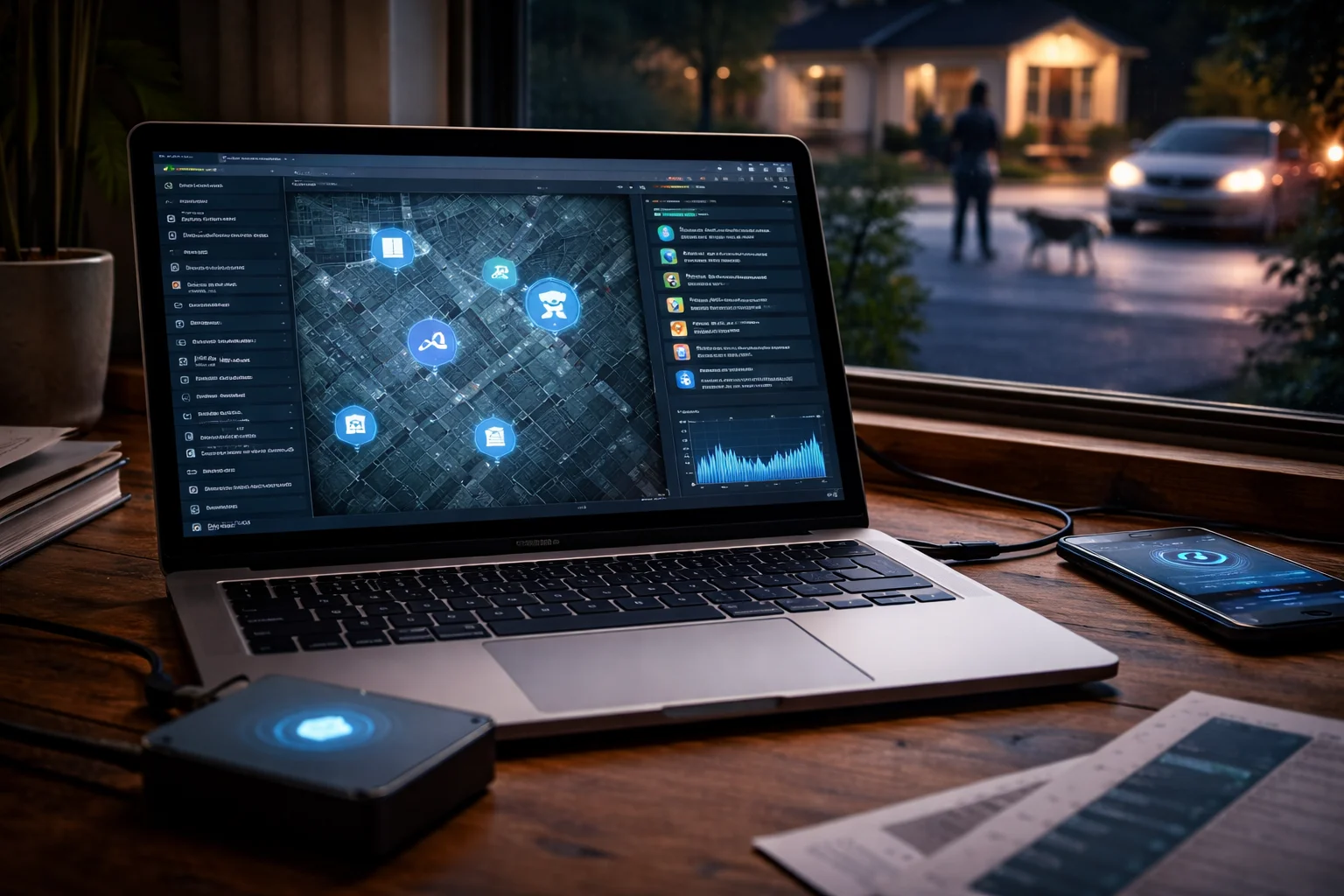
Most people assume privacy risks begin after a hack. The Bluehood Bluetooth tracker shows the opposite. Everyday devices already broadcast enough information to reveal routines, presence, and behavior without anyone accessing the device itself.
The project was released as a research demonstration, yet it highlights how ordinary wireless activity can quietly become surveillance.
How the tracking works
Bluehood continuously scans for nearby Bluetooth signals using common hardware. It does not exploit vulnerabilities or bypass protections. The system simply listens to signals devices regularly emit for pairing and connectivity.
Phones, headphones, watches, cars, and smart home gadgets all send short identifiers. The tool records when a device appears, how long it stays, and when it leaves. Over time, these repeated observations form a timeline of activity.
Because detection happens automatically, monitoring can run day and night without interaction.
What patterns reveal
The Bluehood Bluetooth tracker turns signal presence into behavioral insight. Individual broadcasts seem harmless, but repeated detection creates recognizable patterns.
Observers can infer:
- When someone leaves for work
- When they return home
- Regular walking schedules
- Visits from specific people
- Periods when a home is empty
Vehicles and wearable devices strengthen accuracy because they follow consistent daily movement.
Why privacy is affected
No files are stolen and no accounts are accessed. The exposure comes entirely from metadata. Even with modern address randomization, certain patterns still allow consistent recognition over time.
The result is behavioral tracking without intrusion. Someone does not need passwords or malware to learn habits. Continuous observation alone produces a reliable profile of daily life.
This challenges the common idea that encryption alone guarantees privacy.
Possible misuse
Although designed for awareness, the same method could support stalking or burglary planning. A person monitoring an area could determine safe times to approach a property based on absence patterns.
Because the activity looks like normal wireless communication, detection is difficult. The monitoring device blends into the environment while collecting long-term movement data.
The risk grows as more connected devices enter homes.
Conclusion
The Bluehood Bluetooth tracker demonstrates that privacy loss does not always come from breaking into systems. Constant wireless broadcasting already reveals behavior patterns to anyone willing to observe.
Security discussions often focus on protecting data stored inside devices. This case shows equal attention should be given to signals devices share automatically. Even secure systems can unintentionally expose daily routines through simple presence detection.
0 responses to “Bluehood Bluetooth tracker reveals daily habits”