


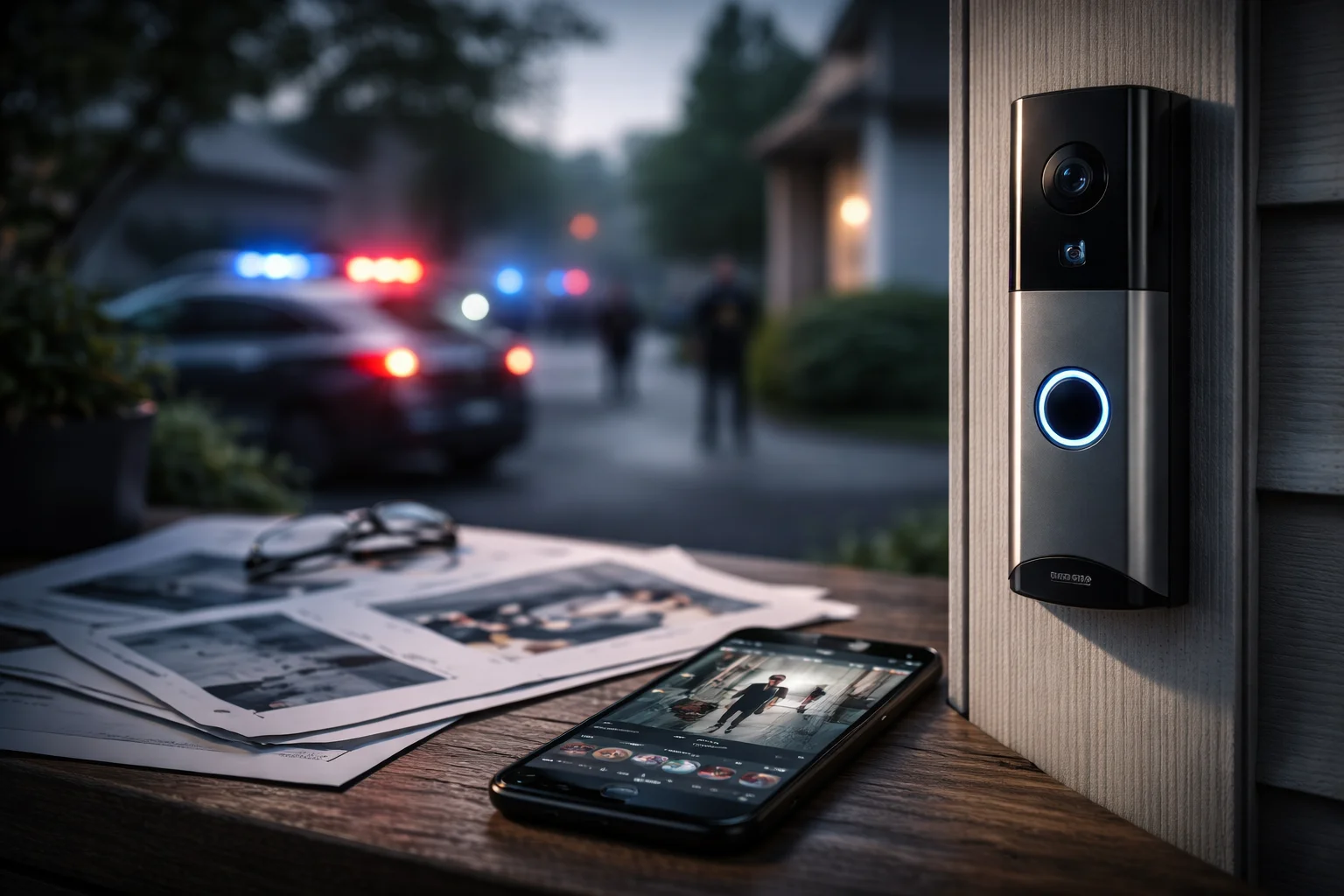
Public trust in smart home security cameras is starting to weaken. The doorbell surveillance backlash intensified after authorities retrieved video from an inactive device and a major manufacturer withdrew from a large monitoring partnership.
These incidents raised new concerns about how long footage actually exists and who can access it.
Footage recovered from inactive device
Investigators accessed video evidence from a Google Nest doorbell connected to a criminal investigation. The camera was no longer actively used, and the owner believed recordings were no longer stored.
However, data remained available in backend storage systems. Security specialists explain that cloud services may temporarily retain files during processing or security checks. Even if a user deletes content or stops using the device, remnants can still exist for a period of time.
For many consumers, this contradicted expectations that disabling a camera removes all recordings immediately.
Controversial monitoring partnerships
At the same time, another major doorbell camera company faced criticism over plans to integrate with a network that aggregates surveillance data across neighborhoods. The system combines home cameras with wider tracking technologies to assist investigations.
Public reaction was negative, and the partnership was eventually canceled. Critics warned that linking private cameras with broader monitoring databases could enable continuous observation across residential areas.
The event reinforced fears that personal security devices may evolve into shared surveillance infrastructure.
Expanding neighborhood observation systems
Doorbell cameras are now common in residential communities. Many owners share clips through mobile apps, neighborhood feeds, and voluntary law enforcement requests.
Originally designed to deter package theft, the technology gradually expanded into investigative and tracking roles. As adoption increased, individual cameras effectively formed distributed monitoring networks without centralized planning.
The shift happened gradually, making the scale less noticeable to users.
Why privacy concerns are growing
The controversy highlights a gap between user assumptions and technical reality. Many people expect recordings to disappear once deleted or once a device becomes inactive.
In practice, cloud processing, buffering, and security retention measures may temporarily preserve data beyond visible settings. The uncertainty over retention duration fuels distrust.
People worry less about one investigation and more about long-term normalization of constant observation in everyday spaces.
Conclusion
The doorbell surveillance backlash reflects a broader debate about convenience and privacy. Smart cameras provide safety benefits, yet unclear data retention practices challenge user expectations.
Recovering footage from an inactive device demonstrated that control over recordings is more complex than it appears. As these devices spread, clearer transparency around storage and access will determine public acceptance of home surveillance technology.
0 responses to “Doorbell surveillance backlash grows after inactive camera footage case”