


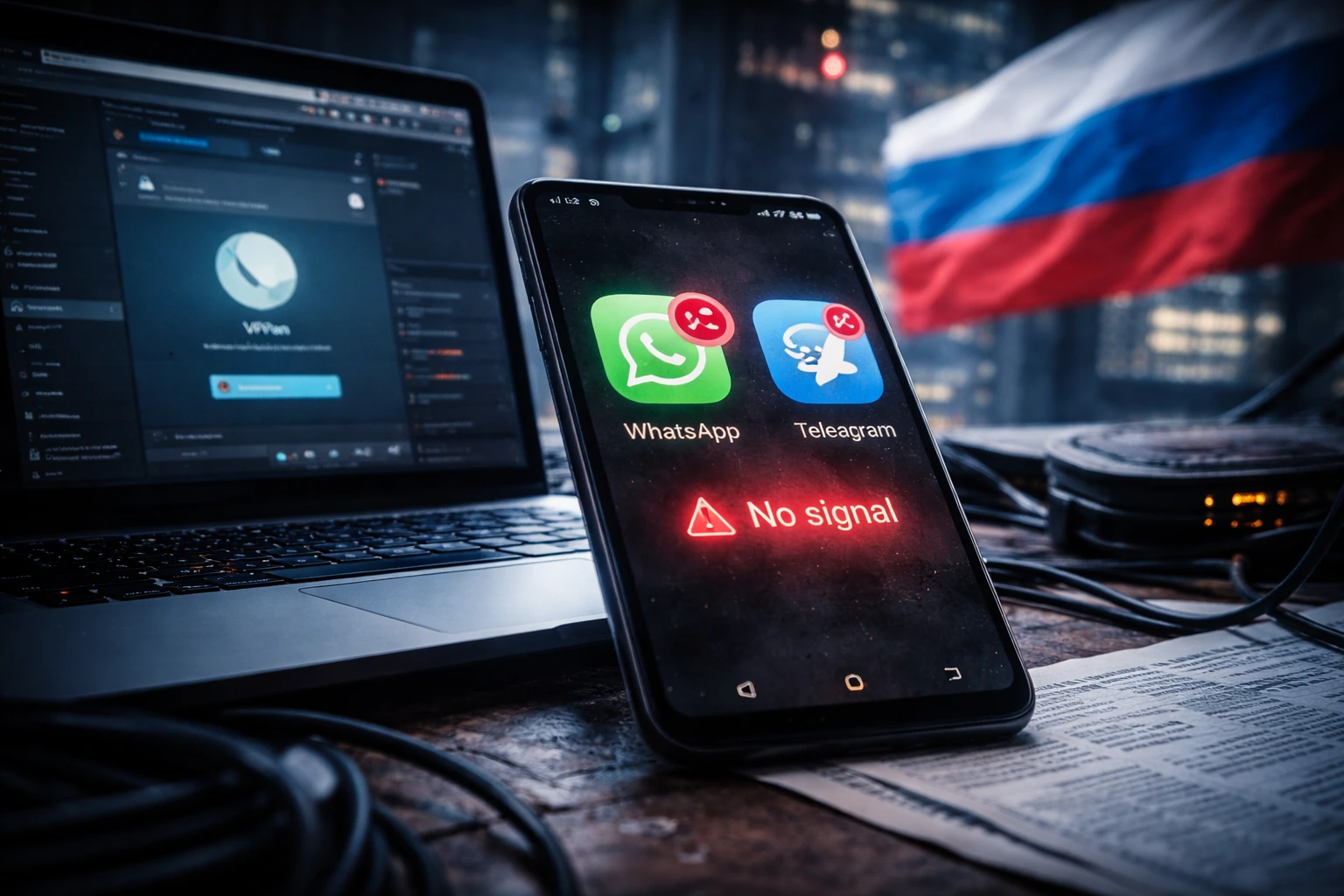
Russian users are experiencing growing disruption when trying to access popular messaging apps. The Russia messaging blockade affects WhatsApp and Telegram connections across multiple networks, making communication unreliable or unavailable without workarounds. Officials describe the move as part of digital security enforcement, but analysts say it signals tighter control over online communication channels.
WhatsApp connectivity restrictions
Access problems began after national network filtering measures interfered with WhatsApp traffic. Many users reported failed connections, delayed messages, and dropped calls. In several regions, the service only functioned when routed through alternative network paths such as VPN connections.
Authorities previously attempted partial restrictions, but the latest actions created wider disruption. The platform remains installed on devices, yet direct communication increasingly fails on domestic networks.
Telegram performance degraded
Telegram experienced similar interference. Connections became unstable and media transfers slowed significantly. The disruptions appear designed to reduce usability rather than fully remove the service.
Such throttling methods allow authorities to limit communication without formally banning the platforms. Users can still connect occasionally, but reliability drops enough to discourage everyday use.
Push toward domestic platforms
At the same time, officials continue promoting locally developed messaging services. These platforms come preinstalled on many devices sold in the country and integrate with government digital services.
Security specialists warn centralized communication ecosystems can enable monitoring and data access. The restrictions therefore shift users toward systems that operate under national regulatory control.
Users attempt to bypass limits
Many people rely on VPN services and alternative DNS settings to maintain access. However, regulators also attempt to block circumvention tools, creating an ongoing technical back-and-forth.
This cycle demonstrates a broader trend where connectivity controls replace direct application bans.
Conclusion
The Russia messaging blockade shows how governments can reshape digital communication without removing apps entirely. By reducing reliability, authorities influence user behavior and encourage migration to controlled alternatives.
Even when technical bypass methods exist, consistent access becomes uncertain as network restrictions expand.
0 responses to “Russia messaging blockade disrupts WhatsApp and Telegram access”