


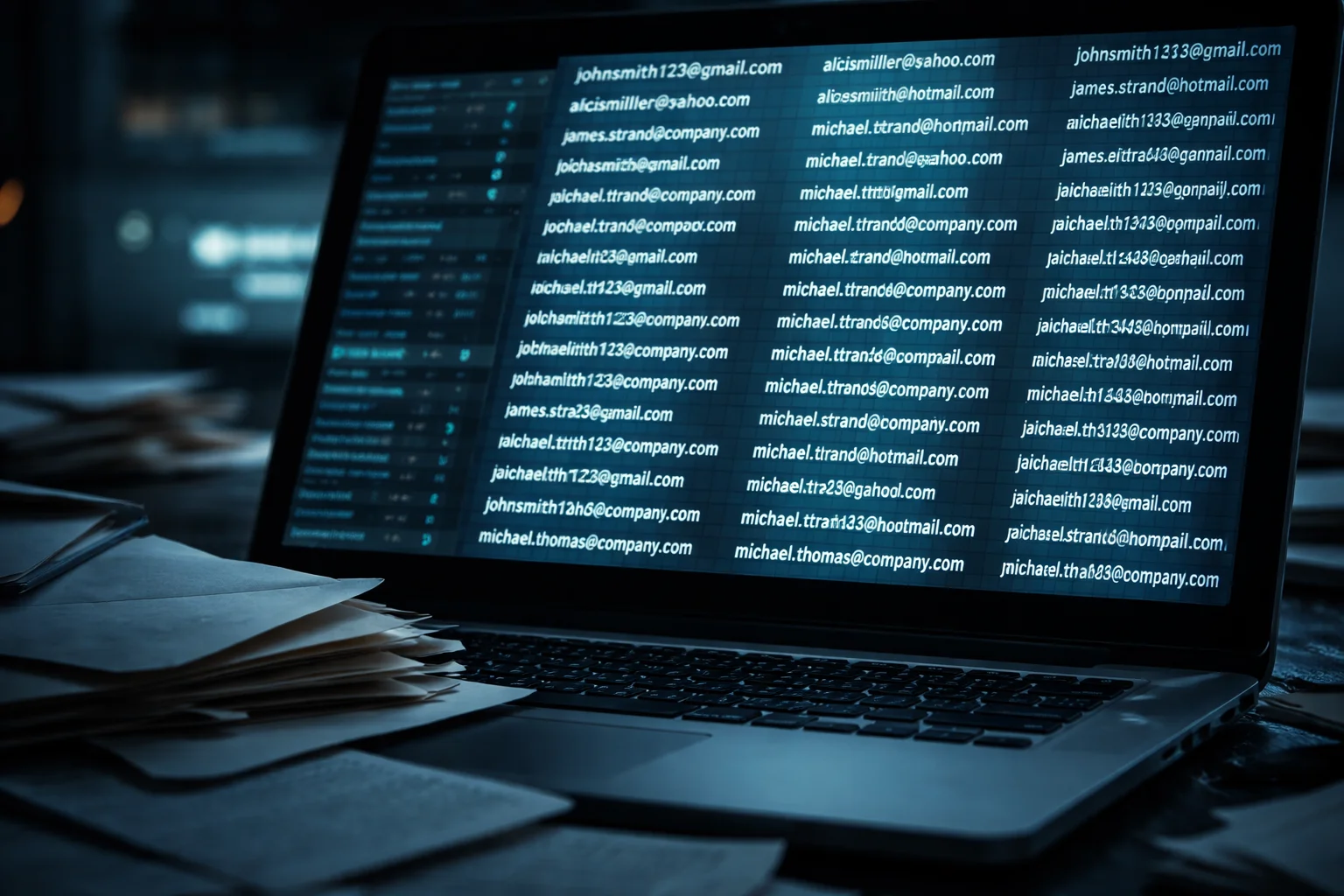
Security researchers uncovered a massive email leak containing billions of addresses gathered into one searchable collection. The dataset does not directly hack accounts, yet it greatly simplifies online scams. Experts warn the scale alone makes phishing campaigns easier and more effective.
A database built from countless breaches
Investigators found a publicly shared archive listing roughly 6.8 billion email entries. The collection combines information taken from earlier breaches, credential logs, and large scraping operations conducted over time.
After removing duplicates and unusable data, researchers estimate around 3 billion addresses remain valid. Even that reduced number gives criminals an enormous pool of potential victims. Instead of gathering targets manually, attackers now receive a prepared contact list.
The database therefore acts as infrastructure rather than a single breach. It aggregates years of incidents into one convenient resource.
Why scale changes the threat
An email address alone cannot unlock an account. The danger comes from automation and volume.
Attackers can rapidly launch campaigns that previously required significant preparation. A tiny success rate becomes profitable when billions of targets exist.
Criminals may use the list to:
- Send phishing emails impersonating trusted services
- Test passwords in credential-stuffing attempts
- Track users appearing in new breaches
- Deliver malware attachments to wide audiences
Even extremely low response rates still produce thousands of victims.
How the data was likely collected
The uploader claims the dataset came from combos, logs, and scraped databases. Researchers believe infostealer malware archives likely played a major role. Those logs often store login information gathered from infected computers.
The public version appears to contain addresses only. However, criminals often keep passwords privately and release partial datasets to attract attention or buyers. The list can also help identify fresh victims once new breaches surface.
This approach turns past incidents into future attacks.
How users can protect themselves
The leak does not mean accounts are automatically compromised. It increases targeting risk instead. Good security habits still block most takeovers.
Users should:
- Use unique passwords for important services
- Enable multi-factor authentication
- Ignore urgent or threatening emails
- Avoid unknown attachments and links
Attackers depend on trust and urgency. Slowing down often prevents compromise.
Conclusion
The massive email leak demonstrates how cybercrime now relies on aggregation rather than single hacks. Combining old data creates powerful attack tools without breaching new systems. While individuals cannot remove their address from such collections, strong authentication and cautious behavior still stop most attacks.
0 responses to “Massive email leak exposes billions of addresses”