


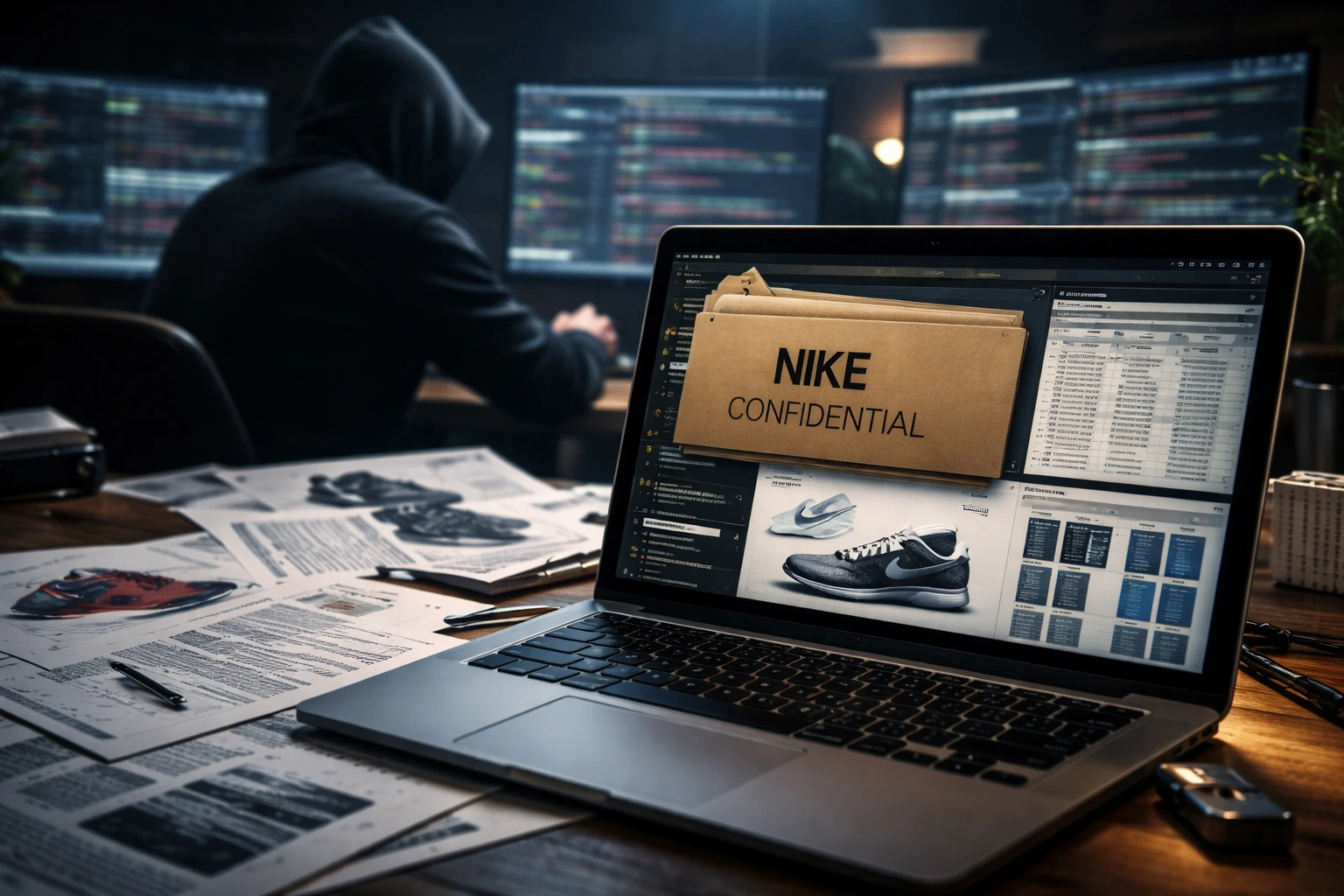
The Nike data breach has raised concerns after cybercriminals published samples of what they claim is stolen internal company data. The leak does not appear to include customer or employee personal information. However, the exposed files could still create serious risks for Nike’s operations, intellectual property, and competitive position.
Cybersecurity researchers are now analyzing the data while Nike continues its internal investigation.
Hackers publish leaked Nike data samples
A cybercrime group released sample files online and claimed responsibility for the Nike data breach. The group stated that it obtained a large volume of internal Nike documents and product-related information.
Researchers who reviewed the samples reported that the files appear authentic. The dataset includes corporate materials rather than consumer-facing records. This distinction limits immediate harm to customers but still presents business-level risks.
Nike has acknowledged awareness of the situation and continues to assess the scope of the exposure.
What data appears in the leak
The leaked samples contain internal documents linked to Nike’s product development and manufacturing processes. The files reference materials, production timelines, testing documentation, and internal planning resources.
Security analysts did not find evidence of customer data, payment information, or employee personal details in the reviewed samples. That finding reduces regulatory and identity theft risks but does not eliminate broader consequences.
Internal data leaks can still undermine long-term strategy and operational security.
Intellectual property and supply chain risks
The Nike data breach could expose sensitive insights into future products and supply chain decisions. Competitors and counterfeit operations often exploit leaked internal documents to replicate designs or anticipate upcoming releases.
Manufacturing data can also reveal supplier relationships, material sourcing strategies, and production methods. This information may weaken negotiating positions and increase exposure to imitation or market disruption.
Even without personal data, internal leaks can cause lasting commercial damage.
Nike’s response and investigation
Nike has not confirmed the full authenticity of the leaked data. The company stated that it is actively investigating the incident and reviewing the exposed files.
Cybercrime groups often publish data samples to pressure companies or damage brand reputation. In many cases, attackers release material even without confirming ransom negotiations.
Nike has not disclosed how attackers may have accessed the data or whether the breach involved third-party systems.
What the breach signals for global brands
The Nike data breach highlights a growing trend in cybercrime. Attackers increasingly target intellectual property and internal business data rather than personal information.
Global brands face rising pressure to protect internal systems, monitor data access, and detect unauthorized activity early. Security teams must treat internal documents with the same protection standards as customer records.
Data exposure now carries strategic risks that extend far beyond compliance concerns.
Conclusion
The Nike data breach demonstrates how internal corporate data has become a valuable target for cybercriminals. Although the leaked samples do not include personal information, they could still expose Nike to competitive and operational threats.
Nike’s investigation will determine the breach’s full impact. The incident serves as a reminder that protecting internal business data is critical in an evolving threat landscape.
0 responses to “Nike Data Breach Exposes Internal Files After Hackers Leak Samples”