


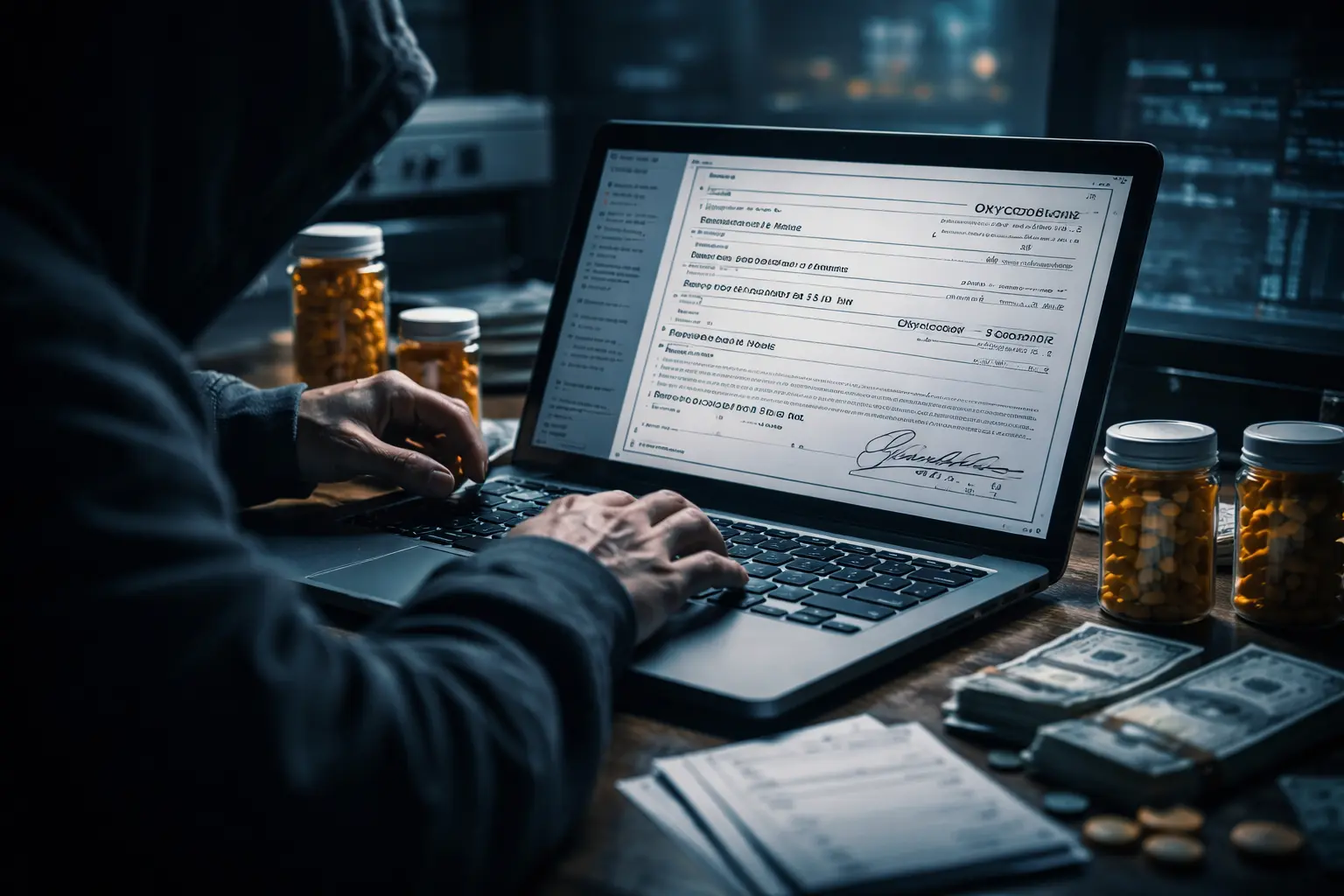
A cyber gang impersonates doctors to issue illegal electronic prescriptions for narcotic and psychotropic drugs. The group used stolen medical credentials to access official healthcare systems and generate prescriptions that pharmacies accepted as legitimate. This scheme combined cybercrime with healthcare fraud and created direct risks to public safety.
Authorities charged several suspects after uncovering a large-scale operation that resulted in hundreds of packages of controlled drugs entering illegal markets.
How the Cyber Gang Operated
The group collected personal and professional details belonging to licensed doctors. Previous data breaches supplied much of the information. Using these details, the attackers created forged digital certificates and logged into a government medical portal.
After gaining access, the criminals operated with full doctor-level privileges. They issued diagnoses and wrote electronic prescriptions without triggering immediate security alerts.
Fake Prescriptions and System Abuse
The cyber gang impersonates doctors by issuing prescriptions that appeared valid inside the healthcare system. Many prescriptions used “family use” classifications, which reduced scrutiny during verification.
The attackers focused on controlled medications. These included narcotic painkillers and psychotropic drugs subject to strict regulation. Pharmacies dispensed the drugs because the prescriptions originated from trusted systems and verified medical accounts.
Drug Distribution Through Legitimate Pharmacies
After generating the prescriptions, the group collected the drugs from pharmacies across multiple regions. In some cases, they filled prescriptions in other countries, which expanded the operation beyond national borders.
Investigators confirmed that the scheme led to the release of several hundred packages of controlled medication. The group then sold the drugs through illegal distribution channels.
Additional Criminal Activity
The suspects also reused stolen doctor identities for financial crimes. They opened fraudulent bank accounts and attempted loan scams using trusted medical credentials. Investigators linked the group to broader fraud activity that relied on bypassing identity verification systems.
This behavior shows how attackers can repurpose healthcare credentials once they compromise them.
Legal Consequences for the Suspects
Authorities charged seven individuals in connection with the operation. Each suspect admitted involvement in impersonating doctors and issuing illegal prescriptions. Prosecutors filed charges related to cybercrime, fraud, and the illegal distribution of controlled substances.
If convicted, the suspects face long prison sentences due to the scale of the operation and the public health impact.
What This Case Reveals
This case shows how cybercriminals target healthcare systems for direct real-world gain. Digital prescribing platforms provide access to controlled substances when security controls fail. Credential theft, weak authentication, and limited behavioral monitoring allowed the scheme to succeed.
Healthcare systems must strengthen identity verification, enforce multi-layer authentication, and monitor prescription activity in real time.
Conclusion
The case in which a cyber gang impersonates doctors to issue illegal prescriptions highlights how cybercrime can enable serious physical harm. By abusing trusted medical systems, the attackers bypassed safeguards and exploited legitimate pharmacies. Stronger security around healthcare identities and prescription platforms remains essential to protect public safety.
0 responses to “Cyber Gang Impersonates Doctors to Issue Illegal Prescriptions”