


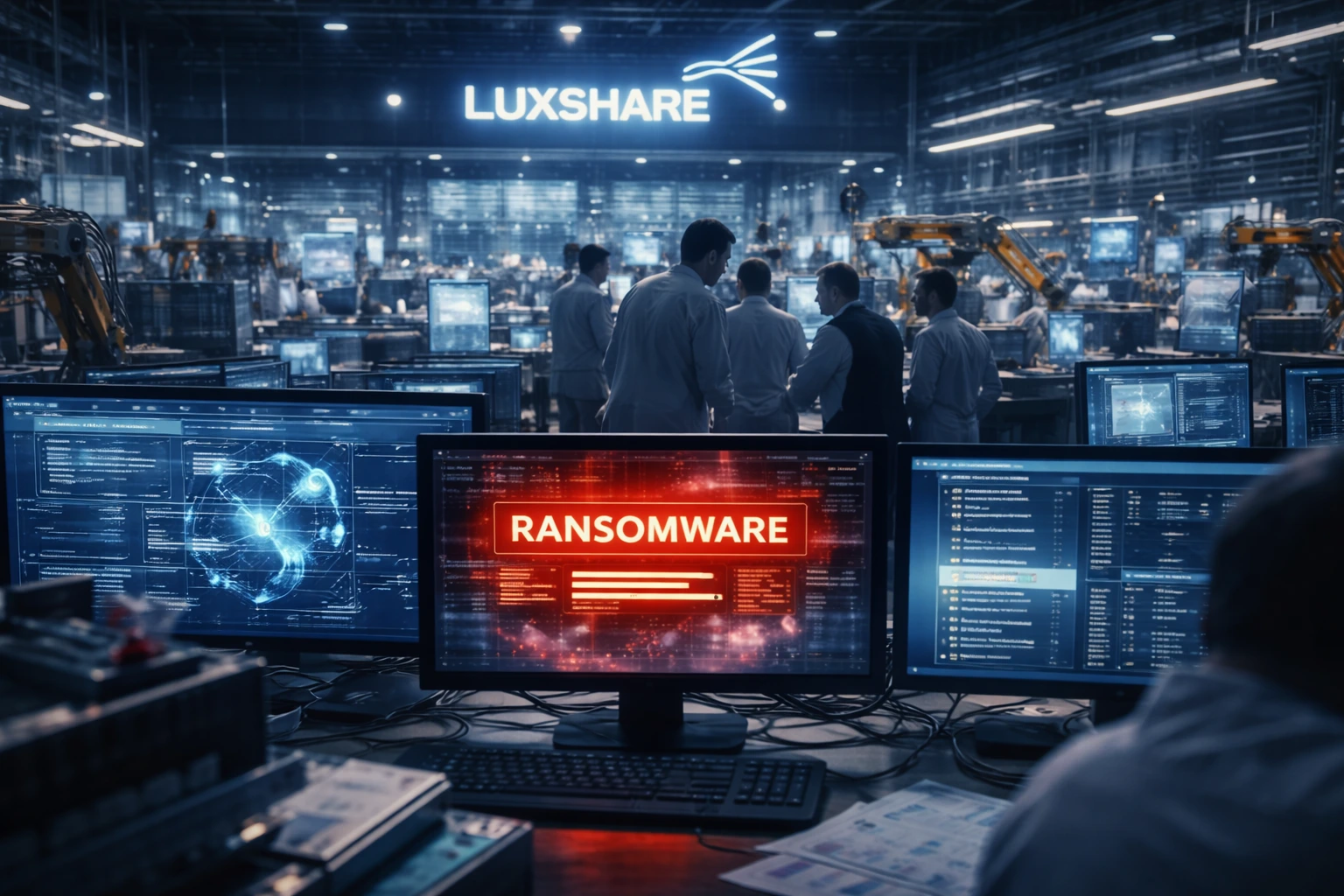
Claims of a cyberattack against Luxshare Precision Industry have drawn attention due to the company’s role as a major electronics manufacturing partner. The Luxshare ransomware breach allegedly involved unauthorized access to internal systems and the theft of sensitive technical data. Because Luxshare assembles devices for global technology brands, the incident raised concerns about supply chain exposure and third-party security risks.
While Luxshare has not publicly confirmed the breach, the claims alone highlight how manufacturing partners remain attractive targets for cybercriminals.
What the Attackers Claim
The ransomware group behind the allegations stated that it accessed Luxshare’s internal network and extracted confidential files. According to the attackers, the stolen material includes detailed engineering data used in device production. They claimed the files contain design layouts, component specifications, and manufacturing documentation.
The group threatened to release the data publicly unless negotiations took place. This pressure tactic mirrors common ransomware strategies that rely on reputational and competitive risk.
Types of Data Allegedly Exposed
The leaked samples shared by the attackers appear to involve technical and engineering materials rather than customer information. These files reportedly include 3D models, circuit diagrams, and internal documentation related to device assembly processes.
Such data can carry significant value. Exposure of manufacturing designs may enable counterfeiting, reveal production methods, or undermine intellectual property protections.
Supply Chain Security Implications
A breach at a contract manufacturer extends beyond a single company. The Luxshare ransomware breach highlights how attackers increasingly focus on suppliers with deep access to proprietary information. Manufacturing partners often hold sensitive files from multiple clients, making them high-value targets.
This trend reinforces the need for stronger supply chain cybersecurity controls and clearer expectations between brands and their partners.
Lack of Official Confirmation
At the time of reporting, Luxshare had not issued a public statement confirming the breach or detailing any investigation. Without official verification, the full scope and authenticity of the claims remain unclear. Security professionals generally urge caution when evaluating attacker statements until affected organizations validate the facts.
Nonetheless, unverified claims can still create operational and reputational pressure.
Why the Incident Matters
The Luxshare ransomware breach claims underscore a growing shift in ransomware activity toward industrial and manufacturing targets. Attackers increasingly prioritize intellectual property and engineering data over personal information. This evolution raises the stakes for companies embedded in global supply chains.
Even the threat of exposure can disrupt partnerships and force costly security reviews.
Conclusion
The alleged Luxshare ransomware breach illustrates how cybercriminals target critical manufacturing partners to maximize leverage and potential impact. Whether or not the claims prove accurate, the situation highlights persistent weaknesses in supply chain cybersecurity. As reliance on third-party manufacturers grows, organizations must treat partner security as a core component of risk management.
0 responses to “Luxshare ransomware breach raises supply chain security concerns”