


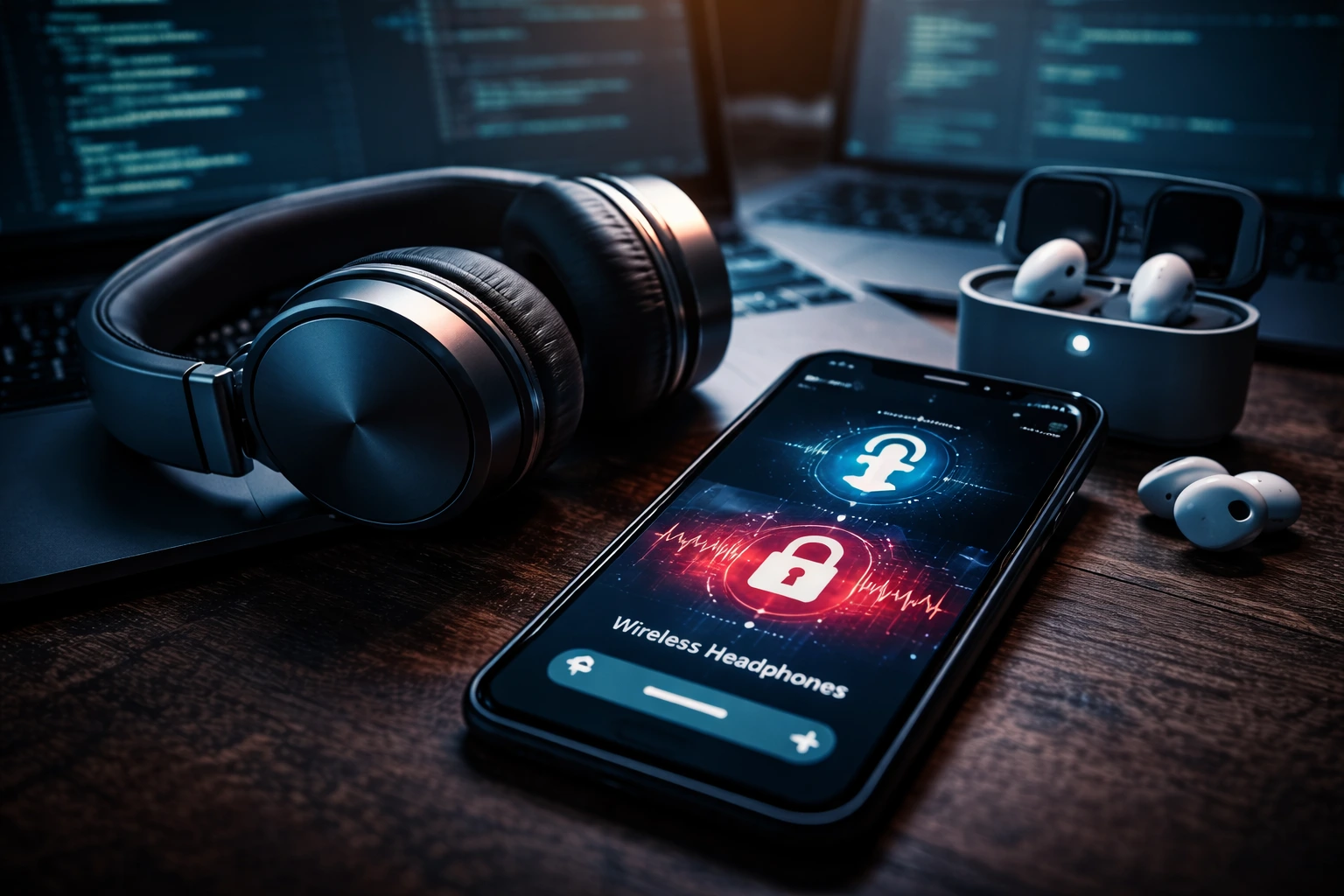
A newly disclosed Bluetooth Fast Pair flaw exposes millions of wireless audio devices to silent hijacking and surveillance. Security researchers warn that attackers can exploit weaknesses in Google’s Fast Pair protocol to connect to headphones and speakers without user interaction. The issue highlights serious privacy risks tied to convenience-driven wireless technologies.
The vulnerability affects a wide range of Bluetooth accessories used with Android devices. Because Fast Pair operates at the protocol level, the impact extends far beyond a single manufacturer or model.
What Bluetooth Fast Pair Does
Bluetooth Fast Pair is designed to simplify how users connect wireless accessories to Android devices. When a compatible device comes within range, Android automatically displays a pairing prompt, reducing setup time and complexity.
The system relies on Bluetooth Low Energy to broadcast pairing information. While this improves usability, it also creates an expanded attack surface when authentication controls are weak or improperly implemented.
How the Flaw Works
Researchers discovered that attackers can abuse weaknesses in the Fast Pair protocol to impersonate legitimate devices. This allows them to pair with a victim’s audio accessory without triggering visible warnings or approval prompts.
Once connected, attackers may access microphone input, monitor audio activity, or abuse device-level features. The attack does not require physical access and can be executed within standard Bluetooth range.
Scope of Affected Devices
The Bluetooth Fast Pair flaw impacts a broad ecosystem of wireless headphones, earbuds, and speakers. Because the issue resides in the Fast Pair design itself, devices from multiple vendors are vulnerable.
Researchers confirmed successful exploitation across several popular accessory brands. Even devices that passed certification checks remain exposed unless manufacturers apply protocol-level mitigations.
Privacy and Security Risks
This flaw presents more than a technical nuisance. Unauthorized microphone access enables covert audio surveillance, creating serious privacy concerns in offices, homes, and public spaces.
Attackers may also use connection metadata to track user movement patterns. In crowded environments, such attacks become difficult to detect and even harder to attribute.
Why This Vulnerability Matters
Bluetooth attacks increasingly target everyday consumer devices rather than traditional endpoints. Audio accessories remain active for long periods and often operate without user attention.
The Bluetooth Fast Pair flaw demonstrates how trusted convenience features can undermine user security when safeguards fail. It also raises concerns about how quickly such protocol-level issues can be patched across fragmented device ecosystems.
How Users Can Reduce Risk
Users should install firmware updates for Bluetooth accessories as soon as manufacturers release them. Many updates require companion apps, making manual checks essential.
Disabling Bluetooth when not in use also reduces exposure. In sensitive environments, users should avoid leaving wireless audio devices powered on unnecessarily.
Conclusion
The Bluetooth Fast Pair flaw exposes fundamental weaknesses in how wireless convenience features are secured. By allowing silent connections and potential microphone access, the vulnerability puts user privacy at real risk. The incident reinforces the need for stronger protocol validation and faster security response across the Bluetooth ecosystem.
0 responses to “Bluetooth Fast Pair Flaw Exposes Millions of Audio Devices”