


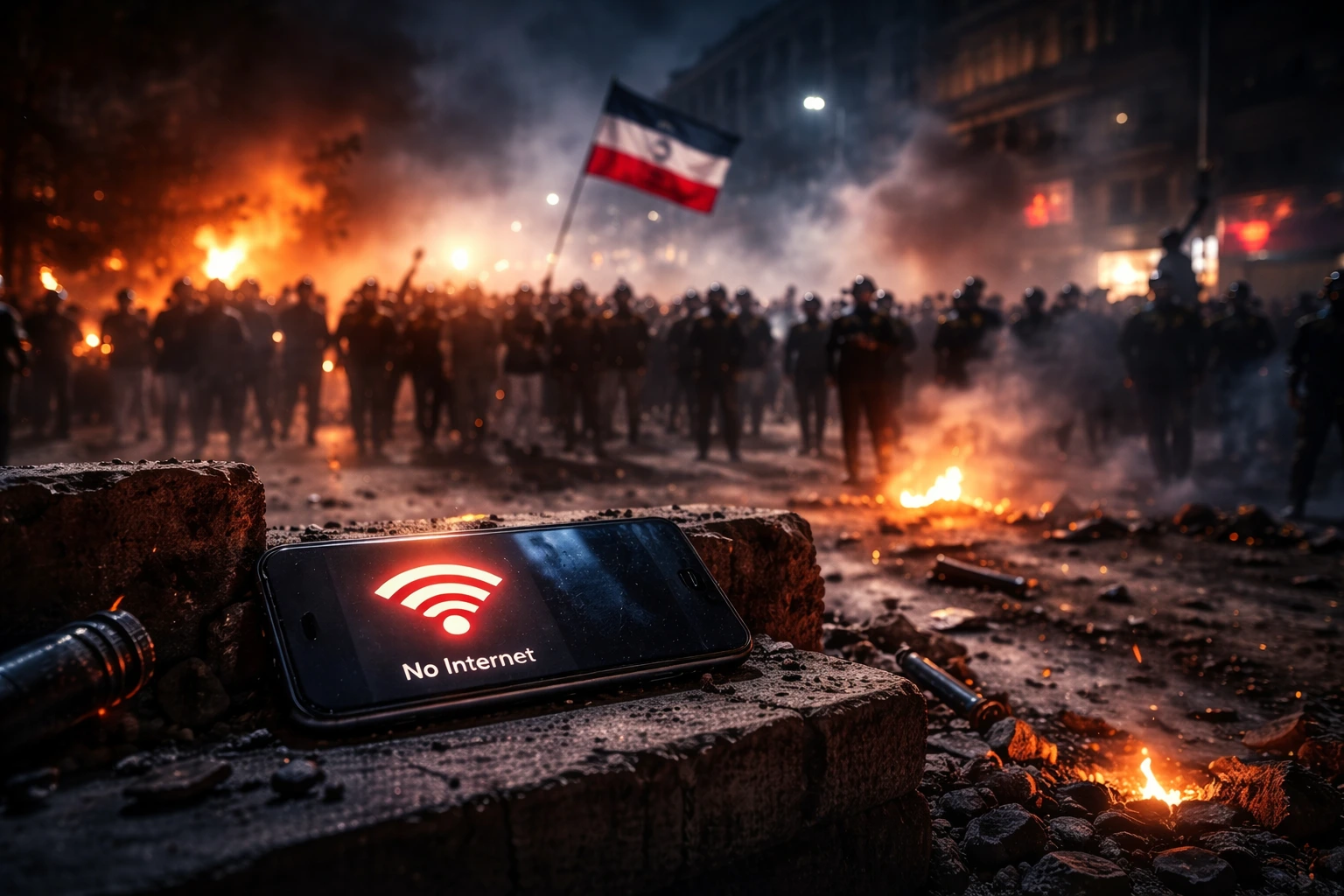
Iran has imposed a near-total internet blackout as nationwide protests continue to spread, leaving millions of people unable to communicate, access information, or use online services. Connectivity levels dropped sharply across the country, with large parts of the population effectively cut off from the global internet. The shutdown has disrupted daily life and raised serious concerns about information control during a period of unrest.
Authorities appear to be using the blackout as a tool to limit coordination among protesters and prevent images and reports from reaching the outside world. For many Iranians, the sudden loss of connectivity has intensified fear and uncertainty rather than restoring order.
How the blackout is being enforced
The Iran internet blackout goes beyond simple throttling or platform bans. Network data indicates that access to mobile data and fixed broadband services has been almost entirely disabled in many regions. Messaging apps load slowly or not at all, while basic services such as online banking and navigation tools have become unusable.
Unlike previous restrictions, this shutdown targets the infrastructure itself. By cutting off access at the network level, authorities have made it difficult for users to maintain even limited online presence.
VPNs struggle to bypass restrictions
Iranian citizens have long relied on VPNs to bypass censorship, but the current blackout has rendered most of these tools ineffective. When the underlying internet connection is severed, VPN services cannot establish a tunnel to external servers. Even advanced circumvention methods fail when traffic is blocked before it reaches the global network.
Some users have attempted to rely on alternative technologies, but technical barriers and interference have limited their success. As a result, many people remain isolated, unable to contact relatives, journalists, or human rights groups.
Protests continue despite digital isolation
The blackout coincides with widespread demonstrations driven by economic hardship, rising prices, and political dissatisfaction. Protests have been reported in numerous cities, with security forces responding through arrests and crowd control measures. Without internet access, documenting these events has become significantly harder.
Activists argue that cutting off communication increases the risk of abuse by reducing transparency. When videos and eyewitness accounts cannot be shared, independent verification becomes nearly impossible.
Why the Iran internet blackout matters
Internet shutdowns have become a recurring tactic during periods of unrest, but the scale of this blackout stands out. By isolating an entire population, authorities gain temporary control over information flow while increasing public anxiety and confusion.
For ordinary citizens, the blackout affects far more than protest activity. Education, healthcare access, commerce, and emergency communication all suffer when digital networks go dark. The economic impact also grows with each day connectivity remains limited.
Conclusion
The Iran internet blackout highlights how digital infrastructure can be weaponised during moments of political instability. By cutting off access to communication tools and bypassing technologies, authorities have deepened isolation while protests continue offline. As long as connectivity remains restricted, millions of people face uncertainty, limited access to services, and reduced visibility into events shaping their future.
0 responses to “Iran internet blackout cuts communication as protests intensify”