


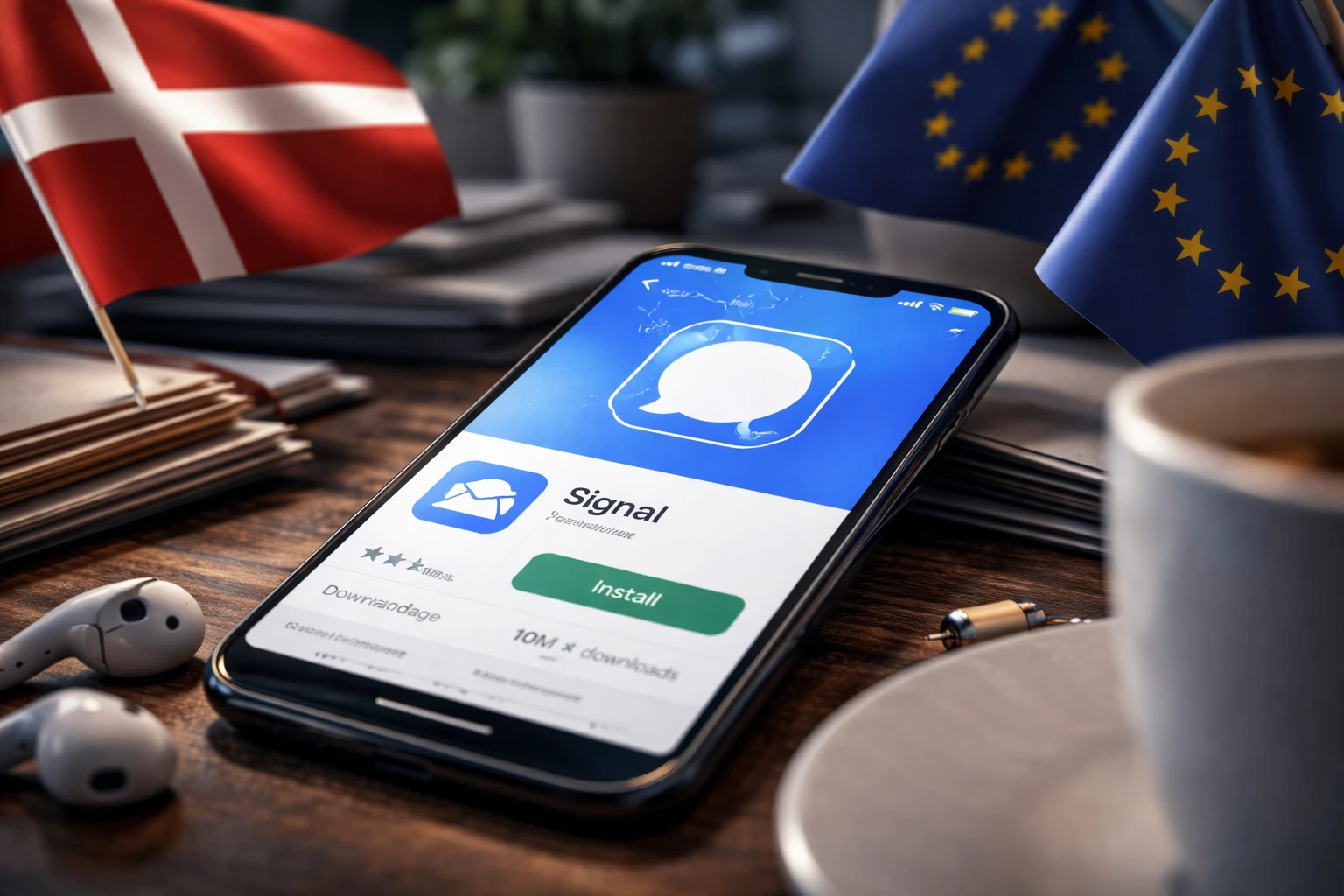
Signal downloads in Denmark have surged as concerns over privacy and digital surveillance grow across the European Union. The encrypted messaging app climbed rapidly in local app store rankings, reflecting rising anxiety around proposed policies that could weaken private communications. For many users, this increase signals a deliberate effort to protect personal conversations.
The trend shows how closely digital behavior now follows political debate. As discussions around surveillance and encryption gain attention, users respond by choosing platforms that prioritize privacy.
What Triggered the Surge
The increase in Signal downloads followed renewed EU debate over proposals to scan private messages for illegal content. Critics argue that these measures would weaken end-to-end encryption by introducing access points into private communications. Even the possibility of reduced encryption has alarmed privacy advocates and everyday users.
In Denmark, awareness spread quickly through news coverage and public discussion. Many users reacted by installing Signal, viewing it as a safer alternative to mainstream messaging platforms. Trust in privacy guarantees played a key role in that decision.
Public Concerns Around Encryption
Encryption protects messages by ensuring only the sender and recipient can read them. End-to-end encryption blocks access by governments, service providers, and third parties. Proposed changes that interfere with this process have sparked strong opposition from technologists and civil liberties groups.
For users, the issue feels personal. Messaging apps support private, professional, and sensitive conversations. Any suggestion of monitoring or scanning pushes users to seek platforms with stronger guarantees.
Why Signal Stands Out
Signal has long positioned itself as a privacy-first messaging service. It collects minimal user data and applies strong encryption by default. Its non-profit structure also reduces commercial pressure to monetize user information.
The surge in Denmark shows that users value transparency and technical safeguards. Signal’s refusal to weaken encryption has strengthened trust among those worried about political interference.
Broader European Implications
The growth in Signal downloads may point to a wider European shift. As EU discussions continue, similar adoption spikes could appear in other countries. User behavior increasingly reflects resistance to policies seen as intrusive.
This trend also pressures lawmakers. Widespread movement toward encrypted tools shows that public trust depends on strong digital protections. Surveillance proposals may accelerate privacy-focused adoption instead of limiting it.
Conclusion
The surge in Signal downloads in Denmark highlights growing concern over privacy and encrypted communication in the EU. Faced with uncertainty around surveillance proposals, users are actively choosing tools that protect private conversations. As policy debates continue, this shift shows how regulation directly shapes everyday digital habits.
0 responses to “Signal downloads surge in Denmark amid EU surveillance concerns”