


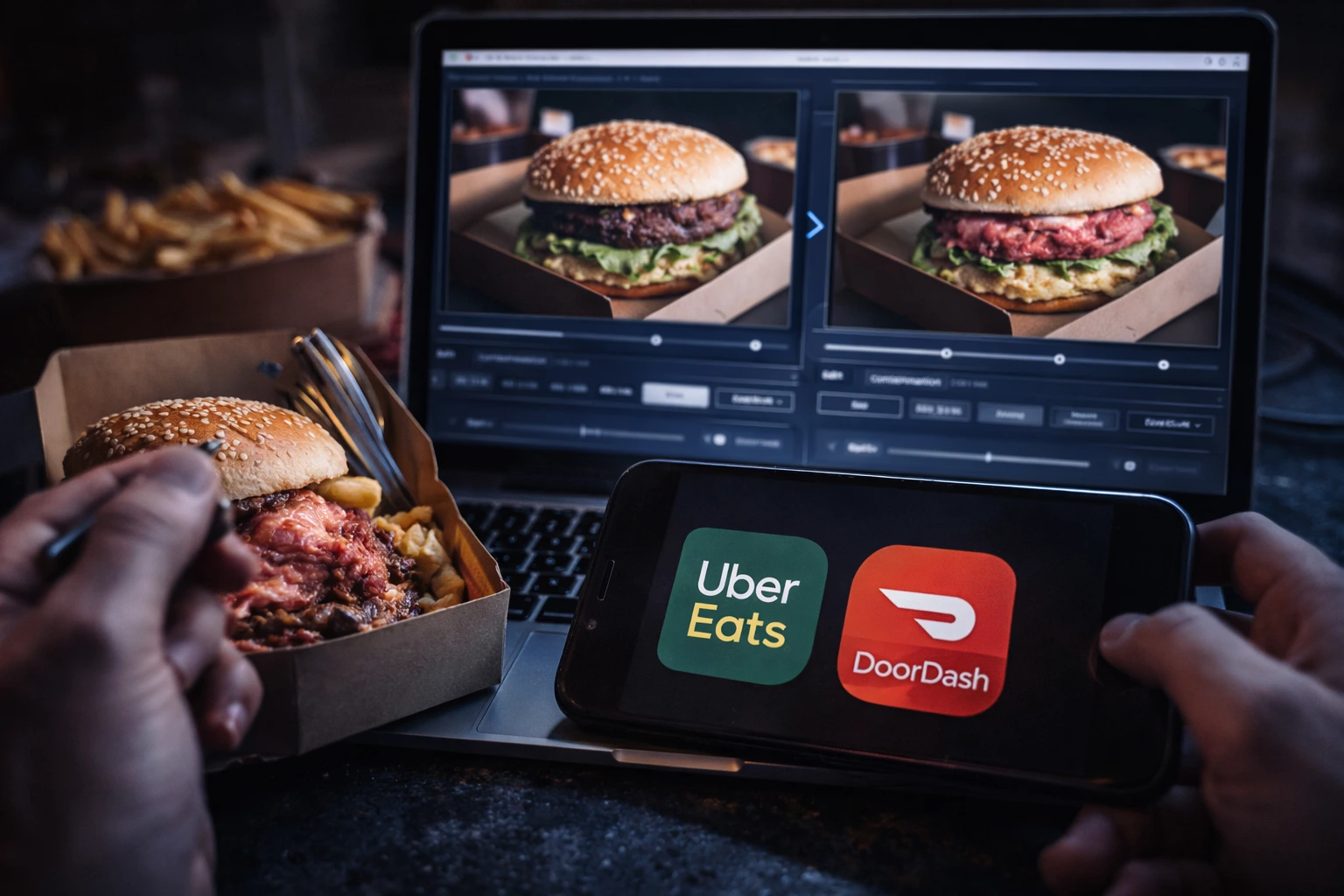
AI deepfake food fraud is emerging as a new tactic on delivery platforms like Uber Eats and DoorDash. Scammers use artificial intelligence tools to manipulate food images and submit them as evidence in refund claims.
The trend shows how generative AI can undermine trust-based systems. It also exposes weaknesses in automated refund workflows.
How the scam works
Scammers start by ordering food through a delivery app. After the order arrives, they take a photo of the meal.
They then use an AI image tool to alter the photo. The AI makes the food look undercooked, damaged, or contaminated.
The scammer submits the edited image to customer support. The platform processes the claim and often issues a refund.
Why AI makes the fraud harder to detect
AI-generated images now look highly realistic. Basic checks often fail to spot manipulation.
Refund systems rely heavily on visual evidence. When that evidence becomes unreliable, fraud detection becomes more difficult.
Human reviewers may also struggle to tell real photos apart from AI-altered ones. This increases the success rate of false claims.
Impact on restaurants and delivery platforms
AI deepfake food fraud creates financial losses for delivery platforms. Restaurants often suffer the most.
Many refund systems charge restaurants directly. Repeated false claims can reduce earnings for small businesses.
Drivers may also face disputes when customers question deliveries. This adds tension to an already strained system.
A growing trend beyond food delivery
Experts warn that this tactic could spread quickly. Any service that relies on image-based proof may face similar abuse.
Online retail, returns, and logistics platforms face comparable risks. AI lowers the barrier to committing this type of fraud.
As AI tools become easier to use, the problem may scale fast.
How platforms may respond
Delivery companies may need stronger verification methods. Possible solutions include live photo capture, video confirmation, or metadata checks.
Some platforms may introduce AI-based detection tools. These systems analyze images for signs of manipulation.
Balancing fraud prevention and user convenience will remain a challenge.
Conclusion
AI deepfake food fraud highlights how generative AI can exploit trust-driven systems on platforms like Uber Eats and DoorDash. Fake food images now make refund abuse easier and harder to detect. Without stronger verification and smarter detection, this form of fraud is likely to grow as AI tools continue to improve.
0 responses to “AI deepfake food fraud targets Uber Eats and DoorDash refunds”