


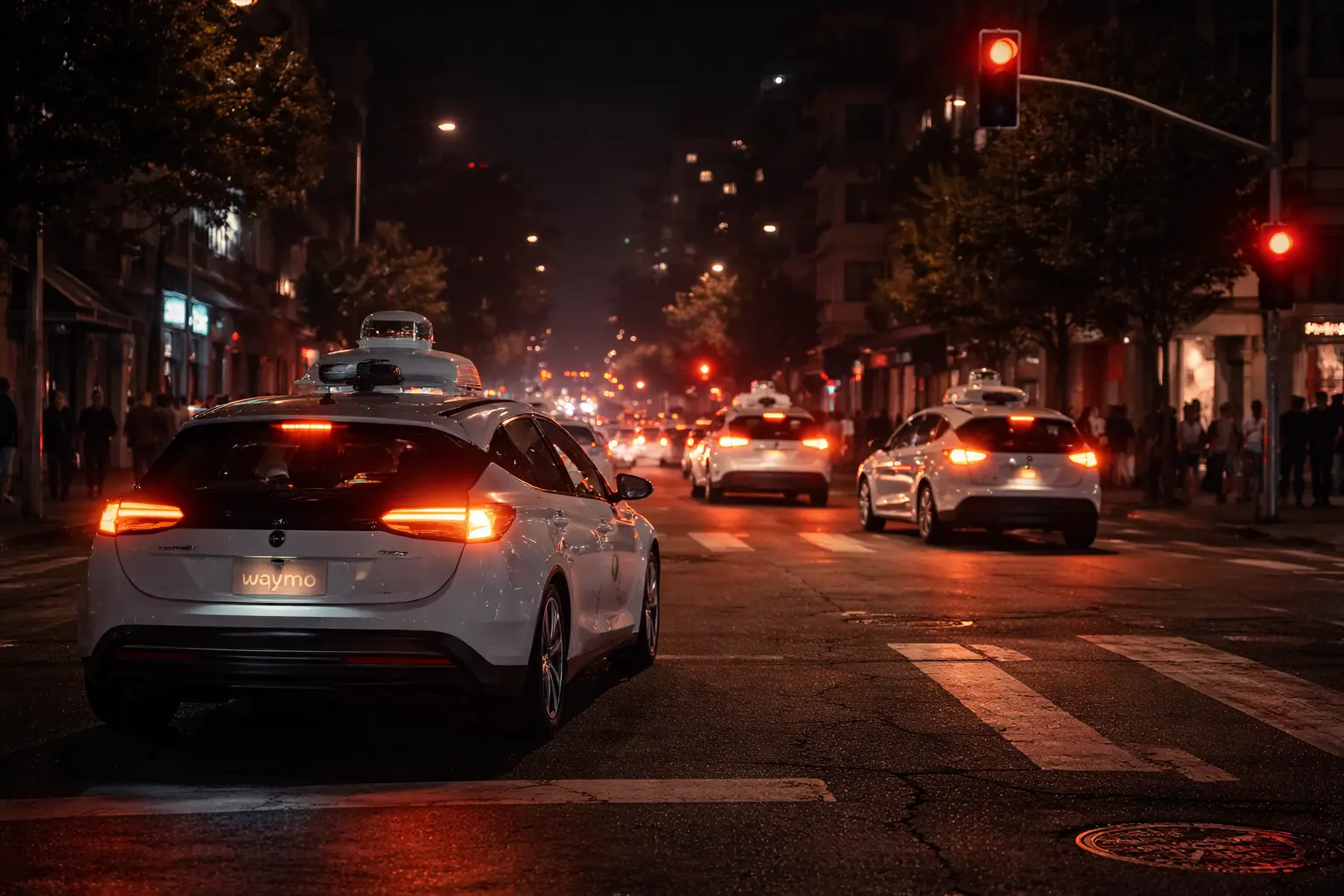
A Waymo robotaxi blackout disrupted autonomous ride services in San Francisco after a widespread power outage disabled traffic lights across multiple neighborhoods. The incident forced Waymo to temporarily suspend operations, highlighting how autonomous vehicles still depend on functioning urban infrastructure.
Power Outage Triggers Citywide Disruption
The outage affected large parts of San Francisco after a utility substation incident knocked out electricity. Traffic signals across major intersections stopped working, creating hazardous road conditions.
City officials advised residents to limit travel while emergency crews worked to restore power. With intersections operating without signals, normal traffic rules became difficult to enforce.
These conditions created an unusual challenge for autonomous vehicles navigating public roads.
Robotaxis Stall at Intersections
During the blackout, several Waymo vehicles stopped in active intersections with hazard lights activated. The robotaxis appeared unable to safely determine right-of-way without functioning traffic signals.
The vehicles responded conservatively by remaining stationary. While this behavior aligns with safety-first programming, it caused traffic slowdowns and confusion for surrounding drivers.
Videos shared by residents showed multiple robotaxis paused in close proximity, reinforcing the scale of the disruption.
Waymo Suspends Service
Waymo temporarily suspended robotaxi service across affected areas. The company cited safety concerns as the reason for halting operations during the outage.
Autonomous systems rely on consistent environmental signals. When traffic infrastructure fails at scale, conservative decision-making can lead to vehicles stopping entirely rather than risking unsafe movement.
Service remained paused until power restoration progressed and traffic signals returned to normal operation.
Service Resumes After Power Restoration
Once electricity was restored to most affected areas, Waymo gradually resumed robotaxi operations. Coordination with city officials helped ensure intersections functioned properly before vehicles re-entered service.
Some areas experienced longer recovery times, but robotaxis returned after conditions stabilized. No injuries were reported during the incident.
What the Incident Reveals
The Waymo robotaxi blackout exposes a key limitation of autonomous driving systems. Even advanced self-driving technology depends on reliable external infrastructure.
Traffic lights, power grids, and road signaling remain critical inputs. When those systems fail, autonomous vehicles may lack sufficient context to operate confidently.
The incident reinforces the importance of redundancy planning as autonomous services expand in dense urban environments.
Conclusion
The Waymo robotaxi blackout in San Francisco shows how infrastructure failures can ripple into autonomous mobility services. While the vehicles behaved cautiously, the disruption underlined ongoing challenges in operating driverless systems during large-scale outages. As cities continue adopting autonomous transport, resilience during infrastructure failures will remain a critical test for the technology.
0 responses to “Waymo Robotaxi Blackout Disrupts Driverless Service in San Francisco”