


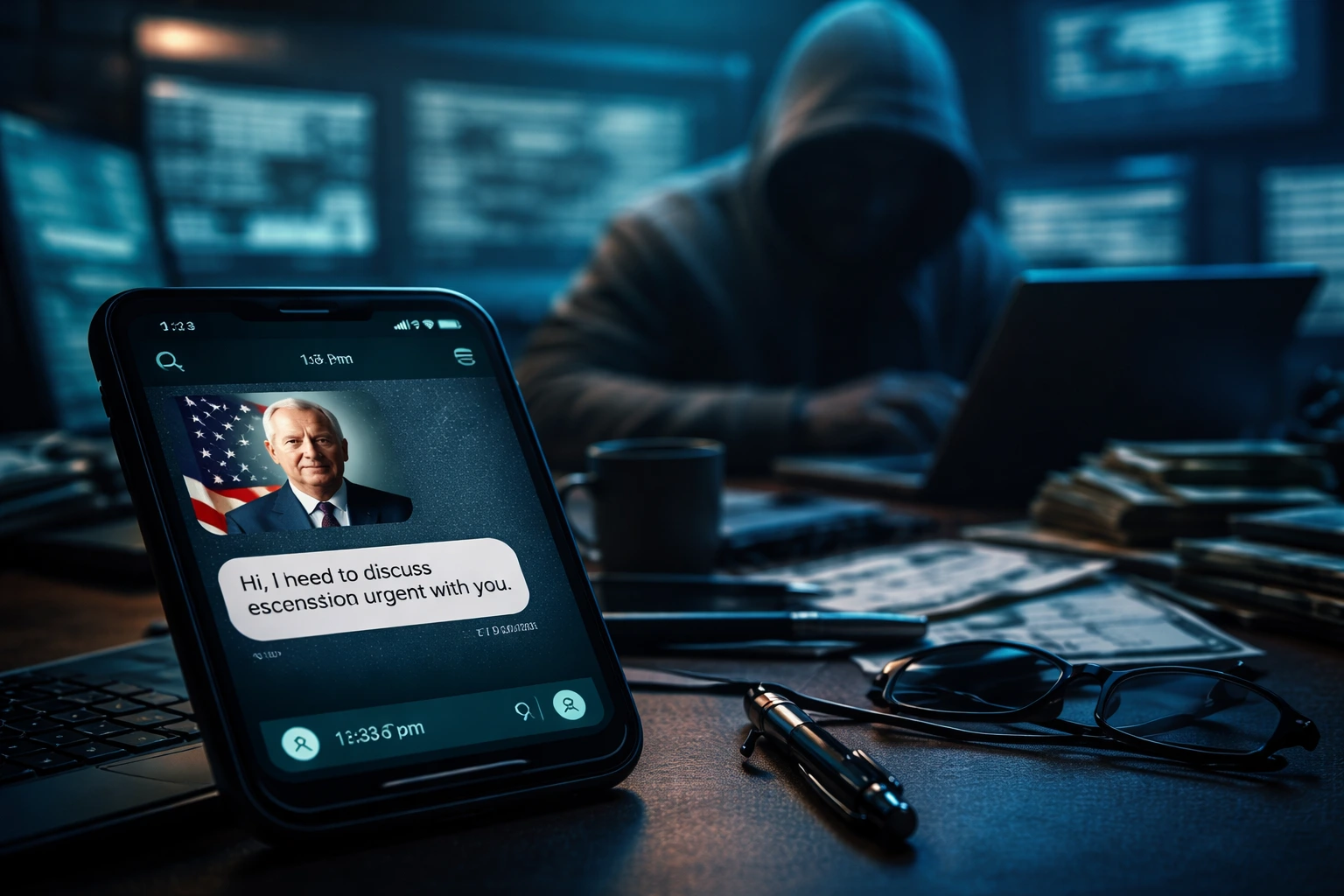
US official impersonation scams are becoming more convincing as cybercriminals abuse messaging apps and AI-generated voices. Federal investigators warn that attackers now pose as senior U.S. officials to manipulate targets into sharing sensitive information. These scams rely on trust, urgency, and realistic communication to bypass traditional security awareness.
How the Impersonation Scams Work
The scams often begin with a simple text message. Attackers claim to represent high-ranking U.S. government figures, including officials connected to Congress, federal agencies, or state leadership.
Messages usually reference real topics, current events, or professional matters. This makes the initial contact appear legitimate. Once the victim responds, the attacker pushes the conversation forward quickly.
In many cases, criminals ask the target to continue the discussion on encrypted messaging platforms. These include widely used apps designed for privacy and secure communication.
Why Messaging Apps Play a Key Role
Encrypted messaging apps help attackers avoid detection. Once the conversation moves off traditional channels, monitoring becomes more difficult.
Criminals exploit this privacy to build trust and extend the scam. Over time, they introduce requests that appear professional or urgent. These may involve private documents, verification codes, or internal communications.
Some victims also receive voice messages instead of texts. These messages often sound realistic and authoritative.
The Growing Use of AI Voice Impersonation
AI tools now play a major role in US official impersonation scams. Criminals can clone voices using short audio samples found online. This allows them to sound like real public figures.
Voice impersonation increases credibility. Victims may trust what they hear, especially if the voice matches a known official. This tactic lowers skepticism and speeds up decision-making.
As AI tools improve, these scams become harder to detect using traditional warning signs.
Common Red Flags Victims Miss
Many scams succeed because they avoid obvious mistakes. However, warning signs still exist.
These scams often:
- Pressure victims to act quickly
- Request a move to encrypted apps without clear reasons
- Ask for personal or professional credentials
- Use authority to discourage verification
Even experienced professionals can overlook these signals when the message feels authentic.
Why These Scams Are Dangerous
US official impersonation scams do more than cause financial loss. They can expose sensitive contacts, internal discussions, and government-related information.
Once attackers gain access to private conversations, they can expand the attack. This includes targeting additional contacts or launching follow-up scams using stolen data.
The damage often extends beyond a single victim.
How Individuals Can Protect Themselves
Awareness remains the strongest defense. People should independently verify any unexpected message claiming to come from a government official.
Never trust caller identity alone. Avoid sharing information unless confirmation comes through official and known channels. Question any request that creates urgency or secrecy.
Security habits must adapt as scams evolve.
Conclusion
US official impersonation scams highlight how cybercrime continues to evolve alongside communication technology. By combining messaging apps, social engineering, and AI voice tools, attackers create highly convincing deceptions. Staying cautious, verifying identities, and resisting pressure remain essential steps in avoiding these increasingly sophisticated scams.
0 responses to “US Official Impersonation Scams Target Messaging Apps”