


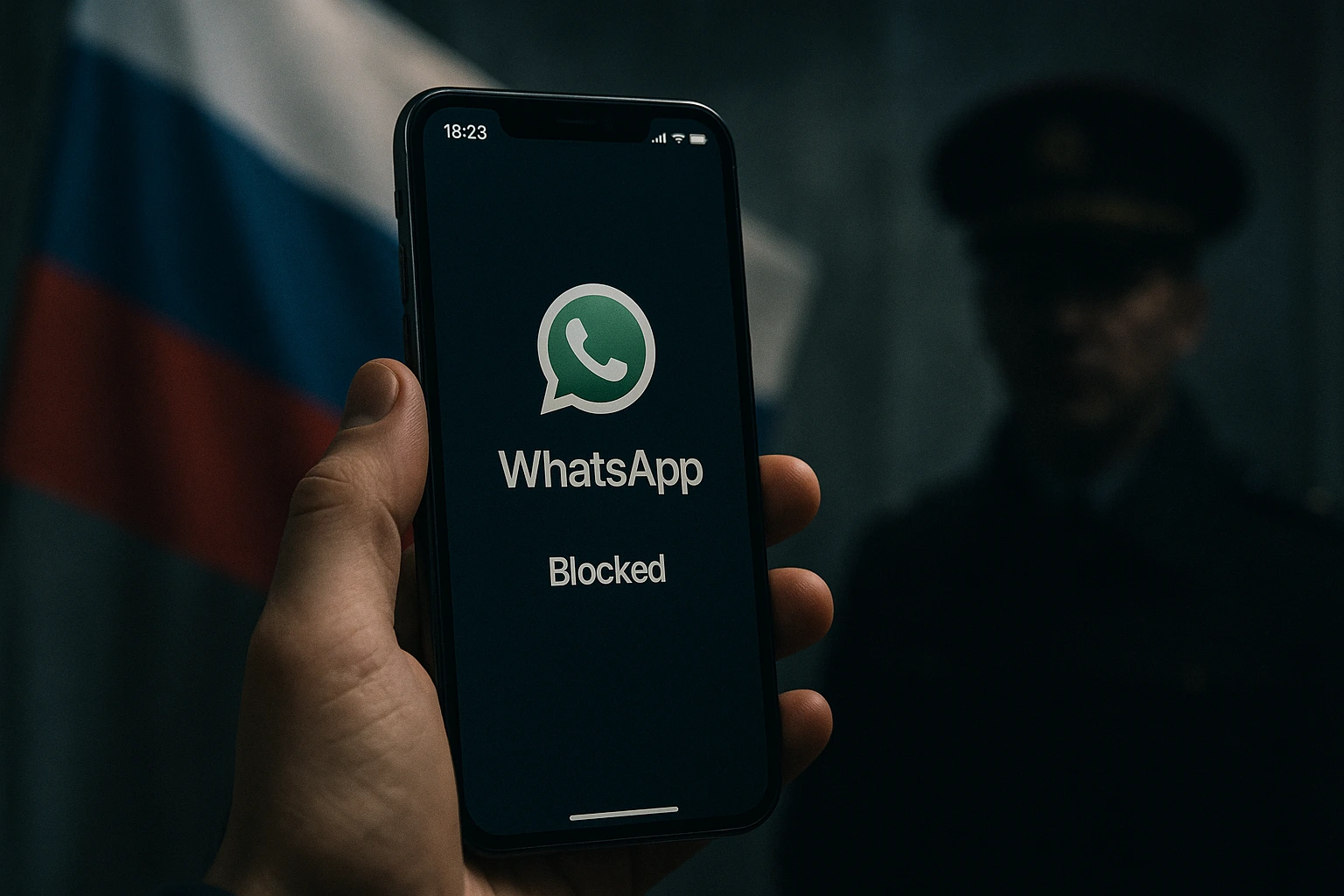
The WhatsApp Russia ban threat has intensified as regulators warn that the messaging platform could face a full nationwide block. Officials argue that WhatsApp failed to comply with data-access requests linked to criminal investigations. The warning follows earlier restrictions on voice and video calls, raising concerns that millions of users may soon lose access to one of Russia’s most widely used communication tools.
Why Regulators Target WhatsApp
Roskomnadzor, Russia’s media and communications regulator, claims WhatsApp breached national rules by denying law-enforcement access to user information. Authorities insist that the platform ignored repeated requests linked to fraud cases and other serious crimes. They frame the non-compliance as a threat to public safety and national security.
Officials already imposed a major limitation earlier in 2025 when they disabled voice and video calls on WhatsApp. That restriction served as a warning that broader action could follow. The regulator now states that a full block remains a likely next step unless WhatsApp changes its stance on data-sharing demands.
Impact on WhatsApp Users in Russia
Millions of people in Russia depend on WhatsApp for daily communication. A full ban would disrupt private and business conversations across the country. It would also pressure users to switch to domestic alternatives promoted by the government.
Critics argue that these local apps lack strong encryption and allow easier access for authorities. Privacy advocates warn that users could face increased surveillance and reduced control over their digital communication.
Cybersecurity analysts note that the earlier call restrictions already pushed users toward other platforms. A full block would accelerate this trend and reshape online messaging habits across Russia.
Moscow’s Broader Push for Digital Control
The conflict with WhatsApp fits into a wider strategy to regulate digital services and reduce reliance on foreign platforms. Russia has increased pressure on Western tech companies over the past several years. The government seeks greater visibility into user activity and tighter control of online communication.
Encrypted messaging services present challenges for these goals. WhatsApp’s refusal to share data places it directly at odds with these policies. Analysts view the ban threat as part of a coordinated effort to strengthen state influence over the country’s digital ecosystem.
Industry and Expert Reactions
Digital-rights groups argue that the potential ban undermines privacy and reduces access to secure communication tools. They warn that the shift toward domestic apps may expose users to greater monitoring risks.
Tech observers highlight that Russia has already blocked or restricted several foreign platforms in recent years. Many believe WhatsApp now sits at a critical crossroads, with future access depending on political and regulatory developments rather than technical considerations.
Conclusion
The WhatsApp Russia ban threat signals a major escalation in the government’s efforts to control digital communication. A complete block would disrupt millions of users and push them toward less secure alternatives. The situation highlights ongoing tension between encrypted platforms and state demands for broader data access. As the investigation continues, the future of WhatsApp in Russia remains uncertain, and users face growing challenges around privacy and secure communication.
0 responses to “WhatsApp Russia ban escalates as authorities threaten full block”