


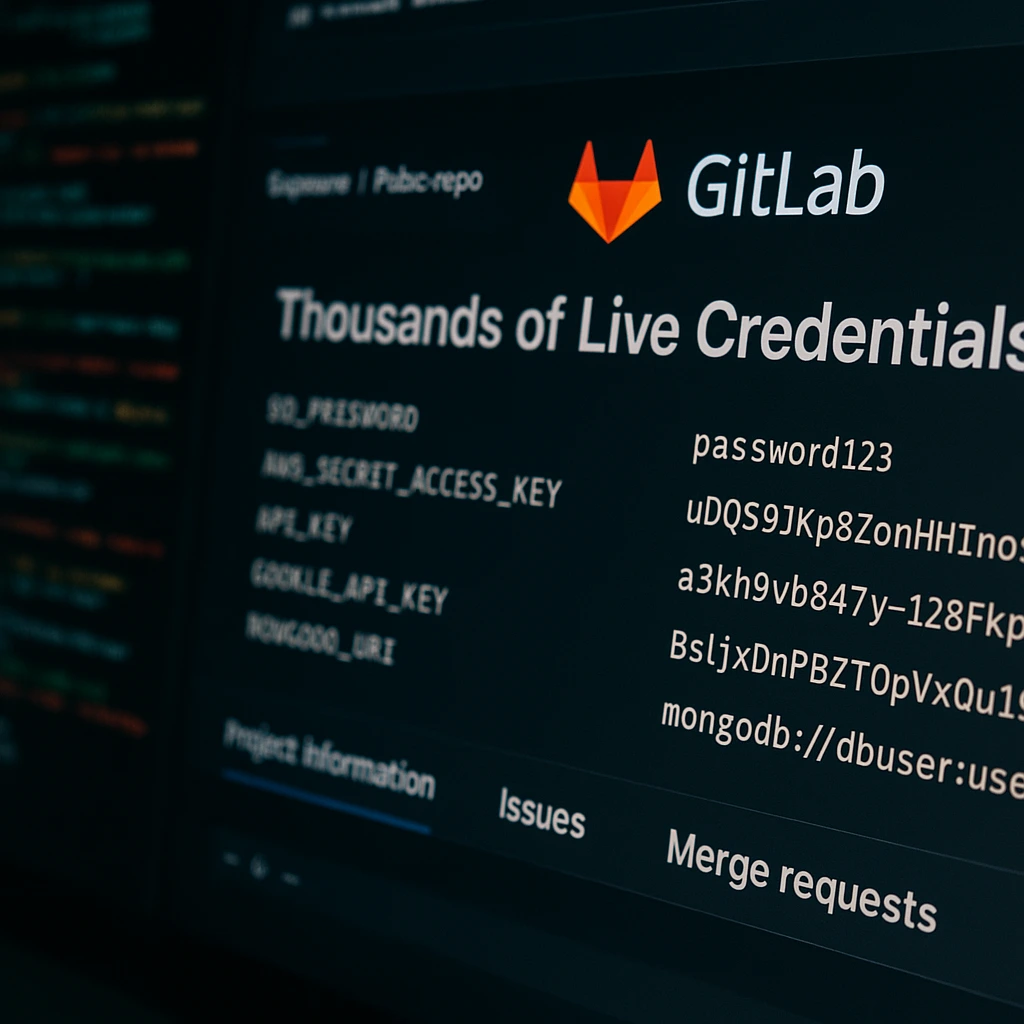
The GitLab secrets exposure revealed a massive collection of leaked credentials inside public repositories. A large-scale scan uncovered thousands of live secrets tied to real infrastructure, cloud platforms, and internal systems. The findings raised serious concerns about secret management and highlighted persistent security failures across software development teams.
What the Investigation Discovered
A security researcher scanned all 5.6 million public GitLab Cloud repositories using an open-source detection tool. The scan validated over 17,000 live credentials across thousands of domains. The breadth of exposed data showed consistent mistakes rather than isolated oversights.
The discovered secrets included:
- Cloud provider keys from platforms such as Google Cloud
- Database credentials, including MongoDB connection strings
- API tokens for SaaS services and internal automation
- Tokens tied to GitLab services and project operations
- Long-lived credentials committed many years ago
Some live secrets came from code committed more than a decade earlier. Developers often left historical commits untouched, allowing sensitive data to remain publicly accessible long after they changed active workflows.
Why the Exposure Matters
Leaked credentials in public source code create high-impact security risks. Attackers scan repositories continuously and exploit any exposed keys they find. The GitLab results showed how widespread such leaks remain, even among experienced development teams.
Major risks include:
- Unauthorised access to cloud accounts through active API keys
- Direct entry into production databases and dev environments
- Abuse of third-party services tied to billing or automation
- Lateral movement across corporate infrastructure
- Persistent compromise through old but still valid credentials
The scale of the exposure confirmed that many organisations underestimate the long-term risks of hard-coded secrets.
How Developers Should Address the Problem
Security teams recommend clear actions to prevent future exposures. These steps strengthen secret hygiene and reduce the risk of recurring leaks.
Recommended practices include:
- Enforcing automated secret scanning across all repositories
- Using environment variables or secure vaults for sensitive credentials
- Revoking and rotating exposed secrets quickly
- Scrubbing secret-bearing commits from repository history
- Training developers on safe credential handling practices
Secret management requires consistent policy enforcement. Automated systems help identify mistakes early and reduce the chance of long-term exposure.
Broader Impact on the Software Ecosystem
This incident highlighted a recurring problem across open-source and commercial development. Many organisations rely heavily on public repositories without implementing strong guardrails. The scale of the GitLab findings suggests that similar exposures likely exist across other platforms.
The software community faces growing pressure to improve secret hygiene. As attacks become more automated, the window between accidental exposure and exploitation continues to shrink. Stronger preventive controls now represent a core requirement for any development workflow.
Conclusion
The GitLab secrets exposure showed how dangerous poor secret hygiene can be at scale. Thousands of live credentials remained publicly accessible across millions of repositories. The incident exposed deep gaps in development practices and highlighted the urgent need for automated scanning, strict credential handling, and consistent security education. Without these improvements, organisations will continue to face widespread and preventable breaches.
0 responses to “GitLab Secrets Exposure Reveals Thousands of Live Credentials in Public Repositories”