


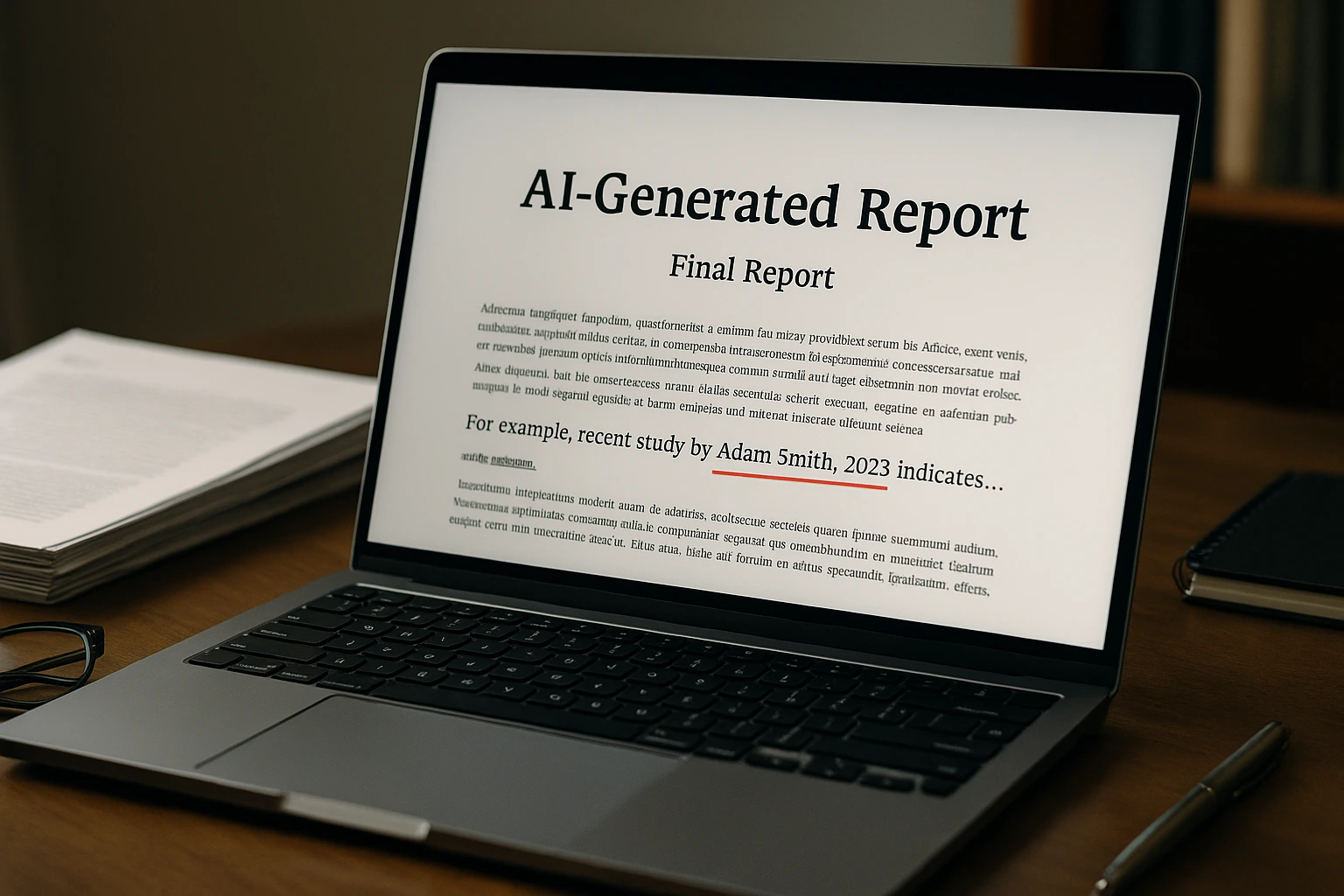
Growing scrutiny surrounds a new Deloitte AI report after investigators found several invalid citations and broken references in a government-commissioned study. The discovery triggered renewed concern about AI-assisted research in official documents. Analysts warn that this incident highlights a pattern of quality-control failures linked to improper use of generative AI tools.
Background of the Incident
A Canadian provincial government hired Deloitte to produce a healthcare analysis. Reviewers later uncovered citations that pointed to nonexistent studies, outdated information and fabricated reference entries. These issues matched patterns associated with AI-generated hallucinations.
Investigators reported that several bibliographic entries did not match any real academic or governmental sources. Reviewers also found footnotes citing documents that had never existed. These patterns indicated that generative AI tools contributed to the drafting process without enough verification.
This episode follows an earlier controversy in Australia. Officials there discovered similar errors within a separate Deloitte report. That report used AI tools during the research phase and featured faulty citations. Deloitte eventually refunded part of the contract after public pressure.
Deloitte’s Position
Deloitte acknowledged the errors in the Canadian study. The firm confirmed that analysts used AI tools during research stages. Deloitte stated that the mistakes did not affect the main findings or recommendations. The company pledged to update the incorrect references and improve internal review processes.
The firm also emphasised that human analysts supervised the drafting process. However, critics argue that this incident shows a serious gap in Deloitte’s quality-control workflow.
Why the Deloitte AI Report Matters
This Deloitte AI report underscores rising risks as organisations increase their reliance on generative AI for research and drafting. Government studies shape policy decisions, funding allocations and public strategy. Any flaw in those documents can mislead decision-makers during critical planning.
Analysts warn that AI hallucinations occur even when tools appear accurate. These hallucinations often include invented citations, false claims or subtle misinformation that seems credible at first glance. Without strict oversight, those mistakes can move into official documents.
Risks for Governments and Institutions
Government agencies face growing pressure to verify AI-generated content. Incorrect citations can undermine trust and damage reputations. Institutions must recognise that AI tools generate text, not guaranteed truth.
Strong safeguards are required:
- Mandatory human verification for every citation
- Clear documentation of AI involvement
- Structured review workflows before publication
- Training for analysts who use generative tools
These steps reduce the chance of misinformation entering public reports.
Conclusion
The latest Deloitte AI report highlights the consequences of unchecked AI-assisted research. The incident demonstrates that even reputable firms can release inaccurate content when oversight weakens. Governments and institutions must treat AI as a supportive tool rather than a replacement for rigorous verification. Strong review practices remain essential for trustworthy public research.
0 responses to “Deloitte AI Report Raises Concerns After New Citation Errors”