


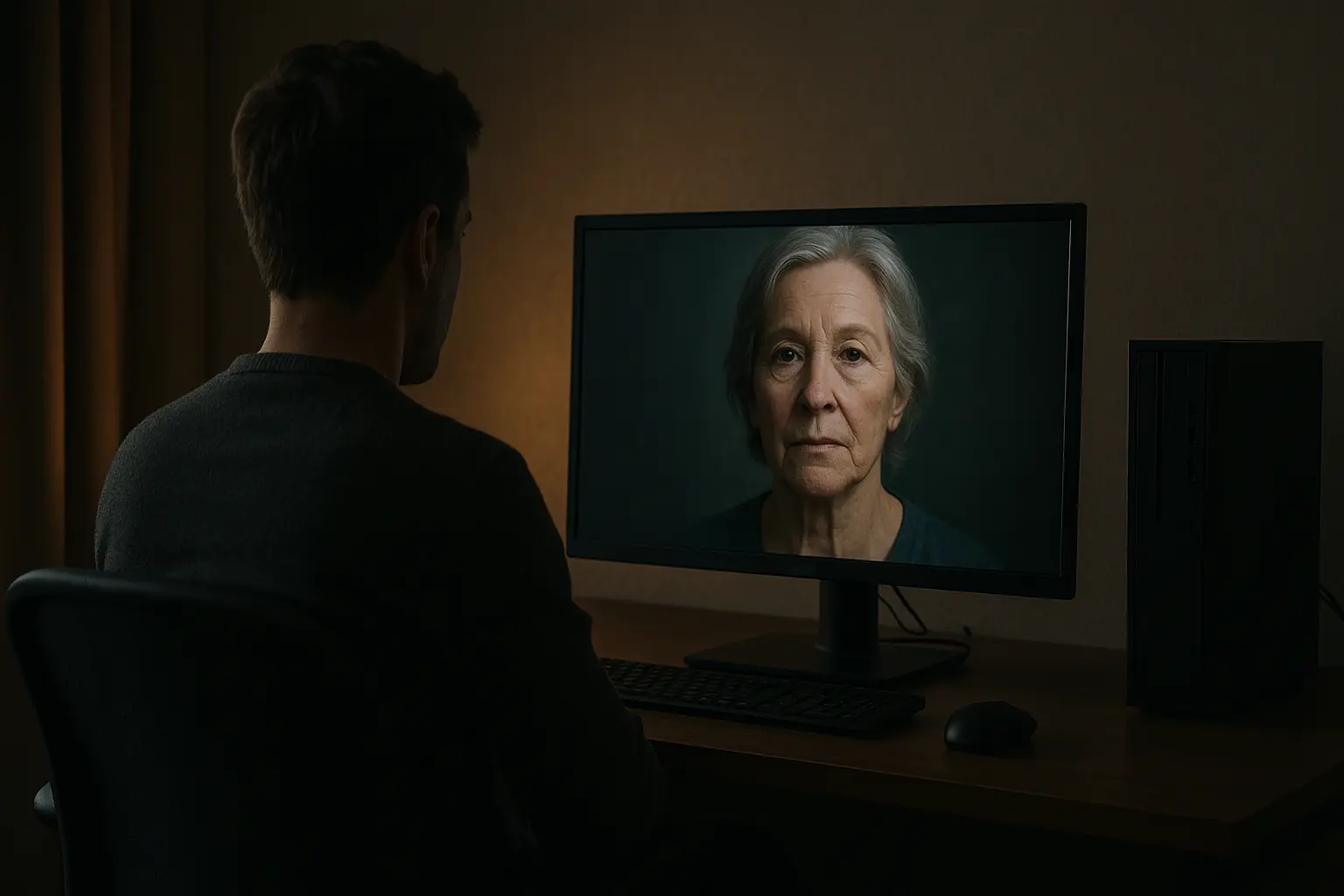
A rising wave of AI image dead people content is alarming families, ethicists and privacy advocates. Deepfake tools now recreate the faces and voices of deceased individuals, often without permission. These synthetic images and videos cause emotional harm, generate confusion online and expose major gaps in current law.
How AI Recreates the Deceased
Investigations show that AI models can produce highly realistic portraits or videos of people who are no longer alive. Some clips portray victims of tragic incidents, while others reconstruct celebrities or public figures. Families describe the experience as distressing because these synthetic depictions appear suddenly on social platforms, often without warning.
In one case highlighted by researchers, a mother discovered an AI-generated video of her deceased daughter circulating online. The content remained available until public pressure forced platforms to remove it. Incidents like this reveal how quickly synthetic media spreads and how slowly platforms respond.
AI tools used for these creations draw on public photos, scraped data and generative models. The process requires little technical skill, allowing almost anyone to produce convincing digital replicas.
Legal Gaps Around Posthumous Deepfakes
The rise of AI image dead people content exposes weaknesses in legal protections. Many jurisdictions offer limited or no rights for individuals after death. Posthumous privacy protections rarely extend to synthetic images unless they involve commercial exploitation or explicit defamation.
This gap leaves grieving families with few options. They often cannot demand removal unless the content meets strict legal criteria. Laws also differ widely, creating inconsistent protections across countries and platforms.
Regulators note that even when content causes emotional harm, proving legal standing or demonstrating measurable damage can be difficult. As synthetic media increases, these gaps grow more visible and more urgent.
Ethical and Psychological Risks
Experts say that manipulating a deceased person’s likeness crosses ethical boundaries. The practice undermines dignity and can distort the grieving process. Psychologists warn that interacting with AI recreations may hinder emotional recovery by creating unhealthy attachments to digital replicas.
Deepfake images also risk exploitation. Unscrupulous creators may use the likeness of deceased individuals for shock content, misinformation or harassment. Without clear consent structures, there is no safeguard against misuse.
Ethicists argue that digital afterlife tools must follow strict guidelines. Suggested measures include:
- Clear consent before death
- Family approval for any posthumous use
- Transparency about data sources
- Warnings or disclaimers on generated media
These conditions aim to protect memory and prevent exploitation.
What Platforms and Policymakers Should Do
Researchers recommend stronger platform controls to address unauthorized AI recreations. Reporting systems should allow quick removal of synthetic depictions that misuse a deceased person’s likeness. Platforms must also enforce clearer rules on deepfake content, especially when it targets vulnerable families.
Policymakers may need to expand posthumous rights to cover digital impersonation. Legal frameworks should support families in requesting removal and restrict AI tools that recreate individuals without documented consent.
People may also want to include digital-legacy instructions in wills or privacy documents. These preferences could outline how their likeness, voice or personal data may be used after death.
Conclusion
The growth of AI image dead people content exposes a complex mix of emotional, ethical and legal problems. Synthetic recreations harm grieving families, disrupt public trust and highlight significant gaps in digital-rights protections. As AI tools evolve, platforms and lawmakers must establish clear rules that respect dignity and safeguard the memory of those who can no longer speak for themselves.
0 responses to “AI image dead people trend raises legal and ethical concerns”