


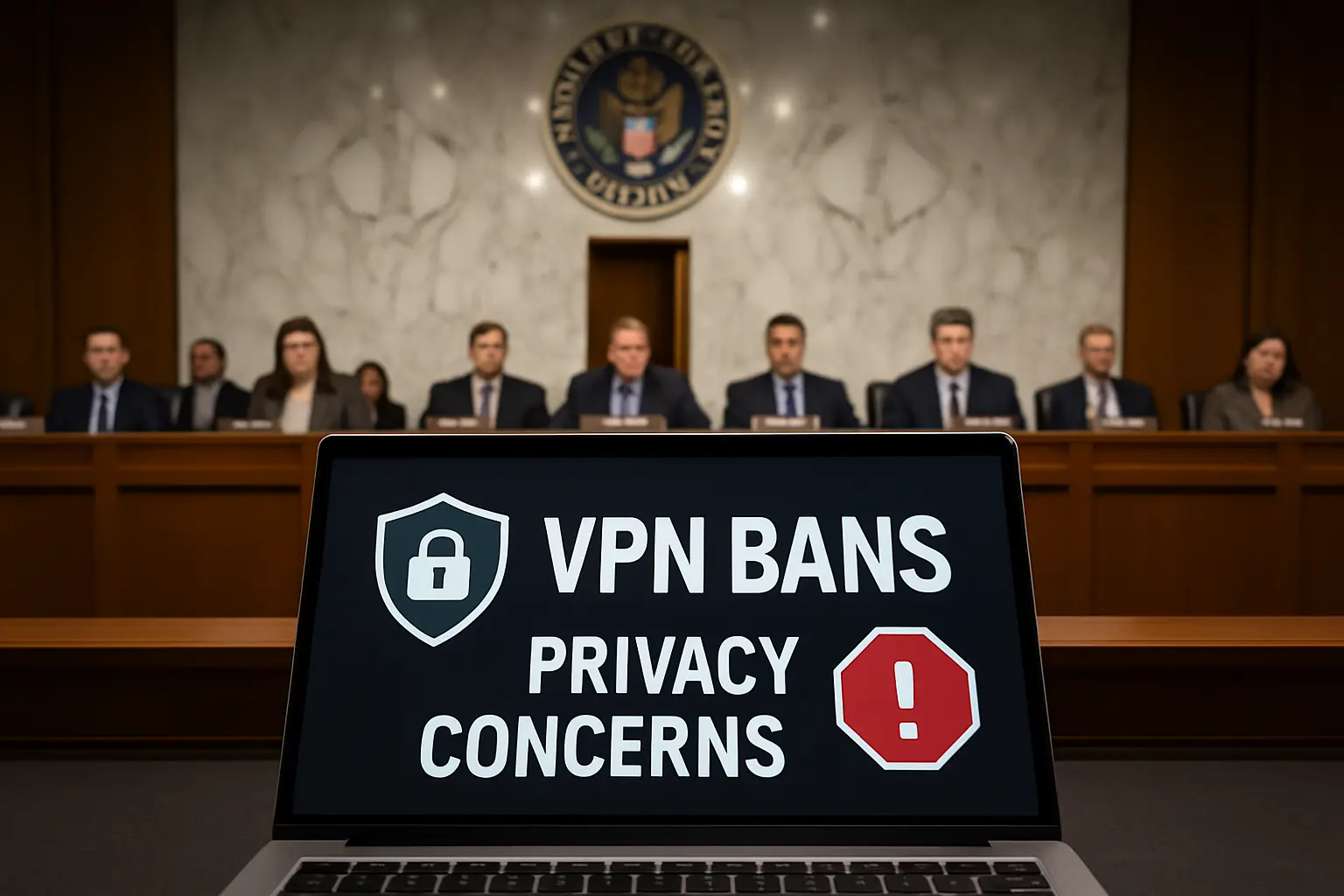
VPN bans in US legislatures are gaining momentum as several states push bills aiming to restrict the use of virtual private networks on websites categorized as harmful to minors. Supporters frame the proposals as necessary for online child protection, while critics argue that the measures threaten privacy, cybersecurity, and civil liberties.
States Considering New Restrictions
Wisconsin leads the movement with a bill already approved in the State Assembly. It requires adult-content websites to block access for anyone using a VPN and demands strict age-verification tools.
Michigan is following a similar path. Lawmakers there want internet service providers to detect and block VPN traffic when users try to reach restricted content. This approach shifts responsibility from platforms to network operators and increases the scale of monitoring.
Supporters Emphasize Child Safety
Proponents of the legislation argue that minors can bypass age-gates easily by masking their location with a VPN. They claim the bans would reinforce existing safeguards and limit access to material that the states classify as harmful. According to them, the proposal supports parents and helps enforce age-restriction laws more consistently.
Critics Warn of Severe Consequences
Privacy experts strongly oppose the bills. They argue that VPN bans in US states could undermine digital safety for millions of legitimate users — journalists, activists, students, corporate workers, and victims of abuse — who rely on encrypted connections for protection.
Opponents also highlight the surveillance risks. Detecting and blocking VPN traffic requires deep monitoring of user data, which could expose sensitive information and expand government oversight far beyond the stated purpose.
Technical and Legal Challenges
A VPN ban is extremely difficult to enforce. Providers would need to inspect encrypted data streams to distinguish VPN usage from normal traffic. Protocols change frequently, which makes the process unreliable and costly.
Legally, critics say the proposals may conflict with constitutional rights related to speech, privacy, and secure communication. Without clear limits on surveillance, the laws risk introducing new vulnerabilities that criminals could exploit.
Impact on Users and the Industry
If the bans pass, VPN providers may need to redesign their infrastructure. ISPs could gain far more control over encrypted communication, and platforms may face new compliance burdens. For everyday users, the internet could become less private and less secure, even when they engage in lawful activity.
Conclusion
VPN bans in US states highlight a growing conflict between child protection and fundamental digital freedoms. The proposals signal a major shift in how lawmakers want to regulate encryption and online privacy. As the debate continues, the outcome will determine how much control governments can exert over secure communication in the future.
0 responses to “VPN Bans in US Spark Major Privacy Concerns”