


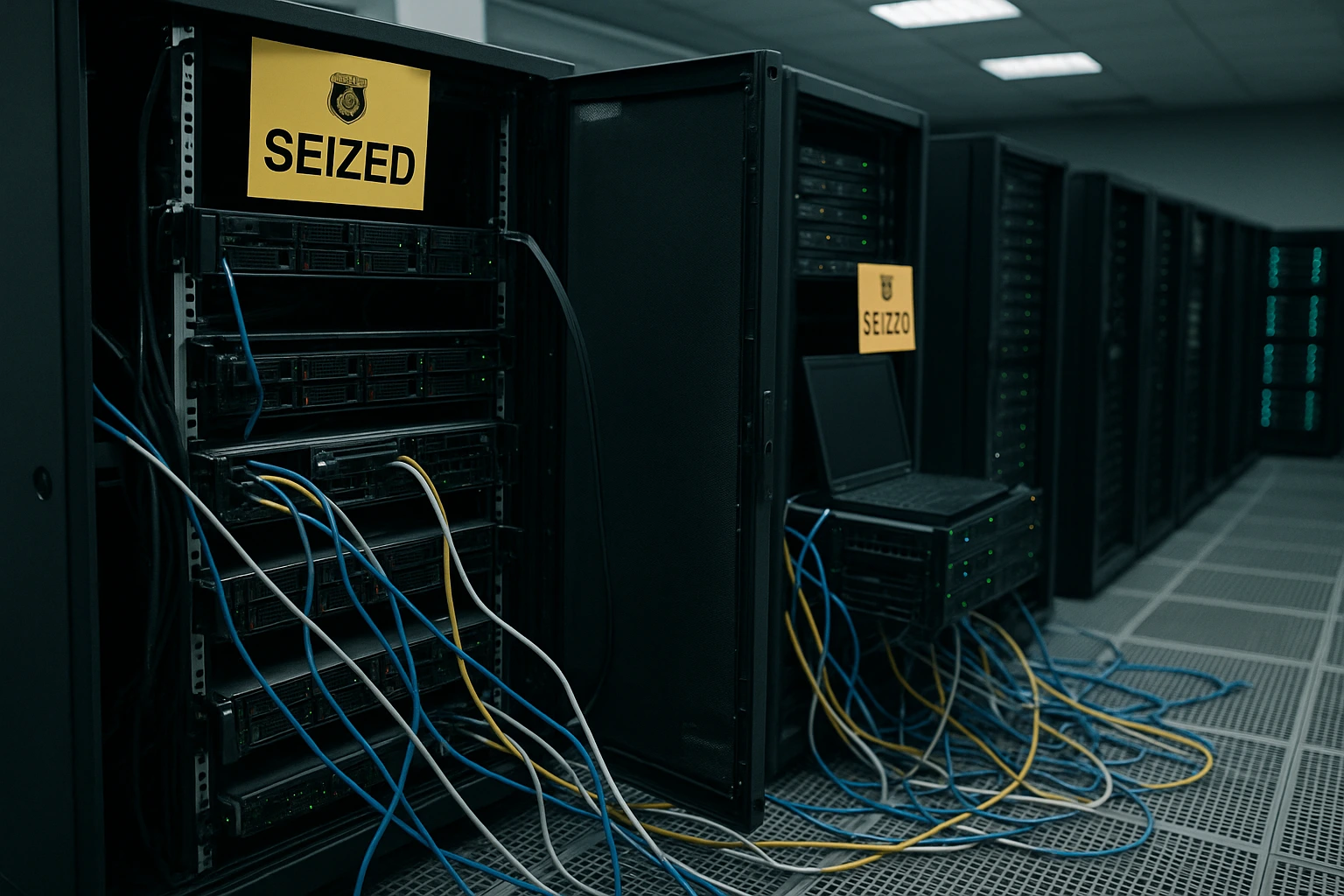
The malware server takedown carried out by Europol and international partners delivered a decisive blow to three major malware families. The action disabled critical infrastructure, halted large-scale infections and disrupted networks that supported global cybercrime. The operation targeted the core systems that powered these threats and forced their operators offline.
Major targets of the operation
Europol coordinated the action against three well-known malware families: Rhadamanthys, VenomRAT and Elysium. Investigators seized or disrupted more than one thousand servers connected to these strains. They also took control of several domains used for command-and-control activity, distribution and logistics.
Law enforcement teams executed searches across several European countries. These searches revealed evidence that linked operators to large data-theft and remote-access campaigns. The collected material confirmed that the affected servers supported huge volumes of malicious traffic.
How each malware family operated
Rhadamanthys acted as an infostealer with a subscription-based model. Criminals used it to collect credentials, cookies and crypto-wallet data. VenomRAT allowed attackers to gain full remote access to infected systems. It enabled screen control, data theft and long-term monitoring. Elysium functioned as a botnet and proxy service that supported malicious campaigns at scale.
These families infected hundreds of thousands of devices worldwide. Their combined impact allowed criminals to steal personal data, run phishing operations and access financial accounts.
Scale of the disruption
The malware server takedown disabled core systems that controlled victim machines and managed stolen data. Investigators identified hundreds of thousands of infected devices during the operation. They also found large collections of credentials linked to major global services. One suspect held access to over one hundred thousand crypto wallets, which highlighted the financial risks posed by these malware strains.
By removing the servers, investigators broke the communication channel between operators and infected devices. This prevented further data theft and limited future abuse.
Why this operation matters
The malware server takedown changed the operational landscape for the involved threat actors. Criminal groups lost infrastructure, revenue streams and control over infected systems. The action also removed key resources used to launch new campaigns.
Cybersecurity analysts noted that these disruptions force criminals to rebuild networks and tools. That process takes time and reduces the risk of immediate follow-on attacks. The operation also demonstrated the impact of close cooperation between law enforcement and private security firms.
What users and organisations should do now
Individuals should check for compromised credentials, review login activity and enable strong authentication on all major accounts. Organisations should run full endpoint scans, update detection rules and monitor for unusual behaviour across networks. The infection scale suggests that many victims may still hold traces of these malware families.
Conclusion
The malware server takedown significantly weakened three major malware families and protected countless devices from further compromise. Europol’s coordinated action removed vital infrastructure, disrupted criminal workflows and reduced the threat landscape for users and organisations. The operation marked an important win for defenders, yet continued vigilance remains essential as threat actors search for new footholds.
0 responses to “Malware server takedown disrupts three major malware families”