


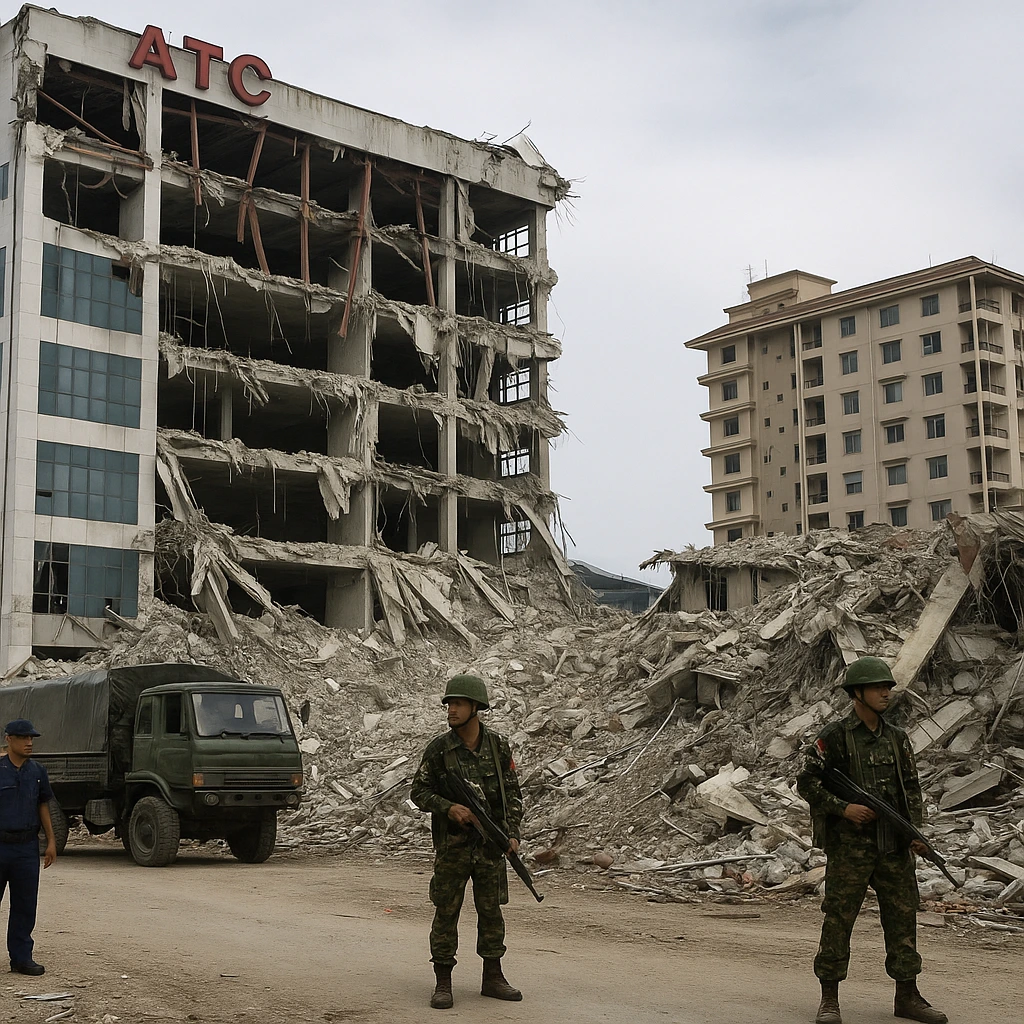
Myanmar’s military launched a major operation against the KK Park scam centre, a sprawling compound linked to fraud networks and human-trafficking. Authorities claimed significant progress, yet satellite imagery and independent analysts disagree. Many parts of the site appear active despite public statements about its destruction.
What Myanmar authorities announced
Officials reported the demolition of large sections of KK Park during operations in October and November. They stated that around 150 buildings were removed, including dormitories, work floors and leisure facilities. Troops also seized satellite-internet equipment and detained more than two thousand individuals during the sweep.
Authorities framed the event as a decisive action against large criminal groups. They described the operation as a turning point for the region and claimed that the crackdown disrupted major scam operations in Myawaddy Township.
Why KK Park matters
KK Park sits along a border region known for weak oversight and strong criminal influence. The compound hosts forced-labour scam operations that run romance scams, crypto fraud schemes, identity fraud campaigns and high-pressure investment scams. Thousands of workers, many trafficked from several countries, were believed to operate under coercive conditions inside the compound.
The facility also served as a hub for cross-border criminal networks that targeted victims worldwide. Investigators linked similar compounds across Myanmar, Laos and Cambodia to financial losses worth billions of dollars globally. KK Park grew rapidly in recent years and became one of the most notorious locations linked to large-scale scam production.
Doubts raised by analysts
Independent investigators reviewed satellite images taken after the announcement. Their findings contrast with the official narrative. Only a portion of the compound appears damaged, while many buildings remain intact and functional. Several areas show no visible signs of demolition, raising concerns about the accuracy of official claims.
Analysts also highlight the military’s complex relationship with border-region compounds. These facilities often generate revenue through taxation or informal arrangements, making full shutdowns politically and financially challenging. As a result, announced crackdowns may not reflect real operational changes inside the compounds.
Human-trafficking concerns
The crackdown left major uncertainty about the workers inside KK Park. Many individuals fled toward the Thai border to escape violence or forced labour. Others remain trapped due to confiscated passports, fear of retaliation or lack of transport. Governments across Asia now face pressure to locate and repatriate their citizens who may be stuck inside the compound or surrounding areas.
What happens next
The future of KK Park depends on continued pressure from international partners and neighbouring governments. Genuine progress requires the dismantling of fraud infrastructure, safe extraction of trafficked workers and strict control of internet access used to sustain the scam operations. Without these steps, analysts warn that KK Park could continue functioning behind the scenes.
Conclusion
The crackdown on the KK Park scam centre marks a dramatic moment for Myanmar’s border-region fraud networks. However, satellite evidence and expert assessments indicate that much of the compound remains operational. Real progress will require sustained action, international cooperation and meaningful support for the people trapped inside these scam complexes.
0 responses to “KK Park Scam Centre Targeted in Myanmar Crackdown”