


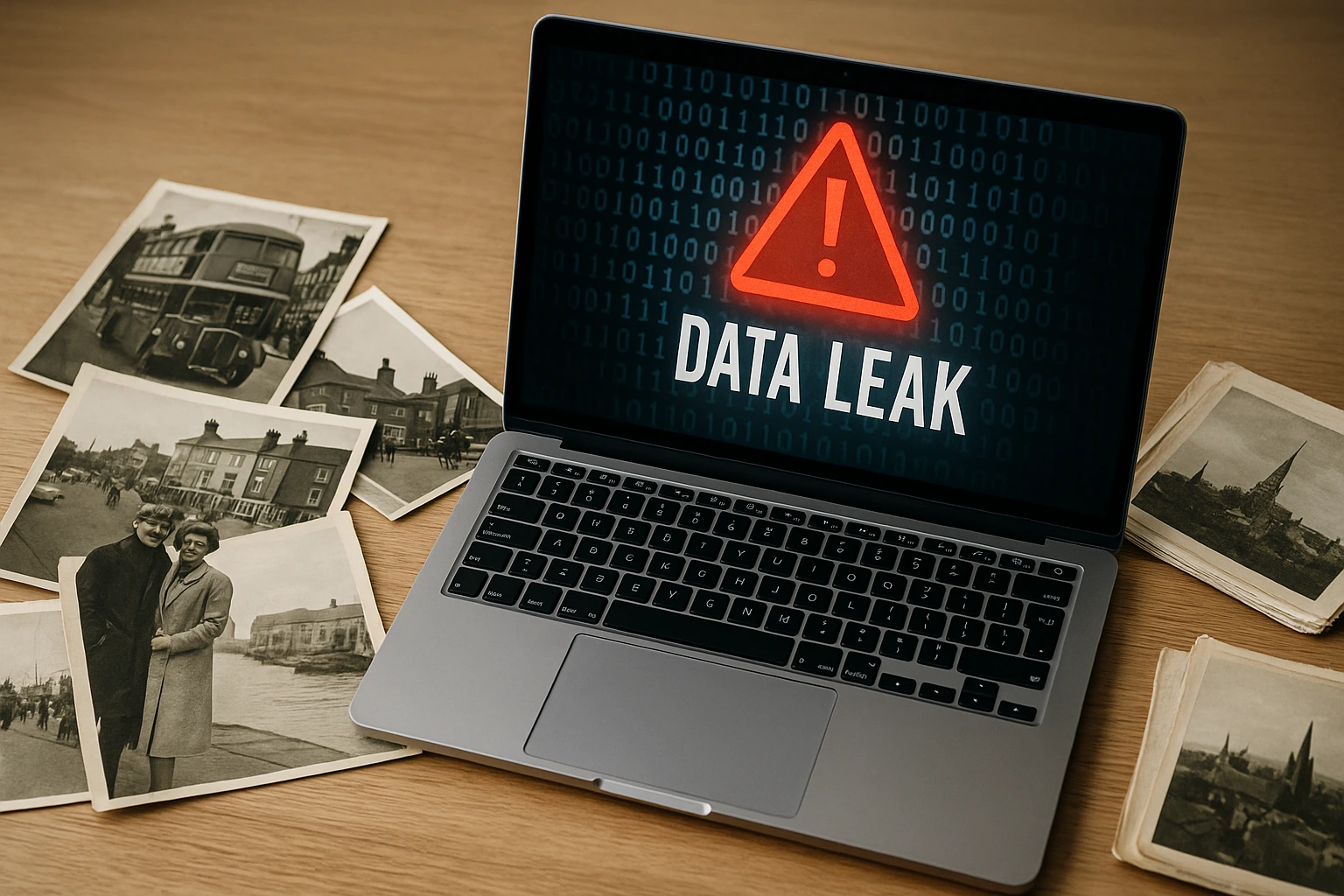
The Francis Frith data-leak exposed more than 300,000 customer records after an unprotected database was left accessible online. The incident affects users of the historic UK photo-archive and includes personal information gathered over nearly two decades.
What happened and what data was exposed
Researchers discovered an unsecured Elasticsearch instance belonging to the company. It was open to the public with no authentication. The database contained names, email addresses and some physical addresses from customer messages. It also held roughly 44,000 enquiry records.
No passwords or payment data were included. However, the leaked personal details can still be misused. Attackers could run phishing campaigns or impersonate the company to trick victims into sharing more information.
Why the breach matters
Although Francis Frith focuses on vintage photography, the exposure highlights a broader problem. Smaller companies often hold large archives of personal data without strict security controls. The Francis Frith data-leak shows how forgotten systems and legacy records can create serious privacy risks.
Some of the leaked data dates back to 2006. Old databases are often overlooked, and this makes them a common weak point. When these systems remain online, they can expose both past and current customers.
Recommendations for affected users
Users should stay alert for suspicious emails. Attackers may send fake updates about orders, prints or account activity. Customers should avoid clicking unexpected links, confirm sender addresses and ignore requests for sensitive information.
Those concerned about identity misuse can also monitor their email accounts for unusual activity. Basic precautions such as two-factor authentication and spam filtering will reduce exposure.
Lessons for organisations
The incident underscores the need for routine data audits. Companies should secure all databases, remove abandoned systems and encrypt stored records. They must also monitor for configuration errors, especially in cloud environments where old instances can remain active.
Regular housekeeping can prevent many breaches. When organisations manage decades of customer data, strong oversight becomes essential.
Conclusion
The Francis Frith data-leak proves that even niche services are vulnerable if they neglect data management. Old systems, forgotten servers and unsecured databases continue to drive many modern breaches. To protect users, organisations must apply consistent security standards to every part of their infrastructure — not only the systems they use every day.
0 responses to “Francis Frith data-leak hits UK photo-archive users”