


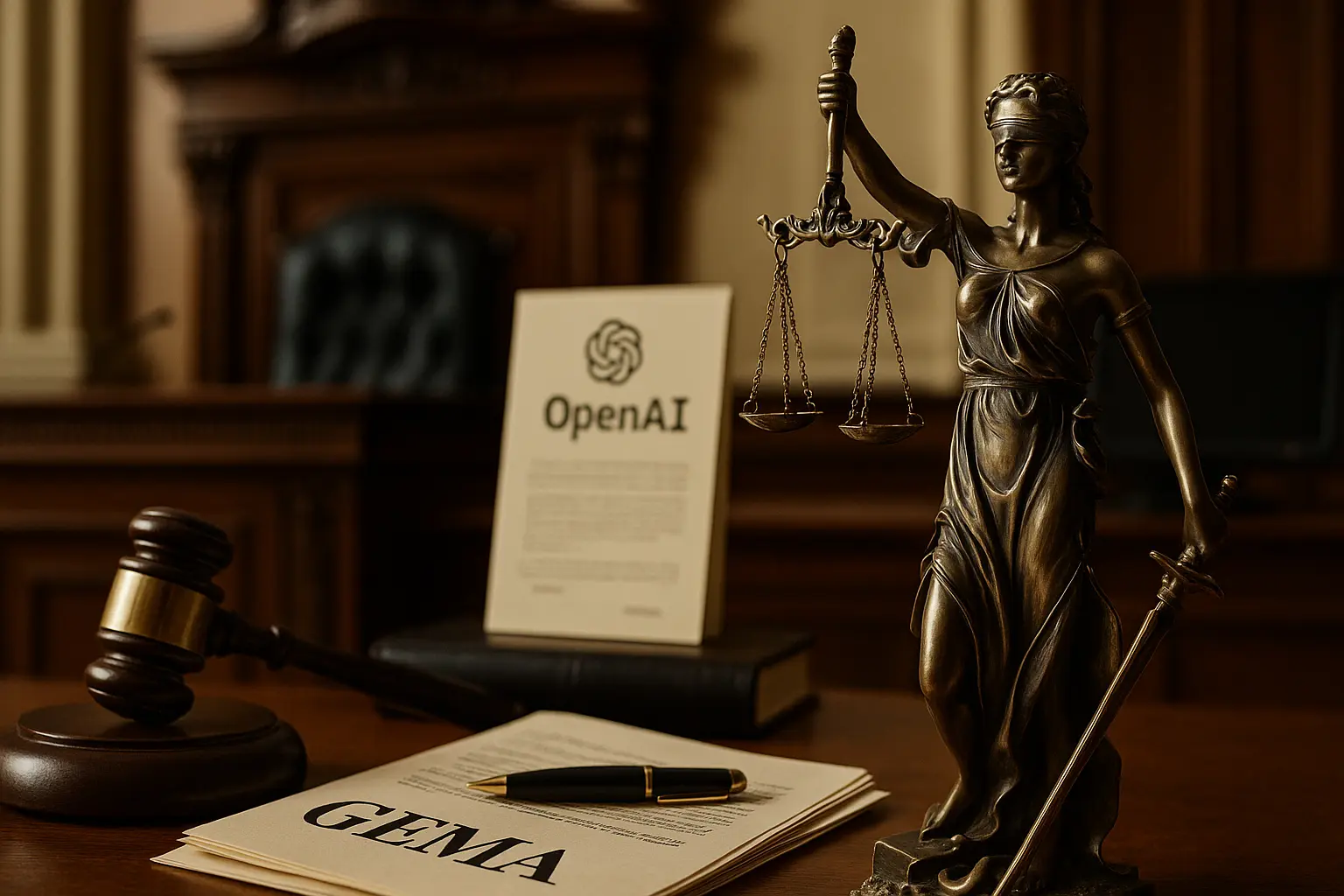
The GEMA wins landmark lawsuit verdict has shaken the global AI industry. A German court ruled that OpenAI violated copyright laws by using protected song lyrics to train its AI systems. The decision represents one of the first major legal victories for artists in the ongoing battle over AI and intellectual property.
Court Rules in Favor of GEMA
The Munich Regional Court determined that OpenAI’s models, including ChatGPT, reproduced sections of copyrighted German songs. GEMA argued that OpenAI trained its models on at least nine works from its catalogue without obtaining a proper licence. The court agreed, confirming that AI-generated text reproducing these lyrics counts as direct copying, not transformative use.
Judges found that OpenAI’s training process stored and reused specific lyric passages in its model outputs. That use fell outside of any text or data-mining exemptions under EU law. As a result, the court ruled that OpenAI infringed copyright and must halt such practices unless authorised by the rights holders.
Why This Ruling Matters
The GEMA wins landmark lawsuit case sets a strong precedent for future copyright claims against AI developers. It clarifies that generative AI tools cannot freely use protected content under general data-mining exceptions. Instead, companies will need to secure licences or pay compensation to creators.
The decision may also influence broader European policy. Lawmakers are already reviewing how copyright and AI regulations align under the upcoming EU Artificial Intelligence Act. This case demonstrates that existing copyright protections can still apply to machine-learning systems.
Reaction from the Industry
GEMA hailed the ruling as a “decisive victory for creative rights.” Its representatives said the outcome ensures artists receive recognition and fair compensation when their work trains AI models. The organisation added that this decision strengthens its position in future negotiations with technology firms.
OpenAI, meanwhile, expressed disappointment and signalled plans to review its legal options, including an appeal. The company maintains that its training methods comply with fair-use principles and support innovation.
What Comes Next
The verdict will likely encourage other rights groups to take similar action. Analysts expect new lawsuits across Europe, particularly from publishers, authors, and music organisations. Many see this as a turning point that could redefine how AI companies handle copyrighted data.
OpenAI may now be required to enter licensing discussions with GEMA and other collecting societies to continue training its models in compliance with the law. The company could also face monetary penalties once damages are assessed.
Conclusion
The GEMA wins landmark lawsuit ruling signals a new era for AI accountability. It reinforces that creative rights remain protected, even in the age of machine learning. As more artists and regulators push back, AI developers must prioritise transparency, consent, and fair licensing—or face mounting legal challenges across the world.
0 responses to “GEMA Wins Landmark Lawsuit Against OpenAI Over Copyrighted Lyrics”