


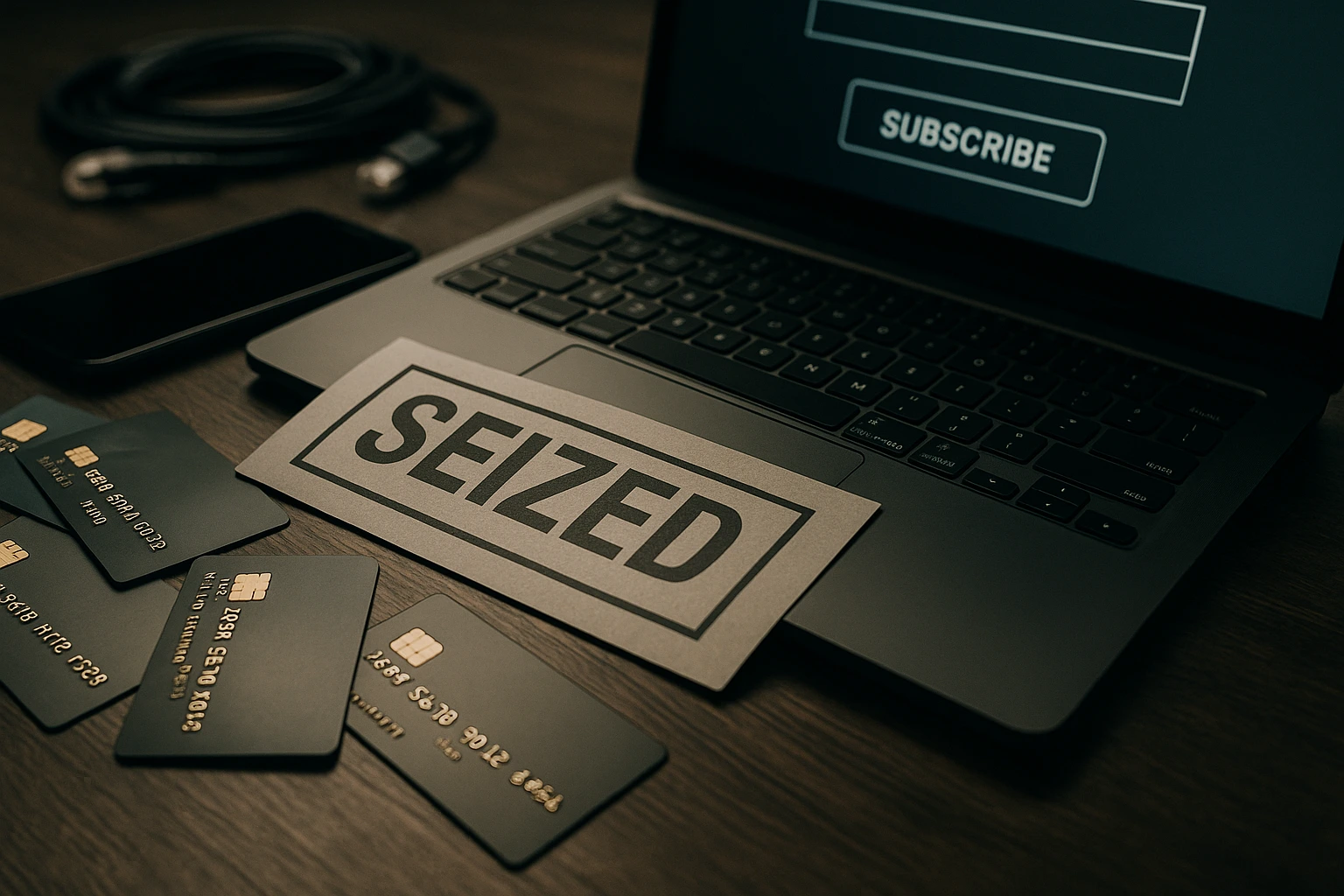
A fake subscription network uncovered by international authorities exposed a highly organised credit-card scam that targeted millions of consumers worldwide. Fraudsters quietly charged small recurring payments disguised as legitimate online subscriptions, allowing the scheme to operate for years before being dismantled. The case highlights serious weaknesses in global payment systems and online-billing checks.
How the Scheme Operated
The network created fake online services, including adult platforms, dating sites and entertainment subscriptions. Criminal groups processed stolen card details through these false services, applying low-value recurring charges that most victims never noticed. The subtle approach let the network avoid fraud-detection systems and operate across multiple jurisdictions.
To mask activity, the operators registered shell companies and used payment processors willing to onboard questionable merchants. Sophisticated routing and layered corporate structures added another level of concealment. Investigators estimate the group created millions of fraudulent transactions over several years, causing major financial harm.
Who Was Behind the Fraud
Law-enforcement teams coordinated across several countries to arrest individuals connected to the operation. Those detained included payment specialists, intermediaries and technical staff who built and maintained platforms used to support the fraudulent billing. Searches across multiple locations resulted in asset seizures worth millions, showing the scale of profits generated by the scheme.
The investigation, run under a global task-force structure, demonstrates how organised-crime groups now blend financial knowledge, tech skills and cross-border business setups to avoid detection.
Why It Matters
This case exposes a dangerous fraud model that flies under traditional radar thresholds. Key risks include:
- Hidden recurring charges that slip past customers and banks
- Criminals posing as legitimate online subscription vendors
- Abuse of international payment channels and merchant onboarding
- Large-scale financial losses spread across millions of small transactions
The discovery serves as a warning that recurring-payment systems remain vulnerable when oversight and transparency are weak.
What Consumers and Banks Should Do
Clear actions can reduce exposure to similar schemes:
- Consumers should review card statements regularly and flag suspicious recurring activity immediately
- Banks must improve monitoring for clusters of low-value recurring charges tied to new merchants
- Payment processors should strengthen verification for subscription-based businesses and scrutinise shell-company risk signals
- Regulators should continue improving cross-border financial-crime cooperation to disrupt similar networks
Better consumer awareness and stronger merchant-screening practices make these schemes harder to run.
Conclusion
The fake subscription network case shows how fraud evolved beyond one-off card theft toward persistent, hidden billing models. Criminals exploited automated subscription systems and global payment networks to steal funds quietly over time. Continued vigilance, stronger merchant checks and proactive consumer education will reduce the success of similar scams and protect payment ecosystems from long-term criminal abuse.
0 responses to “Fake subscription network bust exposes massive global card scam”