


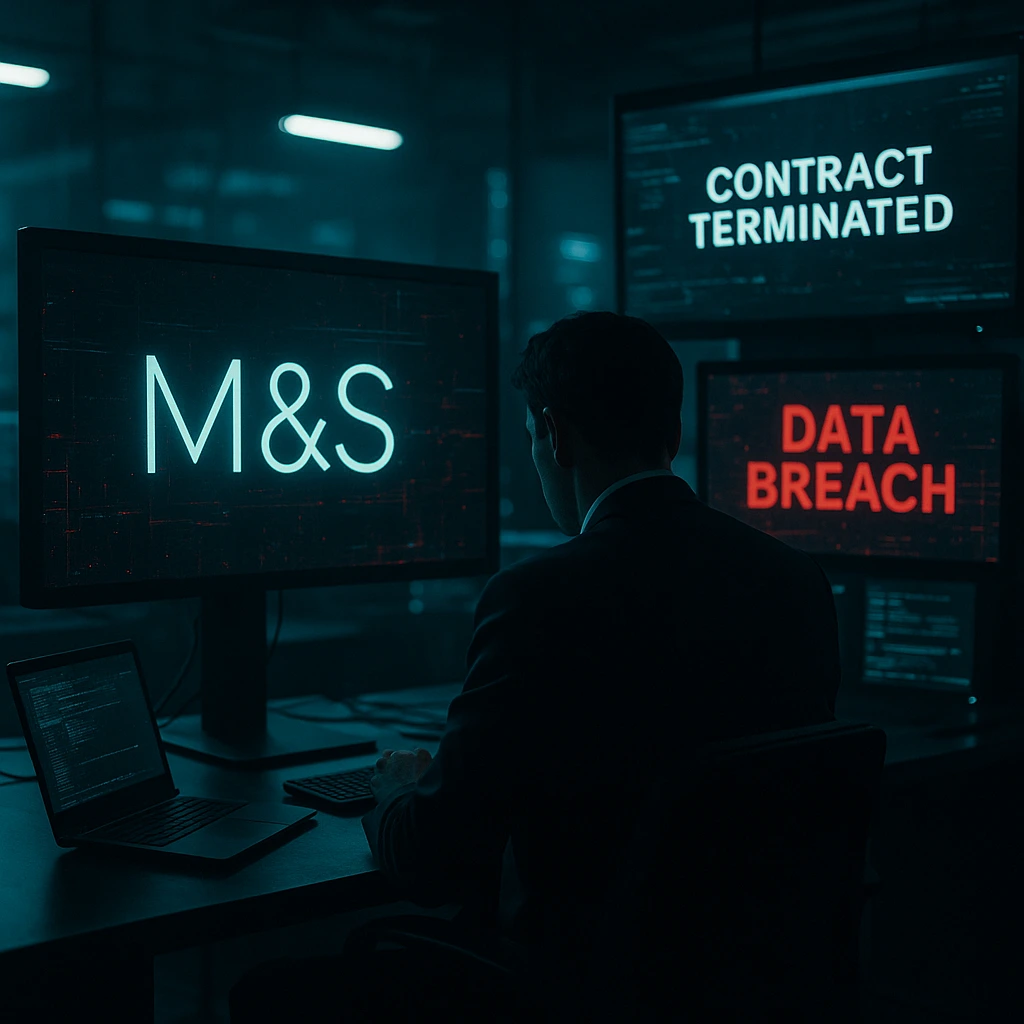
M&S cyberattack fallout continues as the British retailer ends its long-standing IT service desk contract with Tata Consultancy Services (TCS). The decision follows months of disruption caused by a cyberattack that affected its digital and in-store operations.
M&S confirmed that the incident stemmed from a third-party system breach, not a direct intrusion into its network. However, the fallout has forced major reviews across its digital infrastructure and vendor relationships.
How the breach unfolded
Investigations revealed that attackers exploited access through a contractor providing IT support. The breach led to suspended online orders, delayed deliveries, and manual processing in stores. Reports linked the compromised service to TCS, which had managed the company’s helpdesk systems for over a decade.
M&S reported a potential £300 million impact on operating profits due to lost sales and recovery costs. The attack became one of the most damaging incidents in the UK retail sector this year.
TCS responds to contract termination
TCS stated that its network remained secure and denied responsibility for the cyberattack. The company clarified that it does not provide cybersecurity services to M&S, emphasizing that the contract termination resulted from a scheduled procurement cycle.
Despite this assurance, the timing has drawn scrutiny. Industry analysts note that vendor confidence plays a major role in recovery decisions after large-scale cyber incidents.
Financial and operational consequences
The M&S cyberattack fallout extends far beyond immediate financial losses. M&S temporarily shifted to manual processes and faced online order backlogs. Customers reported stock shortages and delayed refunds as systems slowly recovered.
The breach also triggered regulatory attention and internal audits across the company’s supply chain. Analysts suggest that the retailer will accelerate digital transformation plans to reduce dependency on third-party infrastructure.
Strengthening resilience
In response to the breach, M&S aims to upgrade its IT architecture and enforce stricter vendor security requirements. New contracts will reportedly include enhanced monitoring, encryption, and real-time incident response capabilities.
Experts say this marks a wider industry shift, with retailers tightening cybersecurity standards following similar third-party exposure events.
Conclusion
The M&S cyberattack fallout demonstrates how dependent retailers are on vendor security. Ending the TCS contract may signal M&S’s determination to rebuild trust and modernize its systems after a costly breach.
As the company strengthens its defenses, the event serves as a reminder that cybersecurity resilience must extend beyond internal systems to every partner in the supply chain.
0 responses to “M&S cyberattack fallout: retailer ends TCS contract after data breach”