


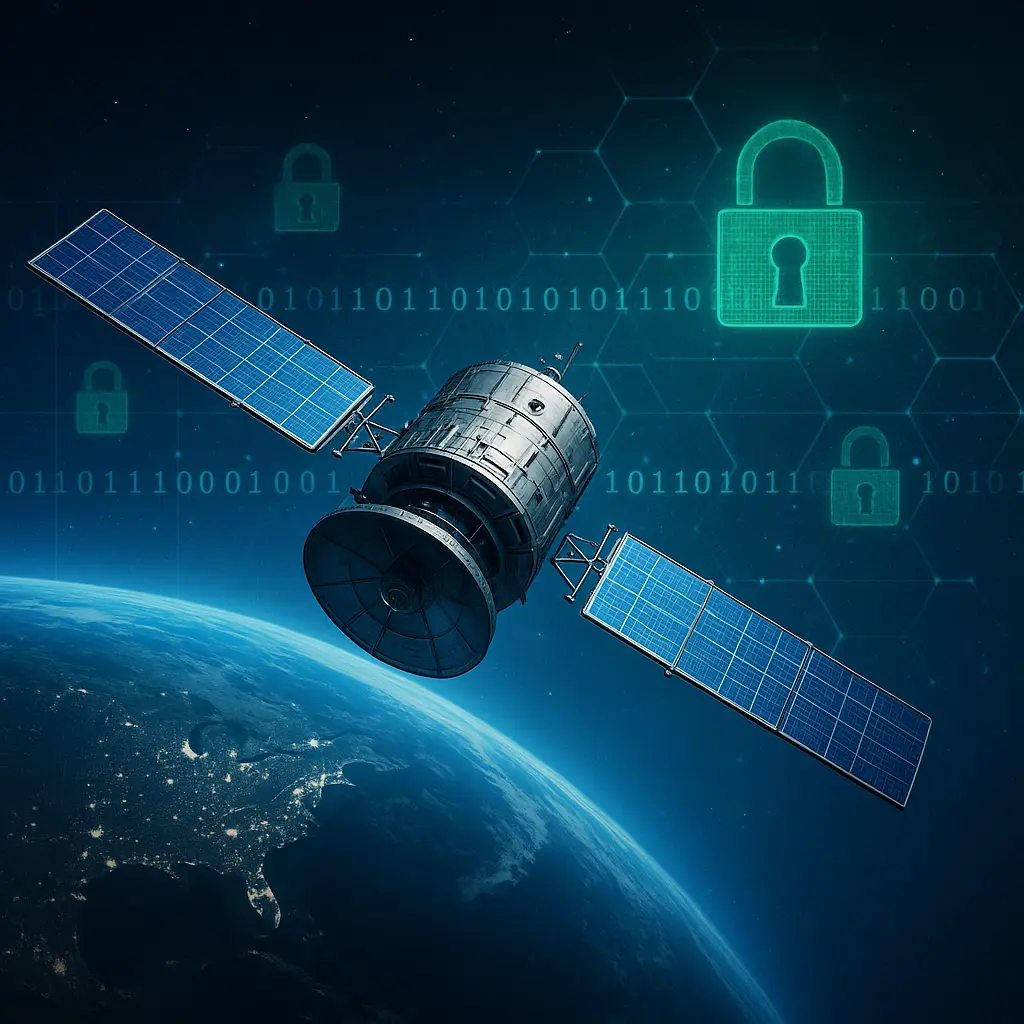
A new satellite encryption research project has revealed serious weaknesses in global satellite communications. Security experts discovered that unencrypted surveillance data can be intercepted using equipment available online for less than $10,000. The findings raise major concerns about national security, privacy, and the protection of sensitive government information.
Researchers Expose Major Vulnerabilities
A team of European cybersecurity researchers conducted experiments on satellite downlinks used for government, military, and corporate communications.
Their satellite encryption research showed that much of this data travels without any form of encryption, allowing anyone with the right tools to access it.
The intercepted data included high-resolution images, radar signals, and real-time surveillance feeds from Earth-observation satellites.
How the Interception Works
The team used commercially available antennas and signal receivers to capture unprotected transmissions from low-Earth and geostationary satellites.
They then decoded the signals using open-source software widely accessible on the internet.
According to the researchers, the process required no hacking—only basic technical knowledge and publicly available resources.
Unsecured Data from Key Sectors
The exposed transmissions included data from weather monitoring systems, defense agencies, and private satellite operators.
Some of the intercepted information could reveal military movement patterns, surveillance operations, and even industrial activity across different regions.
Experts warn that hostile actors could exploit these vulnerabilities to conduct espionage or disrupt global communication networks.
Call for Stronger Encryption Standards
The researchers urge satellite manufacturers and operators to implement stronger encryption protocols immediately.
They argue that failing to secure transmissions leaves both public and private infrastructure open to exploitation.
Regulatory agencies are now under pressure to enforce security standards for all satellite communications.
Industry Response
Many satellite service providers claim encryption is difficult due to hardware limitations and bandwidth constraints.
However, cybersecurity experts counter that the cost of inaction far outweighs the investment in encryption.
Several major companies are reportedly reviewing their systems to ensure compliance with new security recommendations.
Conclusion
The satellite encryption research highlights a critical gap in global communication security. As surveillance satellites expand their reach, the risks of unencrypted transmissions grow.
Stronger encryption standards and international cooperation are now essential to protect sensitive data in orbit and maintain the integrity of satellite networks worldwide.
0 responses to “Satellite Encryption Research Reveals Major Security Gaps”