


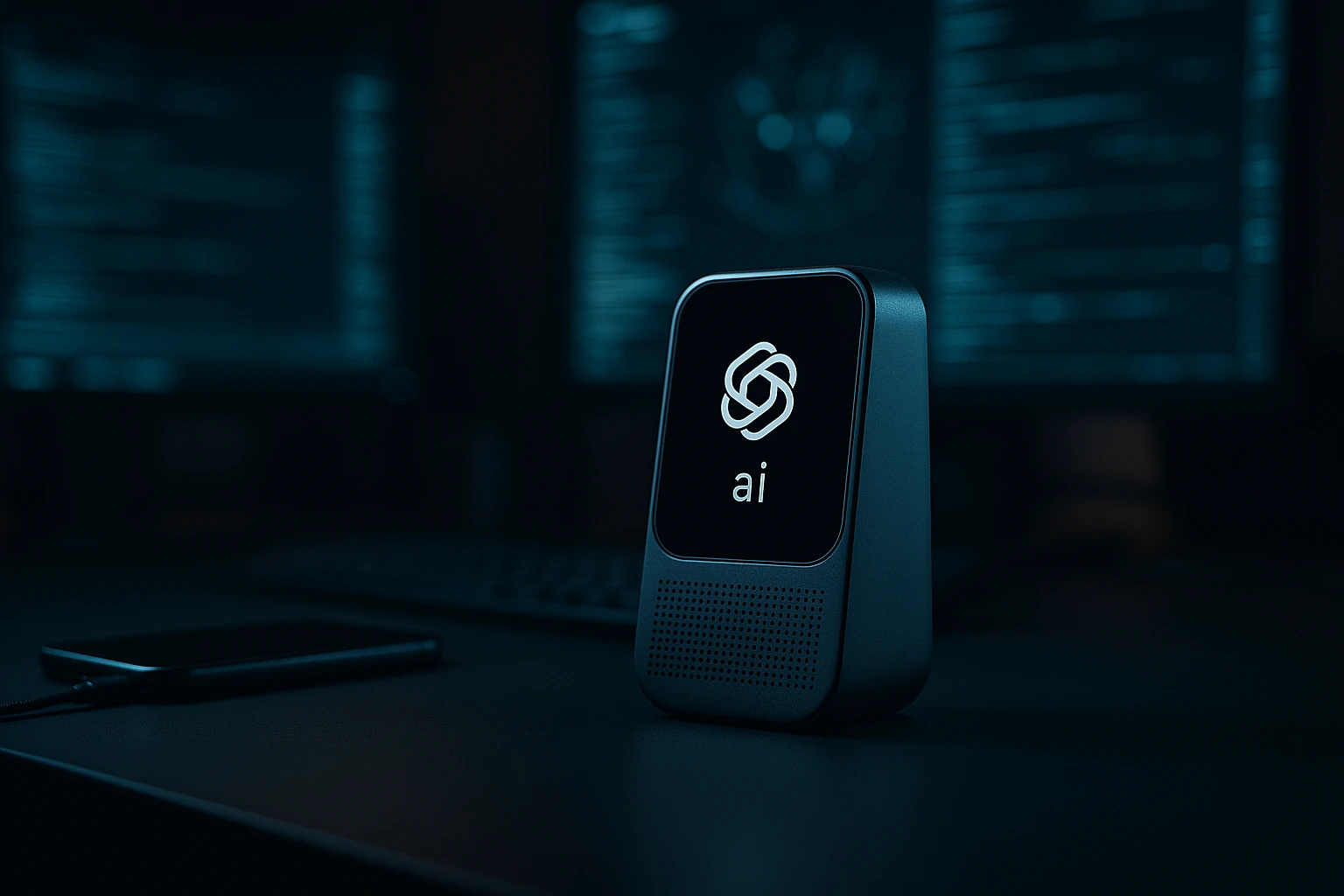
The highly anticipated OpenAI AI-powered hardware has been delayed. The company revealed that its upcoming device faces design, software, and cost challenges that have slowed development. Despite high expectations, OpenAI now admits that creating a next-generation AI assistant is far more complex than expected.
An Ambitious Plan Meets Reality
OpenAI has been developing a revolutionary AI hardware device in collaboration with Jony Ive, Apple’s former design chief, and Sam Altman. The goal was to build a minimalist, screenless device capable of understanding voice, gestures, and context.
The project, internally compared to a “personal AI companion,” aimed to compete with established smart assistants like Alexa and Google Assistant. However, unlike those systems, OpenAI wanted its device to rely entirely on conversational interaction—no screen, no apps, just natural dialogue.
Reasons Behind the Delay
Sources close to the project point to three major hurdles:
- Software integration: The team struggles to adapt GPT-based systems to a compact, always-on device.
- System performance: Early prototypes suffer from slow response times and excessive power consumption.
- Production cost: The estimated retail price may exceed what consumers are willing to pay.
Developers reportedly underestimated the challenge of balancing processing power, battery life, and affordability in a small form factor.
The Vision Still Stands
Despite the setback, OpenAI remains committed to bringing its AI-powered hardware to market. Executives describe the product as a long-term project that will evolve over multiple iterations.
If successful, the device could redefine how users interact with AI—moving from keyboard commands to natural, ambient conversations. However, the company also faces privacy concerns surrounding a device that “listens” continuously.
Industry Impact
The delay highlights the difficulty of merging advanced AI with practical hardware. While OpenAI dominates the software space, creating a reliable physical device introduces new engineering, manufacturing, and ethical challenges.
Industry experts note that the project’s complexity mirrors Apple’s early struggles with first-generation products. OpenAI’s decision to delay, rather than rush to release, may protect its long-term credibility.
Conclusion
The OpenAI AI-powered hardware delay proves that building intelligent devices requires more than innovation—it demands precision, patience, and balance. OpenAI’s ambition to create a seamless AI companion remains alive, but the road ahead will be slow and technical.
The company’s challenge now is not whether it can deliver, but whether it can make AI hardware both functional and affordable.
0 responses to “OpenAI AI-powered hardware launch delayed due to design and cost issues”